Installation Type
Setting up a mailbox for a new house is not simply a matter of buying a box and installing it beside the driveway.
The first question should be:
How will mail actually be delivered to this address?
For a new home, the Postal Service may determine whether delivery will be:
- Curbside
- Centralized
- Door delivery
- Another approved delivery method
USPS currently states that it establishes the mode and location of delivery for new developments, and centralized delivery is its preferred method for new addresses. For new single-family developments, builders and developers are expected to contact USPS during the planning stage rather than after construction is complete.
That means the correct order is:
Confirm delivery type → choose the location → choose the mailbox → plan capacity and security → install it → add address identification → test access.
This guide walks through each decision so you do not have to move or replace the mailbox later.
Quick Answer: What Do You Need to Set Up a Mailbox for a New House?
Use this checklist before buying anything.
| Step | What to Decide |
|---|---|
| 1 | Confirm USPS delivery method |
| 2 | Confirm mailbox location |
| 3 | Choose curbside, wall-mount, recessed, or centralized solution |
| 4 | Decide standard, locking, or parcel capacity |
| 5 | Choose front or rear access |
| 6 | Plan post, wall, fence, or masonry installation |
| 7 | Add visible address numbers |
| 8 | Make sure the carrier and homeowner can access it safely |
The biggest mistake is doing these steps in the wrong order.
1. Confirm How Mail Will Be Delivered
Do this before buying the mailbox.
For new addresses, USPS determines the approved delivery mode.
USPS currently says centralized delivery is preferred for new addresses, and developers or builders of new residential communities should work with USPS early in the planning process. New homes built near existing homes may sometimes receive the same type of delivery as surrounding properties, but USPS first evaluates the delivery arrangement.
There are several possibilities.
Curbside Delivery
A curbside mailbox is typically served by the carrier from a vehicle.
If curbside delivery is approved, the mailbox normally needs to be placed where the carrier can reach it safely without leaving the vehicle.
For new or replacement curbside installations, USPS currently requires approved traditional, contemporary, or locking curbside mailboxes, unless a custom-built design is approved by the local Postmaster and generally meets applicable requirements.
A curbside mailbox may work well when:
- Neighboring homes already use roadside mailboxes
- The road is suitable for vehicle delivery
- There is safe roadside space
- The property has a suitable driveway entrance
Door Delivery
Some established residential areas receive mail near the front entrance.
But do not assume a new house can automatically choose door delivery simply because you prefer a wall-mounted mailbox.
The delivery method needs to match the service USPS establishes for the address.
Centralized Delivery
This is increasingly important for new developments.
USPS states that centralized delivery is its preferred method for new addresses. New construction may use approved Cluster Box Units (CBUs) or USPS-STD-4C wall-mounted centralized mailbox equipment.
If your new home is part of:
- A subdivision
- Planned residential development
- Townhouse project
- Multi-unit development
you may not need an individual curbside mailbox at all.
This is why confirming delivery comes first.
2. When Should You Contact USPS for a New House?
The earlier, the better.
If the house is part of a new development, USPS recommends discussing delivery during the design and planning stage, before final site plans are completed.
For an individual home, especially one being built within an existing neighborhood, contact the local Post Office before installing a permanent mailbox.
You want to confirm:
- Delivery method
- Delivery location
- Whether curbside service is available
- Whether centralized delivery applies
- Any local placement requirements
Do not wait until:
- The driveway is finished
- Landscaping is complete
- A brick mailbox column is already built
because the approved delivery point may affect all three.
3. Where Should You Put a Mailbox for a New House?
Once the delivery mode is confirmed, choose the actual position.
The best location is not always the place that looks most attractive.
Think about both:
carrier access
and
homeowner access
For a Curbside Mailbox
The location should allow the carrier to approach and serve the mailbox safely.
USPS guidance says approved curbside boxes should be positioned where the carrier can conveniently serve them without leaving the vehicle and where customers can also access them reasonably and safely.
Also think about:
- Driveway entrance
- Traffic
- Snowplows
- Road drainage
- Landscaping
- Future trees or hedges
- Trash bins
- Parking
Do not place the mailbox somewhere that will be blocked a year later when the landscaping matures.
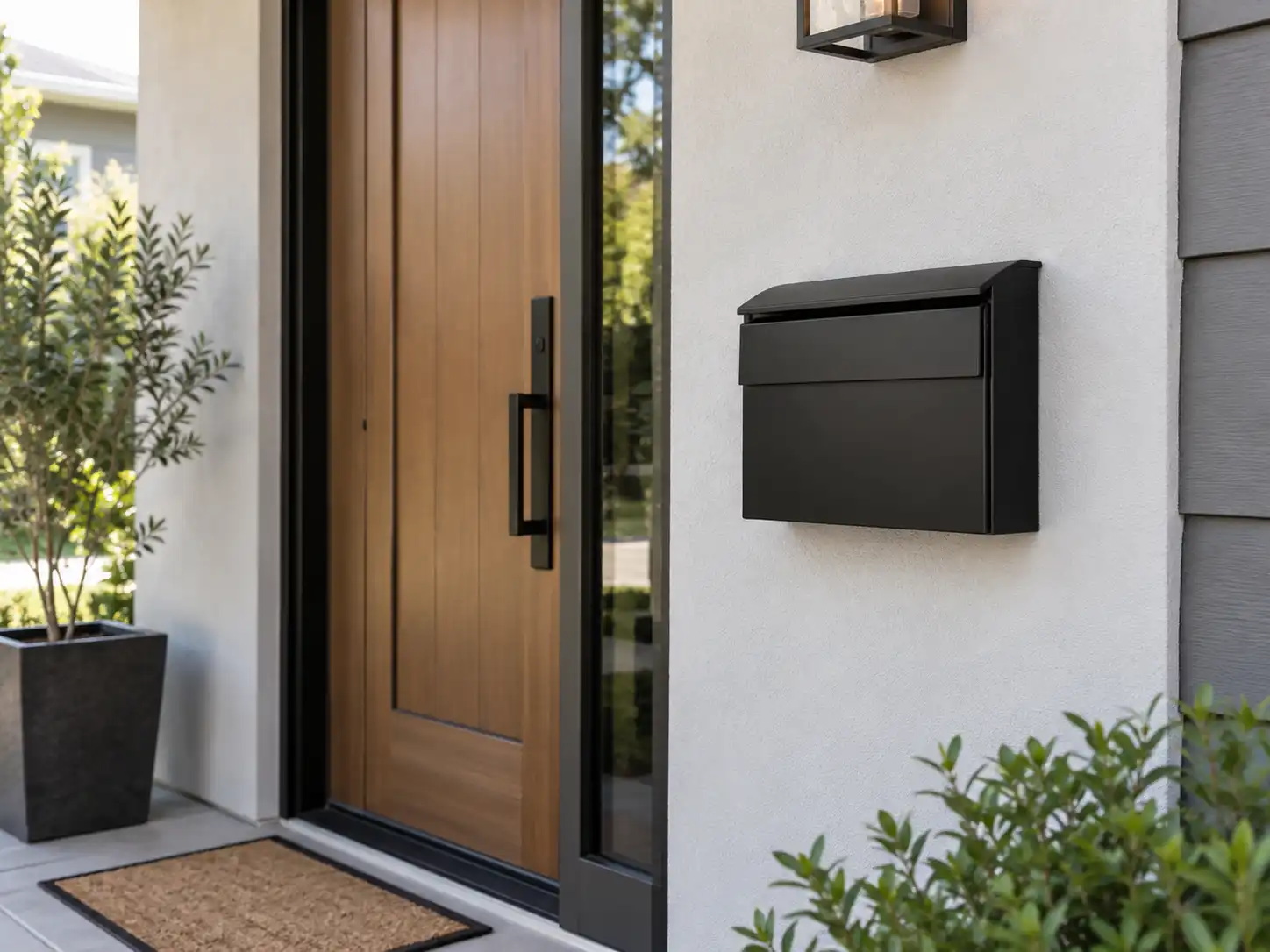
For a Wall-Mount Mailbox
Think about:
- Visibility from the walkway
- House-door swing
- Roof runoff
- Wall structure
- Accessibility
Only use this arrangement when it matches the established delivery method.
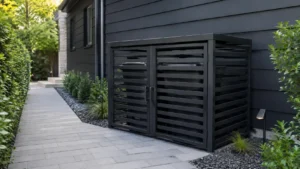
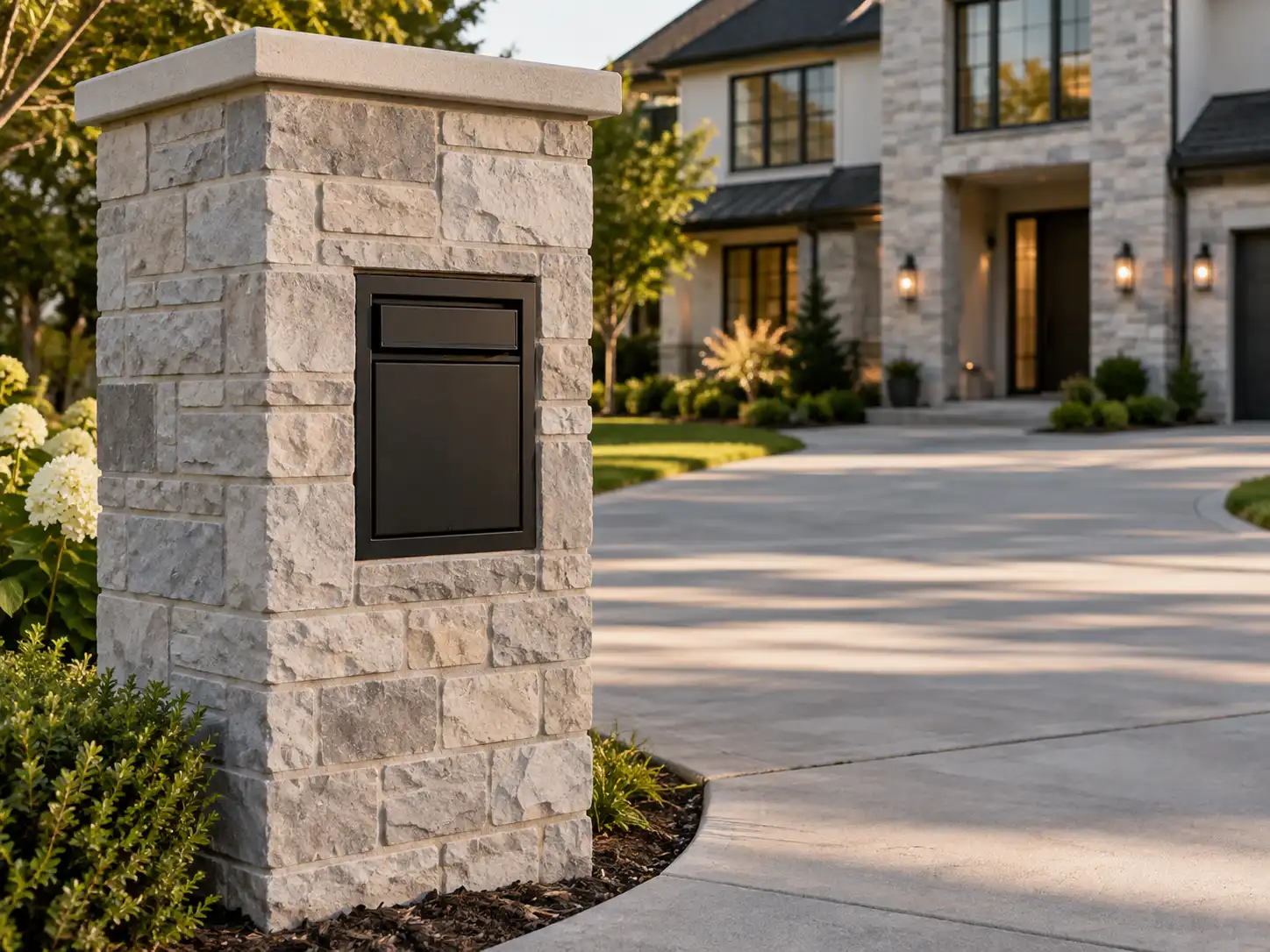
For a Fence or Masonry Column
Plan the mailbox before building the structure.
You need to know:
- Exact mailbox dimensions
- Front or rear access
- Wall depth
- Door clearance
- Mounting method
- Water management
Do not ask the mason to leave a generic opening and choose the mailbox afterward.
4. What Type of Mailbox Is Best for a New House?
There is no single best type.
Choose according to delivery mode and daily use.
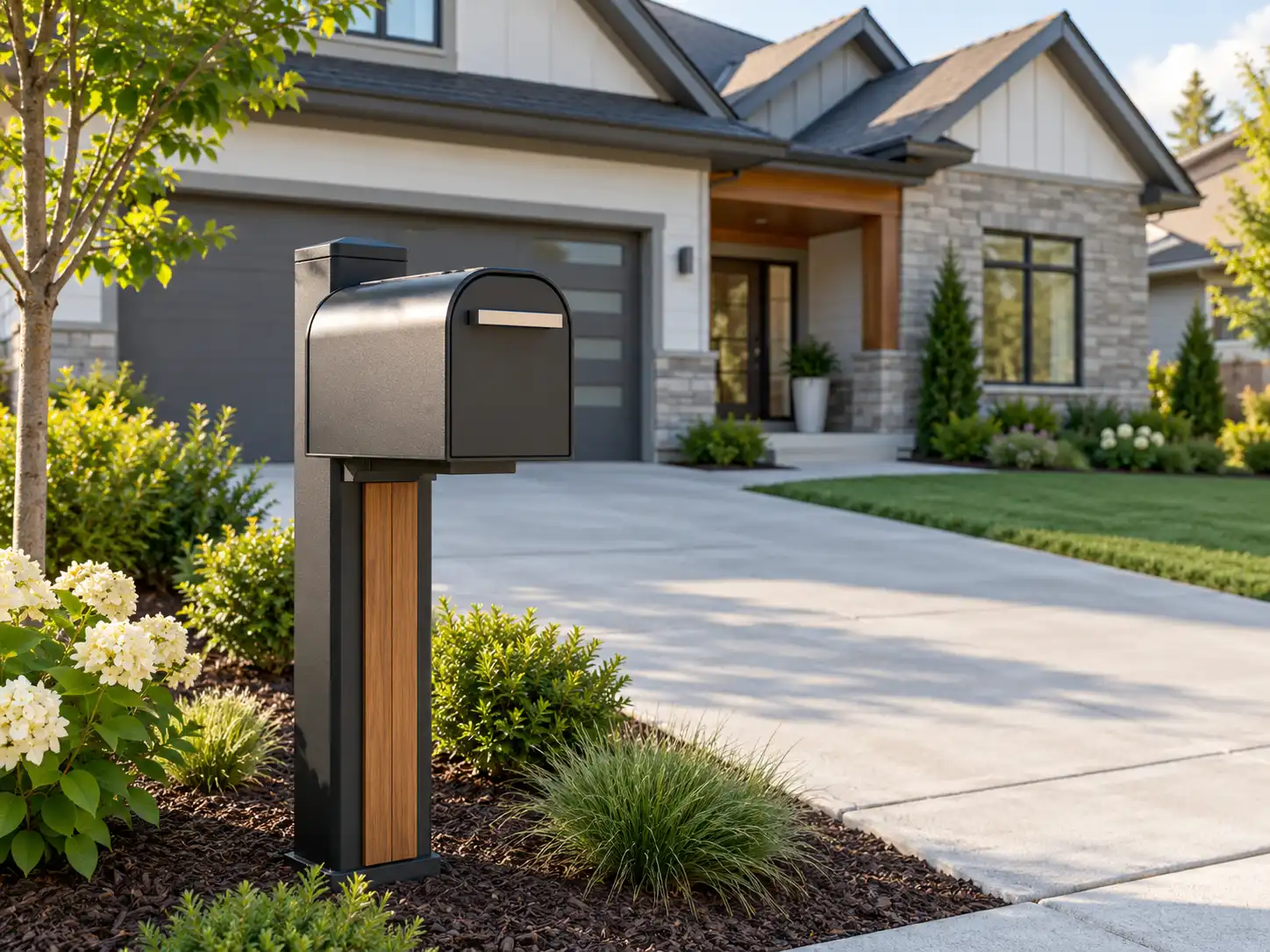
Post-Mount Mailbox
Best when:
- Delivery is curbside
- The carrier serves from a vehicle
- You have roadside space
- You want a traditional individual mailbox
You can choose from:
- Standard mailbox
- Large-capacity mailbox
- Locking mailbox
- Larger locking designs
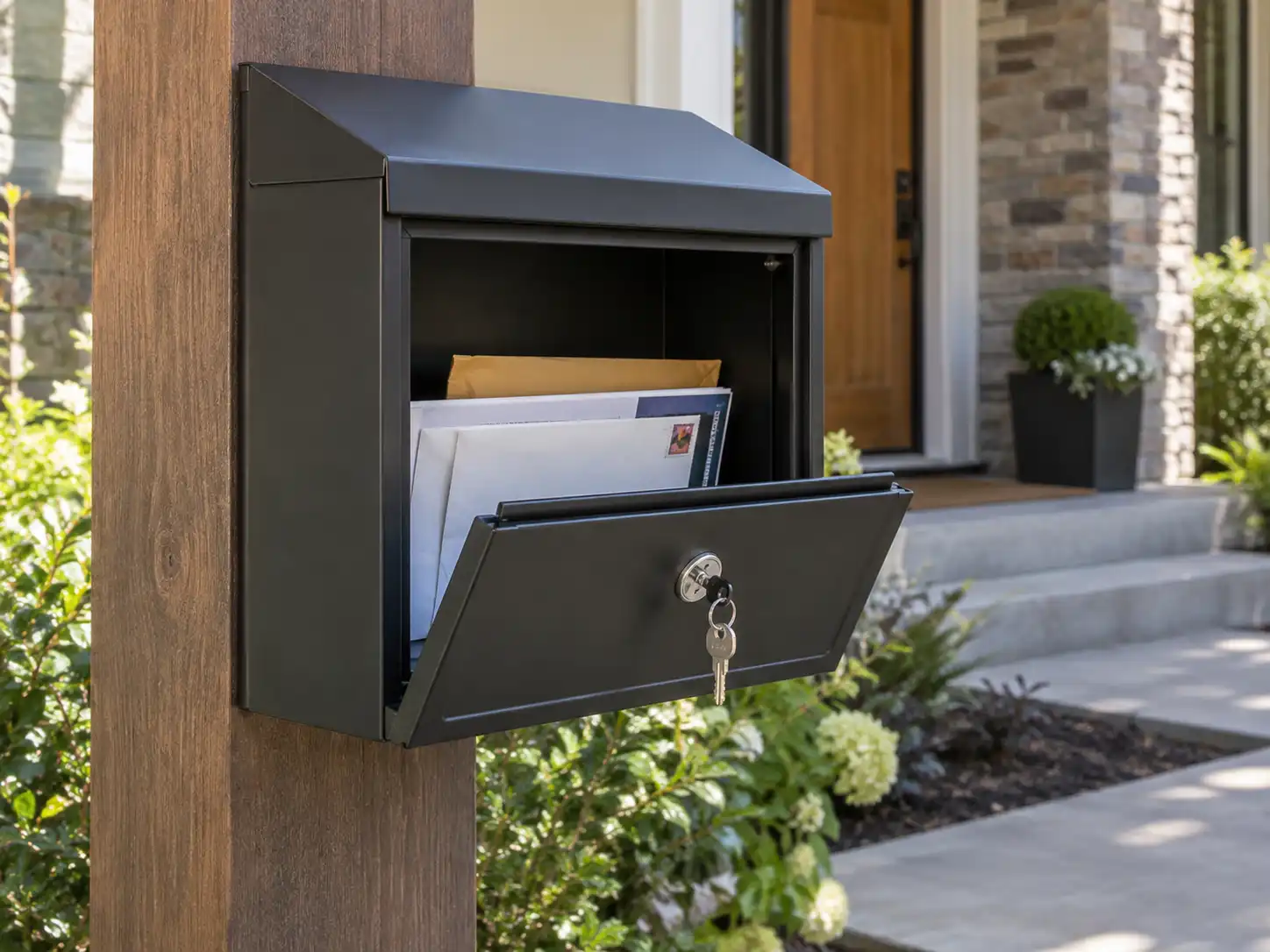
Wall-Mount Mailbox
Best when:
- Door delivery is already approved
- The mailbox will sit near the main entrance
- You mainly receive letters and normal mail
It is usually easier to install than a recessed mailbox.
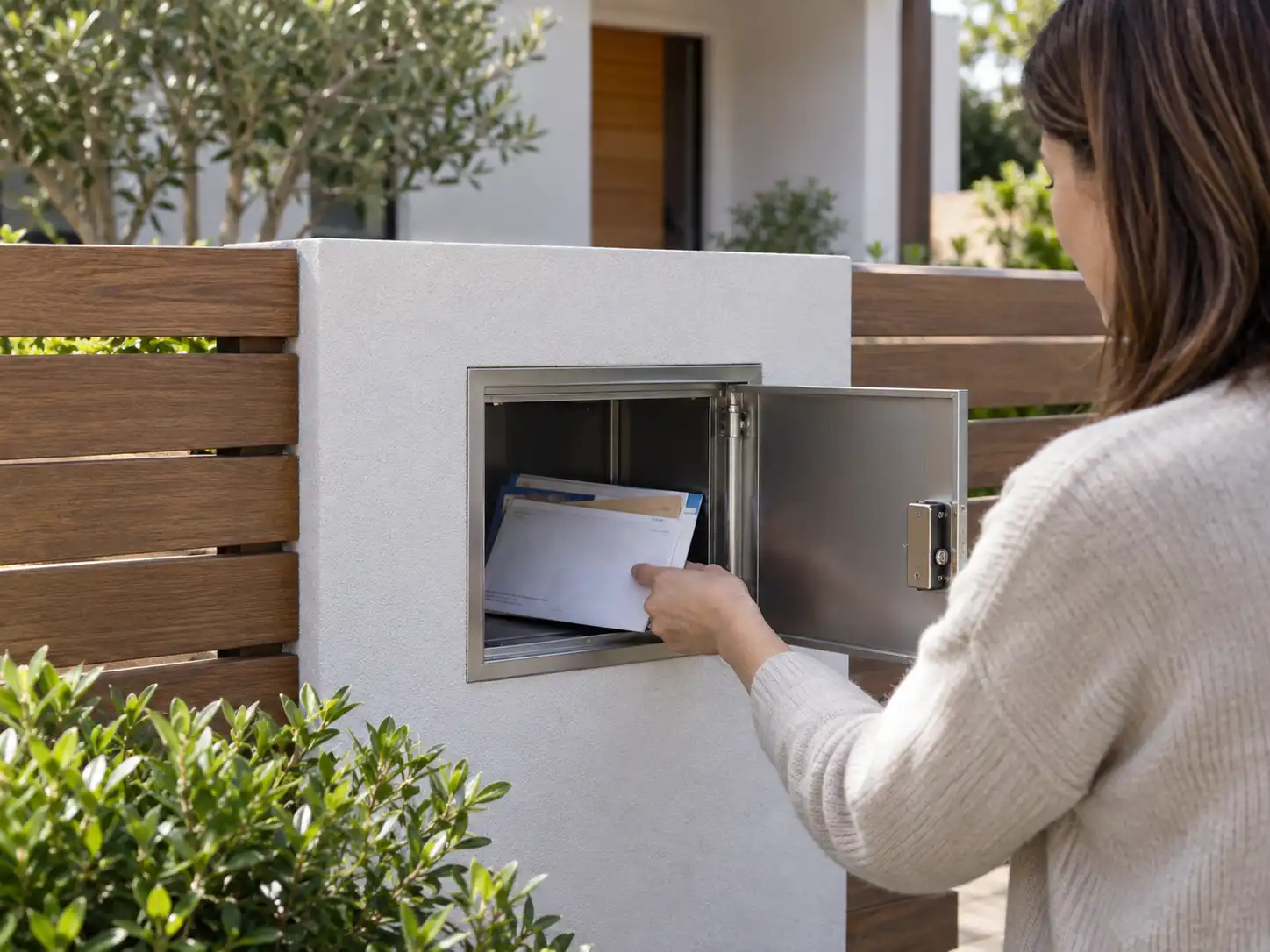
Recessed Mailbox
Best when:
- The mailbox is integrated into a wall
- You are building a fence
- You are building a brick or stone column
- You want a cleaner built-in appearance
This option should be planned early because the opening needs to match the actual mailbox.
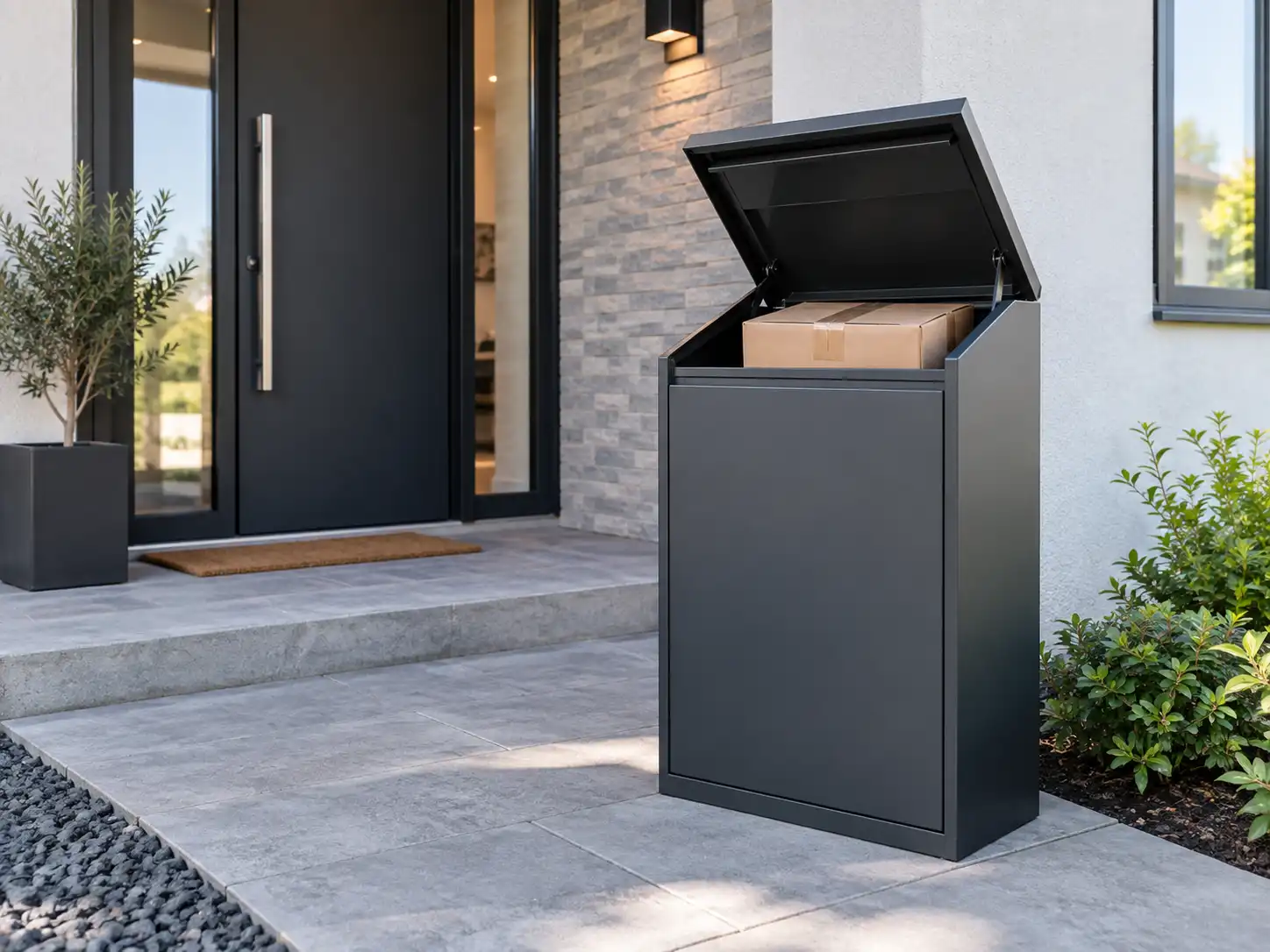
Parcel Box
Best when:
- You shop online frequently
- Packages are regularly left outside
- You want more secure parcel storage
- You have enough installation space
A parcel box is different from a standard mailbox.
Do not assume a slightly bigger letter box will solve a package-delivery problem.
5. What Size Mailbox Should You Choose for a New House?
A new home is a good opportunity to avoid an undersized mailbox from the beginning.
Think about what you actually receive.
Standard Size
Suitable when most deliveries are:
- Letters
- Bills
- Postcards
- Small envelopes
and the mailbox is emptied every day.
Large Capacity
Consider more capacity if you receive:
- Magazines
- Catalogs
- Padded envelopes
- Several days of mail
- Occasional small parcels
USPS currently recognizes Large Capacity as a curbside mailbox category, showing that capacity is now an important part of mailbox planning.
Parcel Capacity
If regular packages are the real issue, look at:
- Delivery opening
- Internal dimensions
- Retrieval opening
- Number of packages it can hold
- Locking mechanism
Do not judge parcel capacity by the exterior dimensions alone.
6. Should a New House Have a Locking Mailbox?
This depends on how the property will be used.
Ask:
How long will mail remain outside before someone collects it?
A standard mailbox may be enough if:
- Someone is normally home
- Mail is retrieved quickly
- Theft risk is low
A locking mailbox may be better if:
- Everyone is away during the day
- The mailbox is far from the house
- Mail theft is a concern
- You receive checks or sensitive documents
- The property is on a busy road
USPS currently recognizes locked curbside mailbox categories for approved curbside delivery equipment.
Do Not Judge Security Only by the Lock
Also check:
- Mail slot
- Door rigidity
- Hinges
- Material thickness
- Internal anti-fishing design
- Retrieval opening
A good lock on a weak door is not a secure mailbox.
7. Should You Install a Parcel Box at a New House?
For many new homes, this is worth considering before the exterior work is finished.
Why?
Because adding a parcel box later may require:
- New foundation
- New post
- Fence modification
- Masonry work
- New pathway
- New installation space
If you already know that packages are delivered several times a week, planning a parcel solution during construction can be much easier.
A Parcel Box Makes Sense If:
- Packages are regularly left at the door
- Nobody is home during deliveries
- Rain or snow exposure is a problem
- You want packages less visible from the street
- You receive several small or medium parcels each week
When It May Be Unnecessary
You probably do not need one if:
- Package deliveries are rare
- Someone normally receives them
- There is already another secure delivery area
The goal is not to install the biggest box possible.
It is to solve the actual delivery problem.
8. Front Access vs Rear Access for a New House
New construction gives you an advantage:
You can choose access before the surrounding structure is finished.
This is much easier than changing it later.
Front Access
Choose front access when:
- There is no usable space behind the mailbox
- It backs against a wall
- All operation must happen from one side
Rear Access
Choose rear access when:
- The mailbox is beside a road
- It sits in a boundary wall
- It is built into a driveway column
- You want to retrieve mail from inside the property
Rear access can be especially useful when you want to avoid standing near traffic.
Think About Daily Use
Before choosing, stand at the proposed installation location and imagine:
- Where the carrier stands
- Where you stand
- Which way the door opens
- Whether a fence blocks access
- Whether plants will grow behind it
- Whether a parked car could block it
Access should be planned for everyday use, not only for installation day.
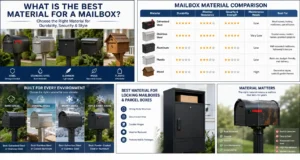
9. What Mailbox Material Is Best for a New House?
The best material depends on the environment.
Common options include:
- Powder-coated steel
- Stainless steel
- Aluminum
Powder-Coated Steel
Good for:
- Strong mailbox bodies
- Larger designs
- Locking mailboxes
- Parcel boxes
Check:
- Coating quality
- Steel thickness
- Edges
- Welds
- Drainage
Stainless Steel
Good for:
- Wet climates
- High humidity
- Premium installations
But stainless steel still needs proper maintenance, especially in salty environments.
Aluminum
Good for:
- Lower weight
- Corrosion resistance
- Many residential applications
Construction design still matters more than material name alone.
10. Plan for Rain, Snow and Coastal Conditions
Do not choose a new-house mailbox only by style.
Consider the site.
Heavy Rain
Look for:
- Good door overlap
- Proper drainage
- Protected seams
- Suitable coating
Snow
Think about:
- Snowbanks
- Plow routes
- Mailbox height
- Post exposure
- Retrieval access
Coastal Areas
Pay extra attention to:
- Corrosion-resistant materials
- Coating
- Stainless hardware
- Drainage
- Cleaning
A new house gives you the opportunity to choose a mailbox suited to the climate from the start.
11. How to Install a Mailbox for a New House
The installation method depends on the mailbox type.
Do not repeat one generic installation method for every box.
For Post-Mount Mailboxes
You need to plan:
- Post location
- Support
- Mailbox height
- Curb setback
- Mounting board
See:
and
How to Install a Mailbox Post With or Without Concrete
For Wall-Mount Mailboxes
You need to plan:
- Wall material
- Structural backing
- Anchors
- Door clearance
- Waterproofing
See:
How to Install a Wall-Mount Mailbox on Brick, Siding or Concrete
For Recessed Mailboxes
You need to plan:
- Opening size
- Wall depth
- Front or rear access
- Structural support
- Future replacement
See:
How to Install a Recessed Mailbox in a Wall or Masonry Column
This keeps each installation method in its own detailed guide.
12. How to Add House Numbers to a New Mailbox
Address visibility is part of a good mailbox setup.
USPS regularly reminds homeowners to keep house numbers readable and visible as part of mailbox maintenance.
Choose numbers that are:
- Large enough to read
- High contrast
- Visible from the carrier’s approach
- Weather resistant
Possible locations include:
- Mailbox side
- Front panel
- Post
- Separate address plate
- Masonry column
Do not let decorative landscaping hide the address.
13. When Should You Install the Mailbox During New Construction?
The best time depends on the installation type.
Post-Mount Mailbox
Usually install after:
- Road level is known
- Driveway location is fixed
- Final grade is established
but before landscaping makes access difficult.
Wall-Mount Mailbox
Install after the exterior wall finish is ready.
But choose the product early enough that:
- Blocking can be added if needed
- Mounting position is known
Recessed Mailbox
Choose it before the wall or masonry column is built.
This is critical.
Once the opening is finished, changing mailbox dimensions becomes expensive.
Parcel Box
Plan it before:
- Fence construction
- Masonry work
- Landscaping
- Pathway installation
when possible.
14. New House Mailbox Planning: What Should Be Done First?
A practical order is:
Step 1
Confirm USPS delivery method.
Step 2
Confirm approved location.
Step 3
Measure the installation space.
Step 4
Decide mailbox or parcel box.
Step 5
Choose standard or locking access.
Step 6
Choose front or rear retrieval.
Step 7
Choose the actual product.
Step 8
Build the mounting structure.
Step 9
Install the mailbox.
Step 10
Add house numbers and test access.
This order prevents most expensive mistakes.
15. Common New House Mailbox Mistakes
1. Buying the Mailbox Before Confirming Delivery Type
This is the biggest mistake.
A new address may not receive the delivery method you expect.
2. Choosing the Location Only for Appearance
Carrier access comes first.
3. Building the Brick Column Before Choosing the Mailbox
Choose the actual product first.
4. Choosing Too Little Capacity
Think about catalogs, padded envelopes and packages.
5. Forgetting Package Delivery
A letter mailbox may not solve online-shopping needs.
6. Ignoring Future Landscaping
Trees and hedges grow.
7. Blocking Rear Access
Leave retrieval clearance.
8. Installing Too Close to Gates or Driveways
Think about vehicle movement and door clearance.
9. Ignoring Weather
Rain, snow and coastal salt affect long-term performance.
10. Installing the Mailbox at the End of Construction Without Planning
The best mailbox decisions are often made before exterior work is finished.
New House Mailbox Planning Checklist
Delivery
- USPS delivery method confirmed
- Delivery location confirmed
- Centralized delivery checked
- Curbside approval checked if applicable
Product
- Standard mailbox
- Large-capacity mailbox
- Locking mailbox
- Parcel box
Installation
- Post mount
- Wall mount
- Recessed
- Fence
- Masonry column
Access
- Front access
- Rear access
- Safe retrieval path
Capacity
- Letters
- Magazines
- Padded envelopes
- Small parcels
- Regular packages
Environment
- Rain
- Snow
- Coastal salt
- Irrigation
- Strong sun
Final Details
- House number visible
- Door opens fully
- Lock easy to use
- Carrier access clear
- Landscaping will not block the mailbox
New House Mailbox FAQ
Do I Need to Contact USPS Before Installing a Mailbox at a New House?
Yes, especially for a new address or new construction.
USPS establishes the delivery mode and mailbox location for new developments and recommends early coordination during planning.
Can I Choose Where My Mailbox Goes?
Not entirely.
The final delivery point must work with the USPS-approved delivery mode.
For curbside delivery, the location needs to support safe and convenient carrier service.
Does Every New House Need an Individual Mailbox?
No.
USPS prefers centralized delivery for new addresses, and new developments may use CBUs or STD-4C centralized mailbox equipment instead of individual boxes.
What Mailbox Is Best for a New House?
Start with the delivery type.
Then choose capacity, security, access and installation style according to your actual needs.
Should I Choose a Locking Mailbox?
Consider one if mail stays outside for hours or security is important.
Should I Add a Parcel Box?
Consider one if packages are delivered frequently and are often left outside.
Can I Build a Mailbox Into a Brick Column?
Yes, but choose the mailbox before building the opening and confirm postal requirements when the unit is used for USPS curbside delivery.
When Should a Recessed Mailbox Be Installed?
Plan the mailbox before masonry or wall construction begins.
The actual box can then be installed while the opening is still accessible.
Can I Use a Wall-Mount Mailbox Instead of a Curbside Mailbox?
Only if the delivery arrangement permits it.
Do not change the established delivery location without checking with USPS.
What Size Mailbox Should I Buy?
Choose according to the mail you normally receive.
If packages are the main problem, a parcel box may be more useful than simply increasing letter-mail capacity.
The Best New House Mailbox Setup Starts With the Delivery Plan
A mailbox should not be one of the last things you think about when the house is finished.
The best time to plan it is while you still have flexibility.
Start with:
How will mail be delivered?
Then decide:
Where will the mailbox go?
Then:
What size, security level, access direction and parcel capacity do you need?
Only after those questions are answered should you finalize the post, wall, fence or masonry opening.
That approach reduces the chance of:
- Moving the mailbox later
- Rebuilding a brick column
- Replacing an undersized box
- Blocking rear access
- Adding a separate parcel box after landscaping is finished
Planning a Mailbox for a New Home?
Before choosing a mailbox or parcel box, prepare these six details:
- Delivery type
- Installation location
- Available dimensions
- Front or rear access preference
- Typical mail and package size
- Photos or drawings of the entrance area
HomeBox Solutions supplies post-mount, wall-mount, front-access, rear-access, locking and parcel box solutions for different residential installations.
If you are still in the planning or construction stage, send us your installation photos or drawings and available dimensions before the structure is finished.
It is much easier to select the correct mailbox first than modify the driveway, wall, fence or masonry column later.