Installation Type
Custom Address Signs
Trash Bin Enclosure

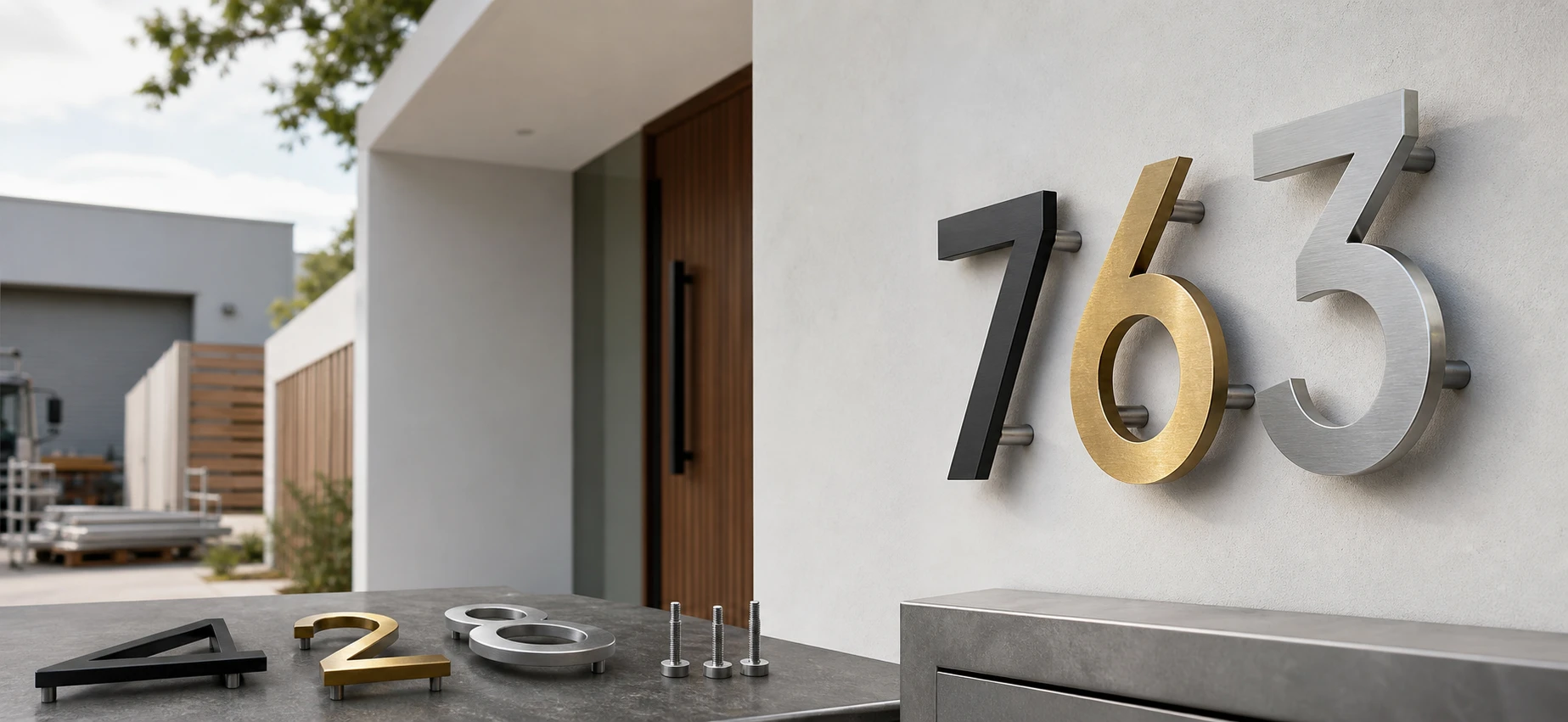
Stud mount house numbers use rear pins or threaded studs that fit into pre-drilled holes in the installation surface.
Compared with adhesive numbers, stud mounting provides a more secure mechanical fixing and keeps visible screws away from the front face.
They can be installed on suitable walls, doors, pillars, entrance panels and mailbox areas. The required hole depth, stud length and fixing method depend on the number design and installation surface.
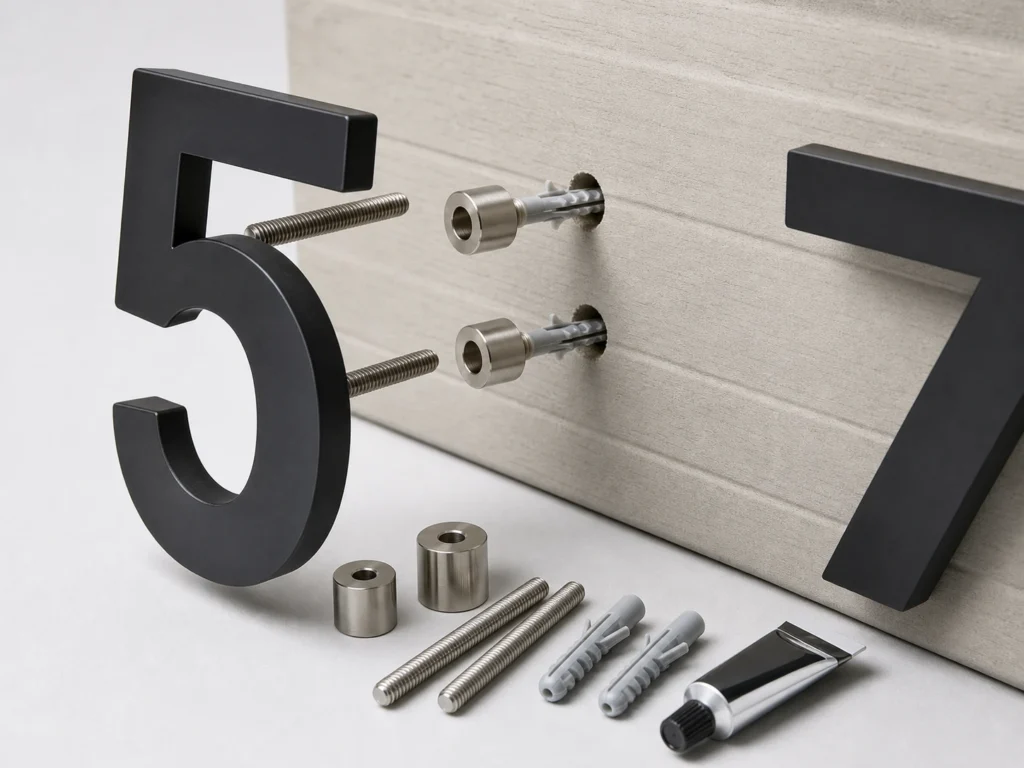
Stud-mounted numbers provide secure address identification for residential, commercial and project entrance applications.
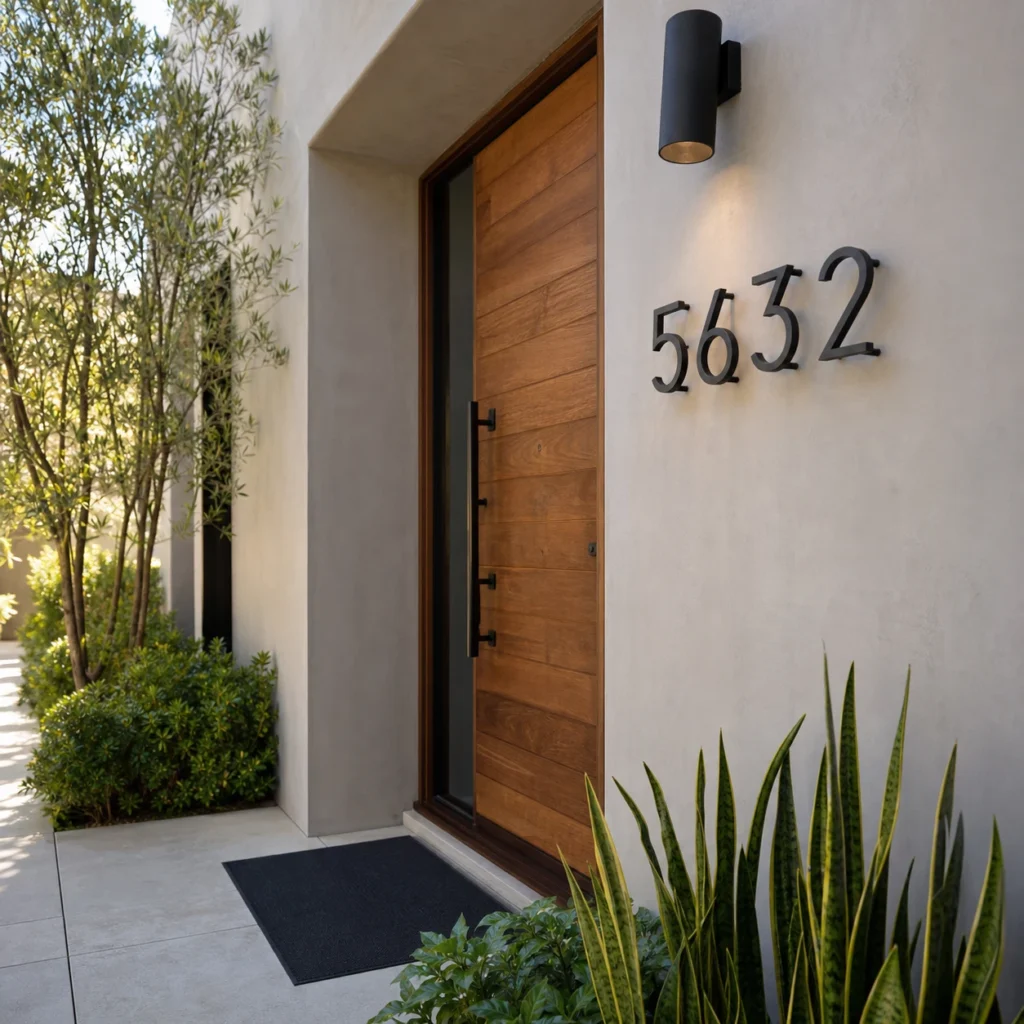
Stud mount numbers for walls, entrance panels and facade details requiring clean front surfaces and concealed fixing.
Inquiry Now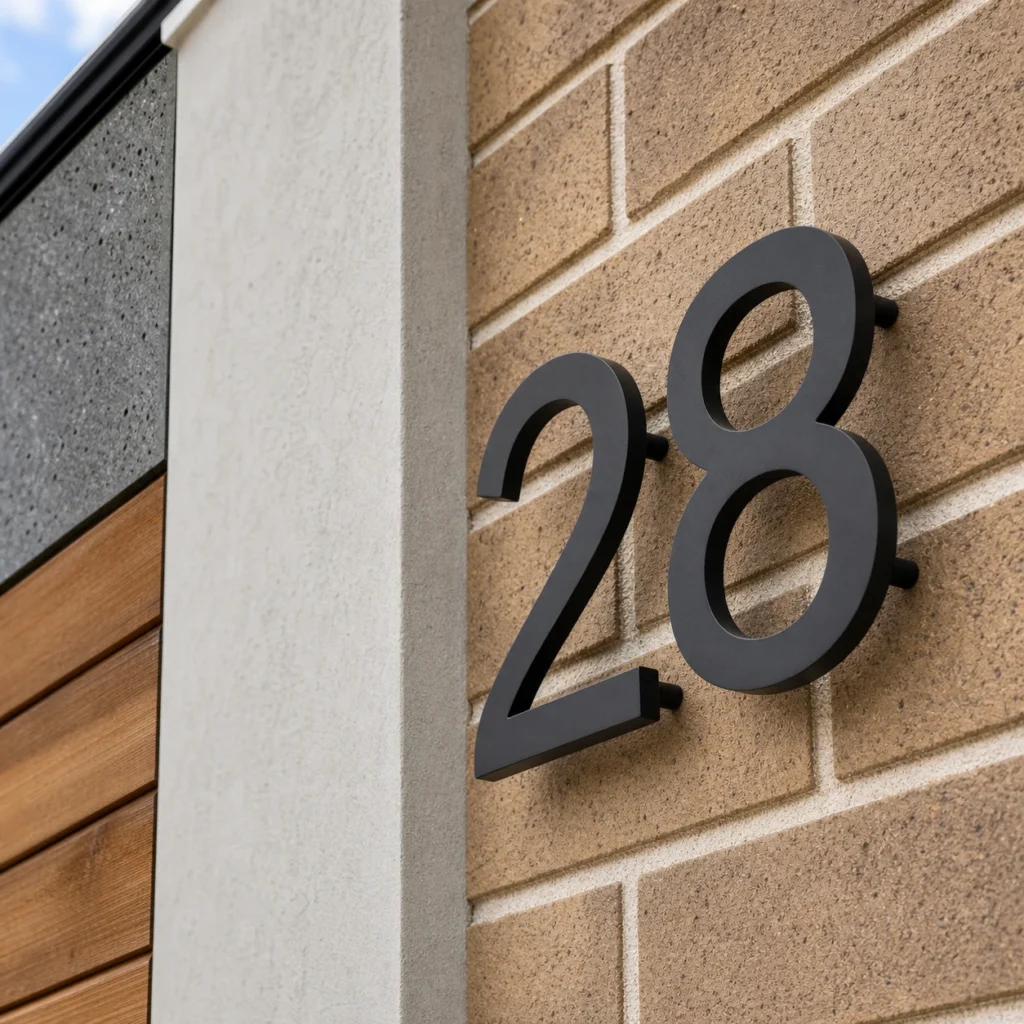
Durable unit and address numbers for apartment buildings, shared entrances and residential development projects.
Inquiry Now
Stud-mounted address numbers for office entrances, building identification and commercial property signage.
Inquiry Now
Secure address and identification numbers for hotels, serviced apartments, villas and managed properties.
Inquiry Now
Metal numbers for shop entrances, exterior walls and branded property identification requiring durable mounting.
Inquiry Now
Building and entrance numbers for campus facilities, administration areas and student accommodation projects.
Inquiry Now| Item | Common Options |
|---|---|
| Product Type | Stud mount house numbers, address numbers and letters |
| Material | Stainless steel, aluminum, brass, zinc alloy or acrylic |
| Height | 50 mm, 100 mm, 150 mm, 200 mm, 300 mm or custom |
| Thickness | Model-specific or custom |
| Finish | Brushed, polished, matte black, gold, bronze or coated |
| Mounting | Rear studs, threaded pins or concealed rear fixing |
| Stud Length | Selected according to number design and installation surface |
| Installation | Pre-drilled holes with suitable adhesive, anchors or fixing hardware |
| Surface | Masonry, concrete, timber, panels or other suitable substrates |
| Style | Modern, classic, slim, bold or custom font |
| Packaging | Individual set, mounting kit, instruction card or OEM packaging |
| Order Type | Wholesale, OEM and project supply |
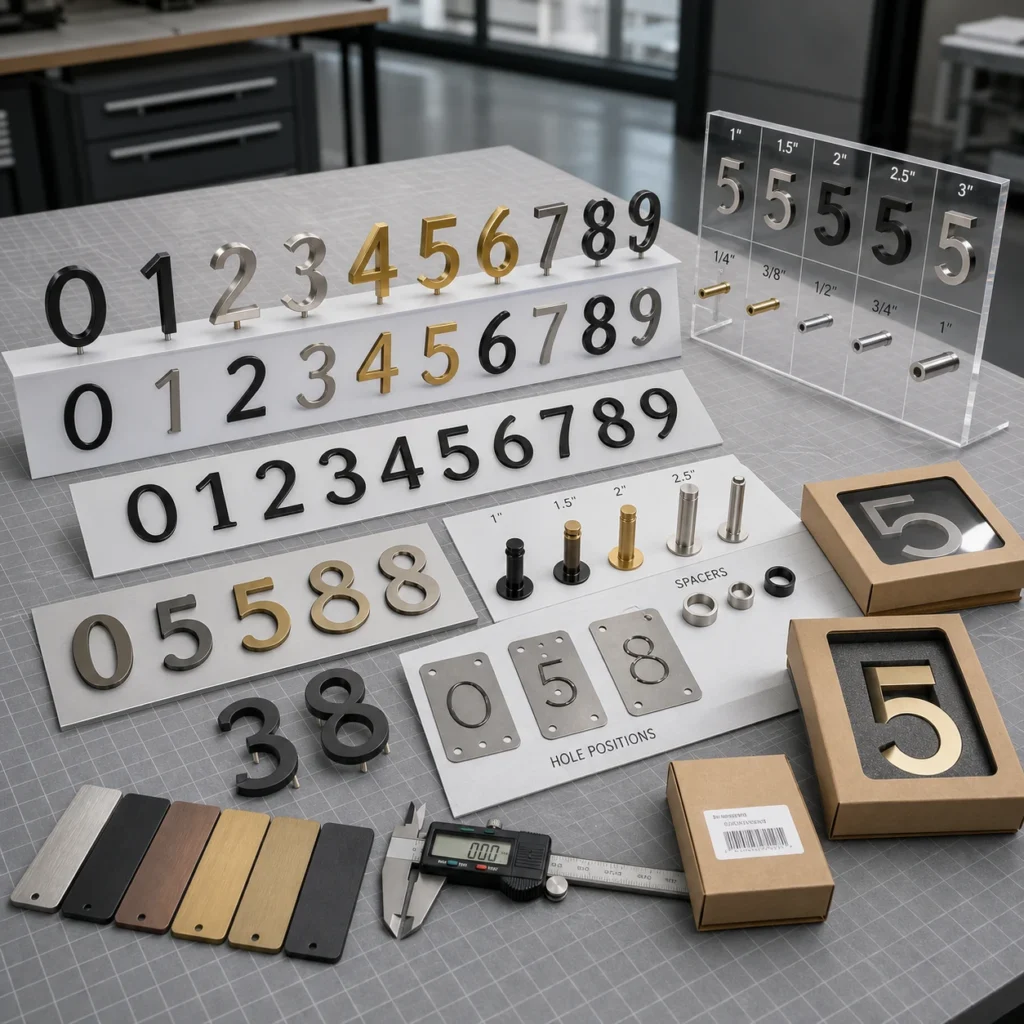
Stud mounting should be matched to the number size, rear fixing position and installation surface.
Rear stud length can be adjusted according to the product design and required installation depth.
Stud positions can follow standard designs or approved drawings to support accurate drilling and installation.
For suitable projects, hole-position information or installation templates can be prepared to simplify site installation.
Suitable adhesive, anchors or other fixing hardware can be selected according to the installation surface and project requirements.
| Feature | Stud Mount Numbers | Floating House Numbers |
|---|---|---|
| Main Focus | Secure concealed fixing | Raised architectural appearance |
| Installation | Rear studs into drilled holes | Rear mounting with intentional wall gap |
| Wall Gap | Flush or minimal | Clearly raised |
| Visual Effect | Clean, fixed appearance | Depth and shadow |
| Best For | Secure permanent installation | Design-focused entrances |
Stud mount house numbers have pins or threaded studs on the back that fit into pre-drilled holes for concealed and secure installation.
Yes. Installation normally requires accurately positioned holes for the rear studs or threaded pins.
They can be installed on suitable masonry, concrete, timber, doors, entrance panels and other surfaces that can accept the required fixing method.
The required depth depends on the stud length, number design and installation surface. Installation dimensions should be confirmed before drilling.
Not exactly. Stud mounting describes the rear fixing method, while floating numbers are intentionally spaced away from the wall to create a raised appearance and shadow.
For suitable OEM and project orders, stud positions or installation information can be supplied according to the approved product design.