Installation Type
20
Oct
Oct
A mailbox stays outside all year.
It is exposed to:
Rain
Snow
Dust
Road salt
Pollen
Bird droppings
Strong sunlight
Insects
Moisture
Daily opening and closing
Over time, dirt builds up, hinges become stiff, locks get harder to turn, coatings can become damaged and water may start entering the box.
Most of these problems do not require a new mailbox.
Regular cleaning and simple maintenance can help extend the life of the mailbox and keep letters and packages dry.
The key is to maintain the right parts without damaging the finish, blocking drainage or sealing areas that need to move.
This guide explains how to:
Clean the outside of a mailbox
Clean inside a mailbox
Remove rust
Waterproof a mailbox
Stop water from entering
Maintain hinges and locks
Maintain wooden and metal posts
Protect mailboxes in coastal environments
Know when maintenance is no longer enough
Quick Mailbox Maintenance Guide
Use this table to identify what your mailbox needs.
| Problem | Likely Cause | Maintenance Action |
|---|---|---|
| Dirty surface | Dust, pollen or road grime | Wash with mild soap and water |
| Wet mail | Door gap, seam leak or poor drainage | Find leak source and repair |
| Rust spots | Damaged coating or trapped moisture | Remove light rust and protect exposed metal |
| Stiff hinge | Dirt or corrosion | Clean and lubricate |
| Lock hard to turn | Dirt, moisture or corrosion | Clean and use suitable lock lubricant |
| Mailbox smells musty | Moisture trapped inside | Clean, dry and improve drainage |
| Wooden post soft near ground | Moisture or rot | Dry, inspect and repair or replace |
| Metal post rusting | Coating damage | Clean and protect affected area |
| Salt buildup | Coastal exposure | Rinse regularly with fresh water |
| Door will not close properly | Dirt, loose hinge or misalignment | Clean, adjust and inspect hardware |
A small maintenance problem is easier and cheaper to fix than a mailbox that has already started to fail.
How Often Should You Clean a Mailbox?
For most residential mailboxes, a simple inspection every few months is enough.
A good routine is:
Every 1–3 Months
Check:
Dirt
Door operation
Lock
Hinges
Loose screws
Water inside
Every 6 Months
Inspect:
Paint or coating
Rust
Post condition
Drainage
Mounting hardware
After Severe Weather
Check immediately after:
Heavy rain
Snowstorm
Strong wind
Flooding
Vehicle impact
In Coastal Areas
Clean more frequently because airborne salt can accelerate corrosion.
A monthly fresh-water rinse may be useful in exposed coastal locations.
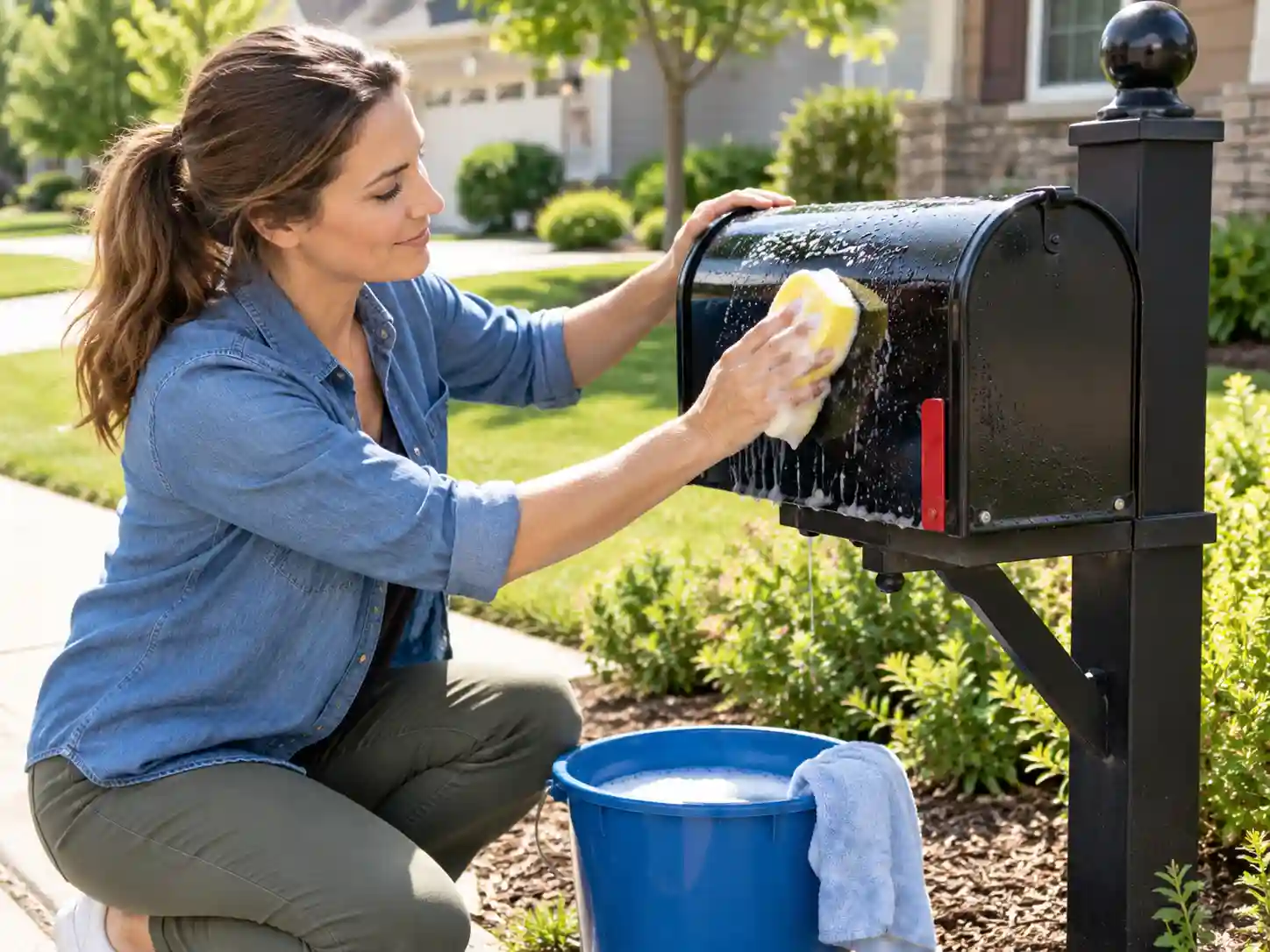
How to Clean the Outside of a Mailbox
Most mailboxes do not need aggressive cleaning chemicals.
Start with the mildest method.
You will usually need:
Warm water
Mild dish soap
Soft cloth
Soft sponge
Soft brush
Clean water
Dry towel
Avoid harsh abrasives unless you are specifically repairing a damaged finish.
Step 1: Remove Loose Dirt
Brush away:
Dust
Leaves
Cobwebs
Insects
Loose debris
This prevents dirt from scratching the surface during washing.
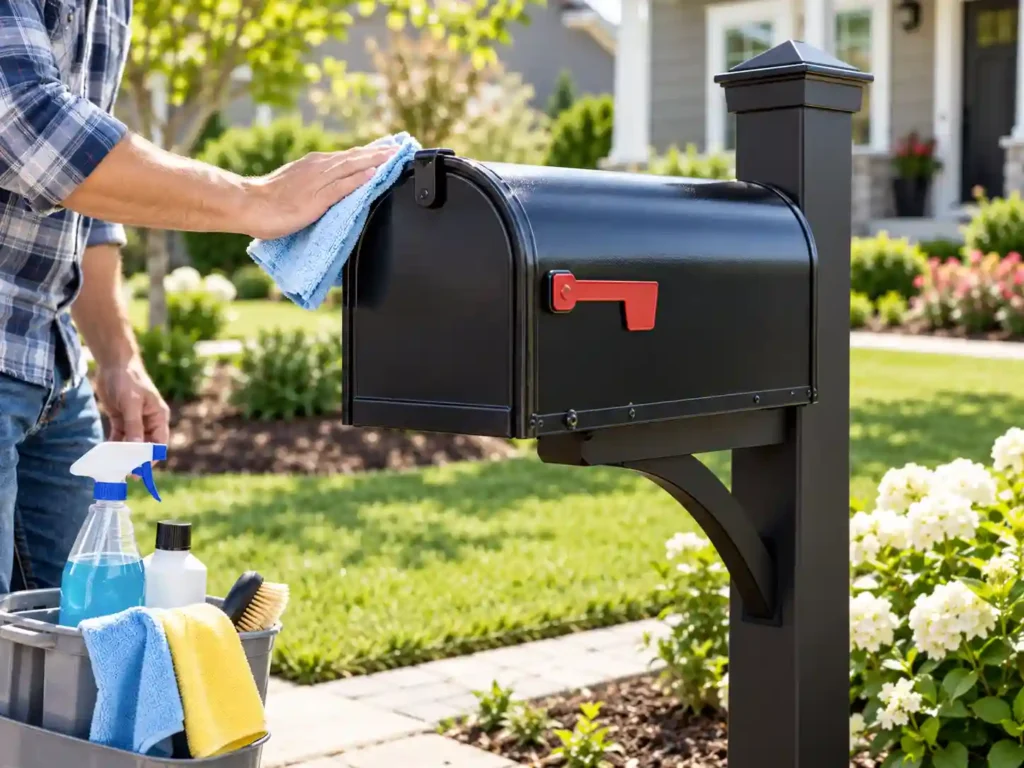
Step 2: Wash With Mild Soap
Mix mild soap with warm water.
Clean the mailbox using a soft cloth or sponge.
Pay attention to:
Door edges
Bottom corners
Hinges
Around the flag
Back panel
Mounting areas
Do not scrub aggressively on painted or powder-coated surfaces.
Step 3: Rinse
Use clean water to remove soap residue.
Avoid forcing high-pressure water directly into:
Locks
Hinges
Mail slots
Seams
Step 4: Dry the Mailbox
Drying is especially useful on:
Steel mailboxes
Hinges
Hardware
Areas where water can collect
This reduces the time moisture stays on the surface.
How to Clean a Powder-Coated Steel Mailbox
Powder-coated steel is commonly used because it provides a durable outdoor finish.
Use:
Mild soap
Water
Soft cloth
Soft brush
Avoid:
Steel wool
Strong solvents
Abrasive cleaners
Sharp scraping tools
If the coating is scratched, inspect the exposed metal for rust.
The sooner coating damage is repaired, the less likely corrosion will spread.
How to Clean a Stainless Steel Mailbox
Stainless steel can still develop:
Fingerprints
Salt deposits
Surface staining
Tea staining
Contamination from other metals
Clean with:
Mild soap
Fresh water
Soft cloth
Always rinse thoroughly.
For brushed stainless steel, wipe in the direction of the grain.
Avoid using ordinary steel wool because small iron particles can become embedded in the surface and later rust.
How to Clean an Aluminum Mailbox
Aluminum is naturally corrosion resistant but can still collect:
Dirt
Salt
Oxidation
Road grime
Use mild soap and water.
Avoid strong alkaline or acidic cleaners unless specifically approved for the finish.
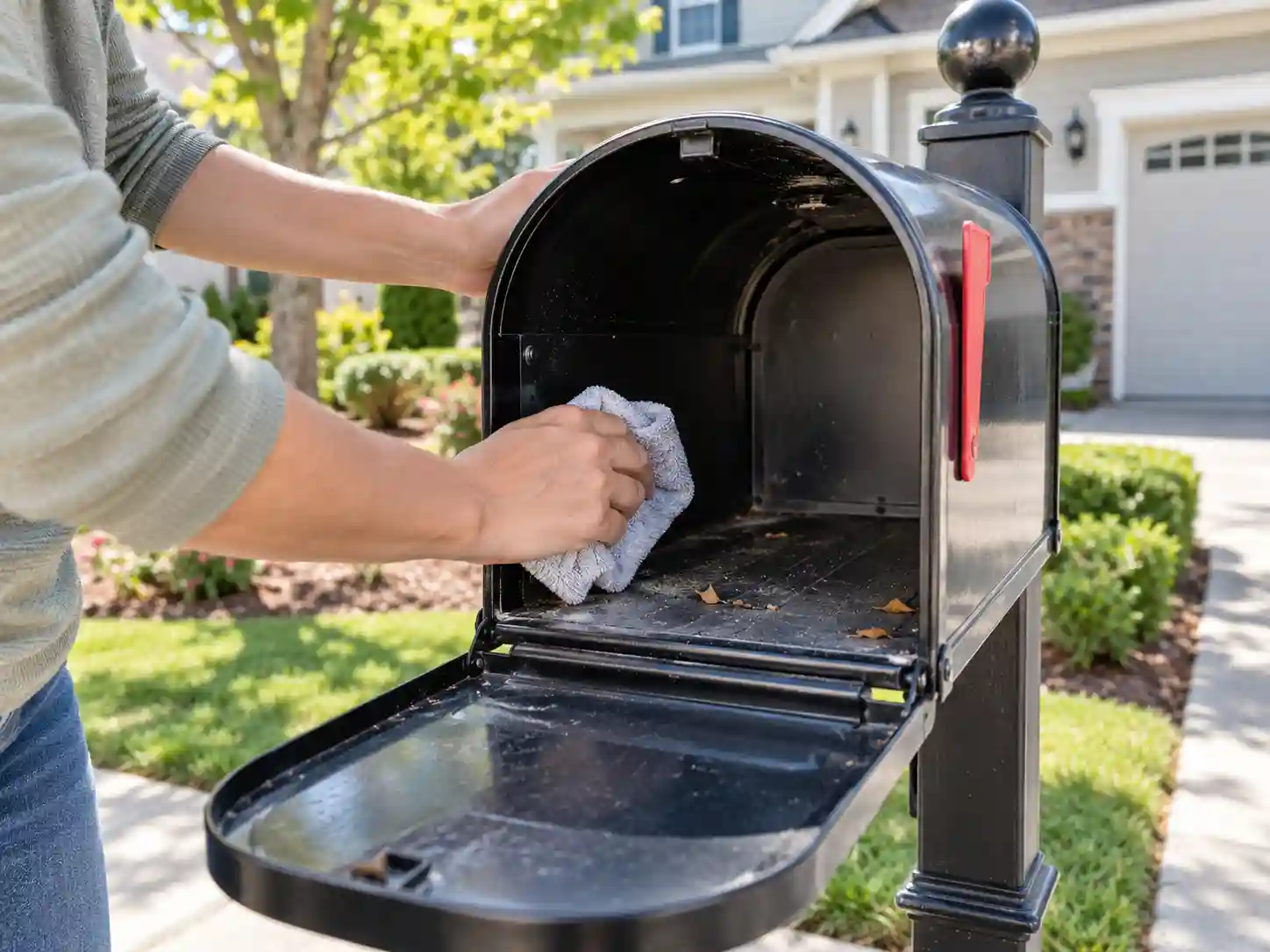
How to Clean Inside a Mailbox
The inside is often forgotten.
But moisture, insects and debris can accumulate there.
Start by removing all mail.
Then remove:
Leaves
Dust
Dead insects
Cobwebs
Small debris
Use a slightly damp cloth to wipe the interior.
Do not leave standing water inside.
After cleaning:
Leave the door open temporarily
Allow the interior to dry completely
This is especially important before sealing or repairing anything.
How to Remove Mold or Mildew From a Mailbox
Mold or mildew usually means moisture is remaining inside.
First identify why the interior stays damp.
Possible causes include:
Door not closing properly
Poor drainage
Water entering through seams
Condensation
Mailbox located in constant shade
Clean the affected area using a suitable mild household cleaner.
Then dry thoroughly.
Cleaning the mold without fixing the moisture problem will usually only solve the issue temporarily.
How to Clean Bird Droppings From a Mailbox
Bird droppings can damage coatings if they remain for long periods.
Do not scrape dry droppings aggressively.
Instead:
Wet the area.
Allow the dirt to soften.
Wipe gently.
Wash with mild soap.
Rinse.
Dry.
If the coating has already been damaged, inspect the metal beneath it.
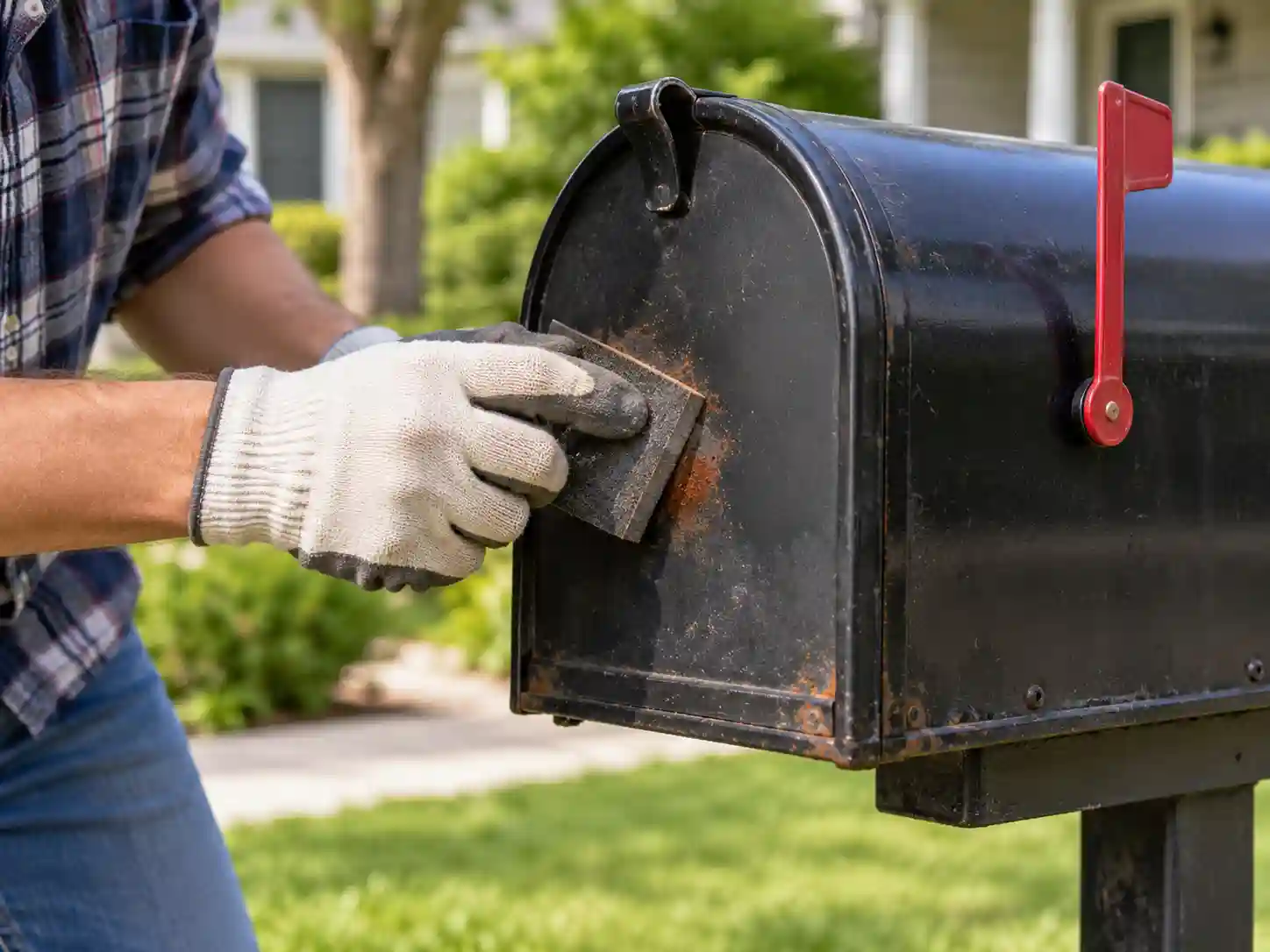
How to Remove Rust From a Metal Mailbox
Rust usually appears after the protective finish has been damaged.
Look for rust around:
Door edges
Screws
Rivets
Hinges
Bottom seams
Scratches
Flag mounting points
Light Surface Rust
For small spots:
Clean the area.
Dry it completely.
Remove loose rust with a suitable abrasive or rust-removal tool.
Clean away residue.
Protect the exposed metal.
Do not leave bare steel exposed outdoors after removing rust.
Deeper Rust
If rust has already caused:
Pitting
Flaking metal
Holes
Weak mounting points
simple maintenance may no longer be enough.
At that point, repair or replacement may be more practical.
Do Not Paint Over Active Rust
Painting directly over loose rust may make the mailbox look better for a short time, but corrosion can continue underneath.
Rust should be cleaned and treated before refinishing.
A full repainting process will be covered separately in:
How to Paint a Metal Mailbox: Prep, Primer, Paint and Rust Prevention
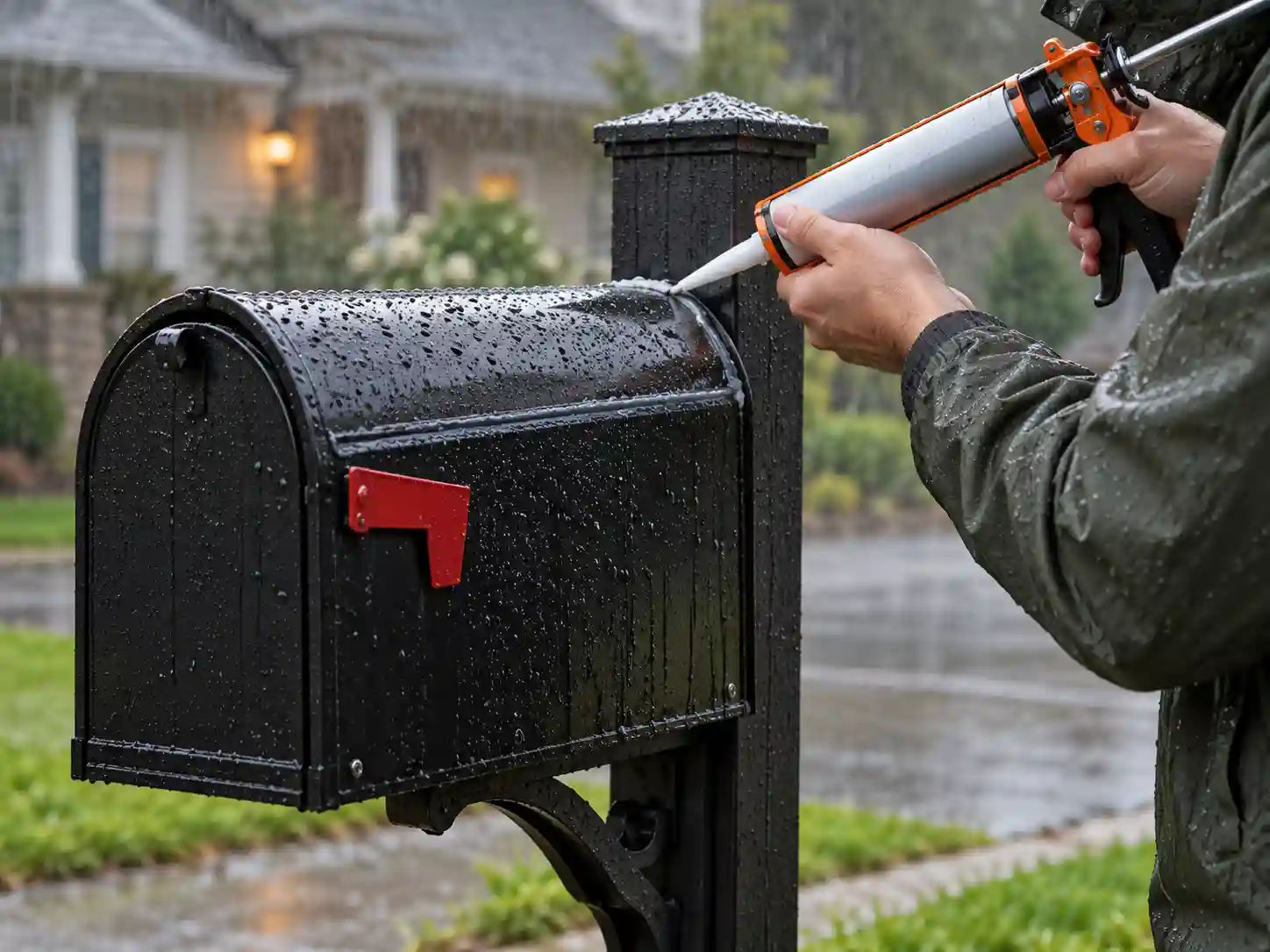
How to Waterproof a Mailbox
A mailbox should resist normal rain, but it should not be sealed completely airtight.
That distinction is important.
A good mailbox needs:
Water-resistant door design
Proper seams
Good installation
Drainage
Ventilation
Waterproofing means controlling water, not sealing every gap.
Start by Finding Where Water Enters
Before applying sealant, inspect the mailbox after rain.
Look for:
Water near the door
Water near the back
Wet bottom corners
Drips around screws
Moisture around seams
Finding the entry point saves time and prevents unnecessary sealing.
How to Keep Water Out of a Mailbox Door
The door is the most common water-entry point.
Check:
Door alignment
Door overlap
Latch
Magnet
Hinge
Bent edges
If the door does not close correctly, fix the alignment first.
Adding sealant around a badly aligned door usually will not solve the problem.
Check the Mailbox Top
Water may enter through:
Seams
Cracks
Fastener holes
Damaged welds
Inspect the top carefully.
Water often travels before dripping into the interior, so the visible wet spot may not be directly under the leak.
How to Seal a Mailbox
Use outdoor sealant only where necessary.
Appropriate areas may include:
Small fixed seams
Fastener penetrations
Wall installation joints
Certain mounting gaps
Do not apply sealant to:
Moving hinges
Locks
Drainage holes
Door pivots
Removable service parts
Too much sealant can create new problems.
Do Not Block Drainage Holes
Some mailboxes include small drainage openings.
These help water escape.
If you block them while trying to waterproof the box, moisture may become trapped inside.
Always check the bottom of the mailbox before sealing anything.
How to Test a Mailbox for Leaks
A simple test can help find the source.
On a dry day:
Empty the mailbox.
Dry the inside.
Start with a small amount of water on the lower area.
Check inside.
Move upward gradually.
Test the door separately.
Do not spray the entire mailbox heavily at once.
If everything becomes wet, you will not know where the leak started.
How to Keep Mail Dry Inside a Mailbox
Keeping mail dry requires more than sealant.
Check all of these:
Door
Should close fully.
Mail Opening
Should have enough overlap or protection from rain.
Bottom
Should not hold standing water.
Mounting Angle
The mailbox should not slope in a way that directs water inside.
Landscaping
Sprinklers should not continuously spray the mailbox.
Roof Runoff
Wall-mounted mailboxes should not sit directly under concentrated roof drainage.
How to Maintain Mailbox Hinges
Hinges operate every day.
Dirt and corrosion can make them:
Stiff
Noisy
Loose
Difficult to close
Clean the Hinge
Remove:
Dirt
Rust particles
Debris
Lubricate When Needed
Use a lubricant suitable for outdoor hardware.
Apply only a small amount.
Excess lubricant can attract dirt.
Check Fasteners
Make sure:
Rivets are intact
Screws are tight
Hinge pins are secure
Do not over-tighten moving parts.
The door should still swing freely.
How to Maintain a Mailbox Lock
Locks need different care from hinges.
Avoid putting heavy grease inside the lock cylinder.
It can trap dust and make the problem worse.
Instead:
Remove visible dirt
Keep water out
Use a lock-compatible lubricant
Test the key regularly
If the key becomes difficult to turn, do not force it.
Check whether door pressure or misalignment is loading the lock.
How to Maintain a Mailbox Door
Inspect the door for:
Loose hinge
Bent edges
Worn latch
Weak magnet
Rust
Misalignment
A door that does not close properly can lead to:
Water entry
Mail loss
Lock problems
Faster corrosion
Fix small alignment problems early.
How to Maintain a Wooden Mailbox Post
Wooden posts need special attention near the ground.
That is where moisture often causes the most damage.
Inspect for:
Soft wood
Cracks
Rot
Insect damage
Loose fasteners
Keep Mulch Away From the Wood
Do not pile wet mulch directly against the post.
Constant moisture can speed up decay.
Check the Ground Line
Push gently near the bottom of the post.
If the wood feels soft or moves excessively, inspect more closely.
Surface staining is different from structural rot.
Protect Exposed Wood
Outdoor-rated treatment or finish may help protect the post.
But do not cover rotten wood and assume the problem is solved.
Rotten structural sections should be repaired or replaced.
How to Maintain a Metal Mailbox Post
Metal posts should be inspected around:
Ground line
Welds
Scratches
Bolt holes
Brackets
Look for:
Rust
Peeling coating
Loose fasteners
Water traps
Clean and protect damaged coating early.
Keep the Post Upright
Use a level periodically.
A small lean may indicate:
Soil movement
Loose base
Impact
Rot
Corrosion
Fix the cause before the post becomes unstable.
How to Maintain a Mailbox in Coastal Areas
Coastal environments are harder on outdoor metal products.
Salt can collect on:
Mailbox body
Hinges
Locks
Screws
Welds
Even stainless steel can develop surface staining when exposed to salt for long periods.
Rinse With Fresh Water
Regular fresh-water rinsing helps remove salt deposits.
Pay attention to:
Door edges
Hinges
Bottom corners
Mounting hardware
Inspect Hardware More Often
Small screws and hinge components may show corrosion before the main mailbox body.
Replace badly corroded hardware before it fails.
Choose Suitable Materials
For coastal installations, consider:
Stainless steel
Aluminum
High-quality powder-coated steel
Corrosion-resistant hardware
Material choice and maintenance should work together.
How to Maintain a Mailbox After Winter
Winter can cause:
Loose posts
Rust
Paint damage
Moisture buildup
Bent doors
Ice damage
In spring, inspect:
Post alignment
Mounting hardware
Door
Hinges
Bottom seams
Coating
Clean away road salt as soon as possible.
How to Maintain a Mailbox Before Winter
Before cold weather arrives:
Clean the mailbox.
Repair small rust spots.
Check hinges.
Check lock.
Tighten loose mounting hardware.
Confirm drainage is open.
Check post stability.
Small problems become harder to fix after snow and freezing temperatures arrive.
Seasonal Mailbox Maintenance Checklist
Spring
Check:
Winter damage
Rust
Loose post
Door alignment
Drainage
Summer
Clean:
Dust
Pollen
Bird droppings
Insects
Also inspect sun-damaged finishes.
Fall
Prepare for:
Rain
Snow
Ice
Wind
Tighten hardware and check seals.
Winter
Keep:
Mailbox accessible
Snow away from the post
Door clear of ice
After severe weather, inspect again.
Common Mailbox Maintenance Mistakes
1. Using Harsh Cleaners
Strong chemicals can damage paint and coatings.
2. Scrubbing Powder Coating With Steel Wool
This can scratch the finish and expose metal.
3. Blocking Drainage Holes
Water needs somewhere to escape.
4. Sealing Moving Parts
Do not seal hinges, locks or door pivots.
5. Ignoring Small Rust Spots
Small corrosion areas can spread.
6. Over-Lubricating Locks
Excess lubricant can trap dirt.
7. Leaving Salt on the Surface
This is especially damaging in coastal and winter-road environments.
8. Ignoring the Post
A clean mailbox on a rotten post is still a maintenance problem.
9. Painting Over Rust
The corrosion may continue under the new paint.
10. Waiting Until the Mailbox Fails
Preventive maintenance is usually easier than repair.
When Maintenance Is No Longer Enough
Cleaning and maintenance have limits.
Consider repair or replacement if the mailbox has:
Large rust holes
Severely bent body
Broken mounting base
Repeated leaks
Badly damaged door
Broken lock area
Rotten post
Severe corrosion
Structural cracks
Also ask whether the mailbox still fits your needs.
A mailbox may be physically repairable but still be:
Too small
Not secure enough
Difficult to access
Unsuitable for package delivery
Maintenance cannot solve a capacity problem.
Mailbox Maintenance Checklist
Use this checklist every few months.
Exterior
Surface clean
No heavy dirt
No severe rust
Coating intact
Door
Opens smoothly
Closes completely
No large gaps
Latch or magnet works
Hinges
Clean
Secure
Move freely
Lock
Key turns smoothly
Cylinder clean
No excessive corrosion
Interior
Dry
Clean
No mold
No standing water
Drainage
Open
Not blocked by dirt or sealant
Mounting
Screws secure
Mounting board sound
Mailbox does not move
Post
Upright
Stable
No serious rot
No severe corrosion
Frequently Asked Questions
How Do I Clean a Metal Mailbox?
Use mild soap, water and a soft cloth.
Avoid abrasive cleaners that can damage the protective finish.
How Do I Clean Inside a Mailbox?
Remove all mail and debris, wipe the inside with a slightly damp cloth and allow it to dry completely.
How Do I Waterproof a Mailbox?
First identify where water enters.
Check the door, seams, fasteners and drainage before applying outdoor sealant to fixed leak points.
How Do I Keep Water Out of My Mailbox?
Make sure the door closes properly, the mailbox is installed correctly and drainage holes remain open.
Can I Seal My Mailbox With Silicone?
Outdoor silicone or another suitable sealant may help at fixed seams or installation joints.
Do not seal drainage holes, hinges or moving parts.
Why Is My Mailbox Wet Inside?
Possible causes include:
Door gaps
Leaking seams
Poor drainage
Installation angle
Condensation
Sprinklers
Find the source before sealing the mailbox.
How Do I Remove Rust From a Mailbox?
Clean the area, remove loose rust and protect the exposed metal.
If rust has created holes or weakened the mailbox body, replacement may be better.
How Often Should I Clean My Mailbox?
A basic inspection every few months is usually enough.
Clean more often in coastal, dusty or high-pollen environments.
Can I Pressure Wash a Mailbox?
It is usually unnecessary.
High-pressure water can force moisture into seams, locks and openings.
Gentle washing is safer.
How Do I Maintain a Mailbox Lock?
Keep it clean, protect it from moisture and use a lock-compatible lubricant when necessary.
Avoid forcing a stiff key.
How Do I Stop a Wooden Mailbox Post From Rotting?
Keep excessive moisture and mulch away from the base, inspect the wood regularly and use suitable outdoor protection.
Replace structurally rotten wood.
How Do I Maintain a Mailbox Near the Ocean?
Rinse salt deposits with fresh water regularly and inspect hinges, screws, locks and exposed metal more often.
A Clean Mailbox Usually Lasts Longer
Mailbox maintenance does not need to be complicated.
The most important habits are:
Keep it clean.
Keep water moving out.
Repair coating damage early.
Maintain the hinges and lock.
Inspect the post.
Most serious mailbox problems begin as small issues:
A scratch becomes rust.
A loose hinge becomes a broken door.
A small leak becomes repeated wet mail.
A soft wooden post becomes unstable.
A few minutes of maintenance every few months can prevent much larger repairs later.
Need to Replace an Old Mailbox?
If cleaning and maintenance are no longer enough, think about what should improve in the replacement.
Consider:
Mail capacity
Locking security
Weather resistance
Front or rear access
Wall or post mounting
Package delivery
Local climate
HomeBox Solutions supplies different mailbox and parcel box configurations for residential and project applications.
If you are replacing an older or unusual mailbox, send us:
Installation photos
Existing mailbox dimensions
Mounting type
Front or rear access requirement
Typical mail or package size
Environmental conditions
Choosing the right replacement can reduce future maintenance and improve long-term durability.