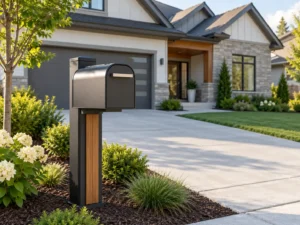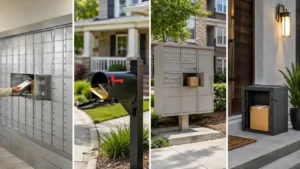
Installation Type
13
Oct
Oct
A mailbox spends every day outside.
It may be exposed to rain, snow, road salt, strong sun, passing vehicles, lawn equipment and people who should not be opening it.
That means a good mailbox needs more than an attractive finish.
It needs the right combination of:
Secure construction
Correct placement
Weather protection
Stable mounting
Suitable materials
Regular maintenance
The best protection also depends on the problem you are trying to prevent.
A locking mailbox can reduce mail theft, but it will not stop a weak post from leaning.
A heavy post may feel strong, but making a roadside mailbox excessively rigid can create a vehicle-safety problem.
And adding sealant everywhere may actually trap water inside instead of keeping mail dry.
This guide explains how to protect a mailbox from the most common risks and how to decide when a more secure mailbox, rear-access design or parcel box makes sense.
Quick Guide: What Are You Protecting Your Mailbox From?
| Risk | Common Problem | Best Starting Point |
|---|---|---|
| Mail theft | Letters removed from mailbox | Locking retrieval compartment |
| Mail fishing | Mail pulled through delivery opening | Anti-fishing internal design |
| Package theft | Parcels left outside | Secure parcel box |
| Vandalism | Door, lock or body damaged | Strong construction and protected hardware |
| Rain | Wet letters or internal rust | Door overlap, drainage and proper sealing |
| Rust | Corrosion and peeling finish | Suitable material and coating maintenance |
| Snowplow damage | Box or post knocked over | Safer placement and extended-arm support |
| Vehicle impact | Bent box or broken post | Correct setback and breakaway-friendly support |
| Loose post | Mailbox leaning | Inspect post and ground connection |
| Coastal exposure | Fast corrosion | Corrosion-resistant materials and regular cleaning |
Start with the actual risk instead of trying to make every mailbox equally heavy, large or complicated.
How to Protect a Mailbox From Theft
Mail theft is different from mailbox vandalism.
With vandalism, someone may damage the box.
With theft, the mailbox may look completely normal while letters, checks or other documents are removed.
The first step is reducing easy access to stored mail.
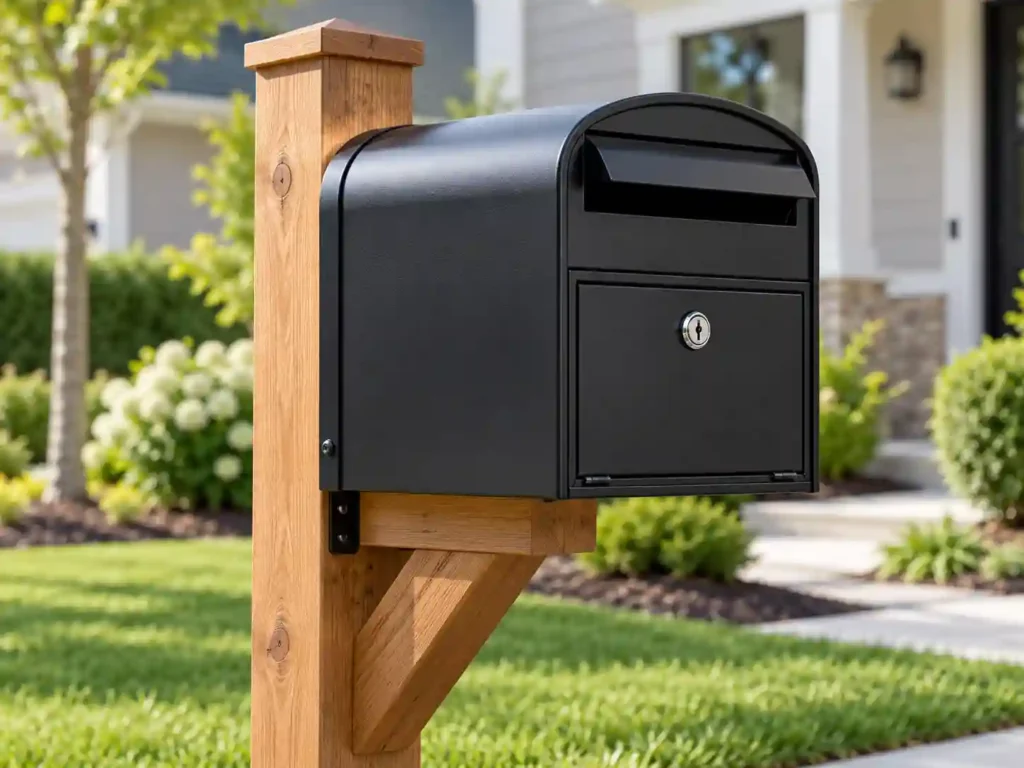
Use a Locking Mailbox
A locking mailbox normally allows mail to be deposited through a delivery opening while the homeowner retrieves it from a separate locked door.
This is useful when:
Mail remains outside for several hours
Nobody is home during delivery
The mailbox is far from the house
Sensitive documents are received
Mail theft has happened nearby
But do not judge security only by the presence of a key lock.
A better locking mailbox also needs:
A strong retrieval door
Protected hinges
A rigid mailbox body
Secure mounting
A delivery opening that does not provide easy hand access
A strong lock attached to a weak door provides limited protection.
Reduce Access Through the Mail Slot
The larger and more direct the opening, the easier it may be to reach inside.
Better security designs may use:
Internal baffles
Angled delivery plates
Drop chutes
Increased distance between the opening and stored mail
The goal is simple:
Mail should go in easily but should not be easy to pull back out through the same opening.
Collect Mail Regularly
Even the best mailbox is safer when mail is not stored in it for long periods.
If possible:
Retrieve mail daily
Do not leave mail for several days when traveling
Avoid allowing the box to become visibly full
Security works best when mailbox design and homeowner habits work together.
Keep the Mailbox Visible
A mailbox completely hidden by bushes may seem private, but it can also give someone more time to tamper with it without being seen.
Where practical, keep the mailbox:
Visible from the property
Clear of excessive vegetation
In a reasonably visible area
Easy to approach safely
Outdoor lighting can also help around mailboxes located near entrances or private access areas.
How to Prevent Mail Fishing
Mail fishing happens when someone reaches through the delivery opening or uses an object to pull mail back out.
This is especially important when checks or sensitive documents may stay inside for several hours.
Use an Internal Anti-Fishing Barrier
An internal plate or baffle can prevent a direct path between the mail slot and storage compartment.
Increase the Drop Distance
If deposited mail falls away from the opening, it becomes more difficult to retrieve from outside.
Keep the Retrieval Compartment Separate
A secure design should separate:
delivery access
from
homeowner retrieval access.
This is one reason purpose-built locking mailboxes can provide better protection than simply adding a padlock to a standard mailbox.
How to Protect a Mailbox From Vandalism
You cannot make an outdoor mailbox completely vandal-proof.
But you can make casual damage more difficult.
Choose a Strong Mailbox Body
For metal mailboxes, look at more than the material name.
Check:
Panel rigidity
Metal thickness
Weld quality
Door construction
Corners and seams
Thin sheet metal can deform around a strong lock.
Protect Hinges and Fasteners
Exposed hardware can become a weak point.
Better designs reduce easy access to:
Hinge pins
Lock fasteners
Mounting screws
Door hardware
If mounting screws can be removed from outside in seconds, the mailbox itself may be secure while its mounting is not.
Mount the Mailbox Securely
A mailbox should not rock when pushed gently.
Check:
Mounting board
Screws
Brackets
Post connection
Loose movement can worsen over time and make impact damage easier.
Do Not Create a Dangerous Roadside Barrier
It may seem logical to protect a mailbox by surrounding it with heavy steel or concrete.
For a roadside mailbox, this can be the wrong approach.
USPS states that curbside supports should be stable but should bend or fall away if struck by a vehicle. USPS/FHWA guidance recommends a wood support no larger than 4 × 4 inches or a standard 2-inch-diameter steel or aluminum pipe, and warns against unyielding supports such as heavy metal or concrete posts.
Protection should not create a new road hazard.
How to Protect a Mailbox From Snowplows
Snowplow damage is a common problem in areas with heavy winter snowfall.
But the blade itself is not always what damages the mailbox.
A mailbox may also be hit by:
Heavy snow thrown from the plow
Packed roadside snow
Ice
Repeated freeze-thaw movement
Check the Mailbox Position First
For curbside delivery, USPS currently recommends placing the bottom of the mailbox or point of mail entry about 41–45 inches above the road surface and the mailbox door approximately 6–8 inches back from the curb or road edge. Local road conditions vary, so USPS recommends contacting the local Post Office where conditions require guidance.
A mailbox positioned too close to the road is more exposed to passing vehicles and snow removal equipment.
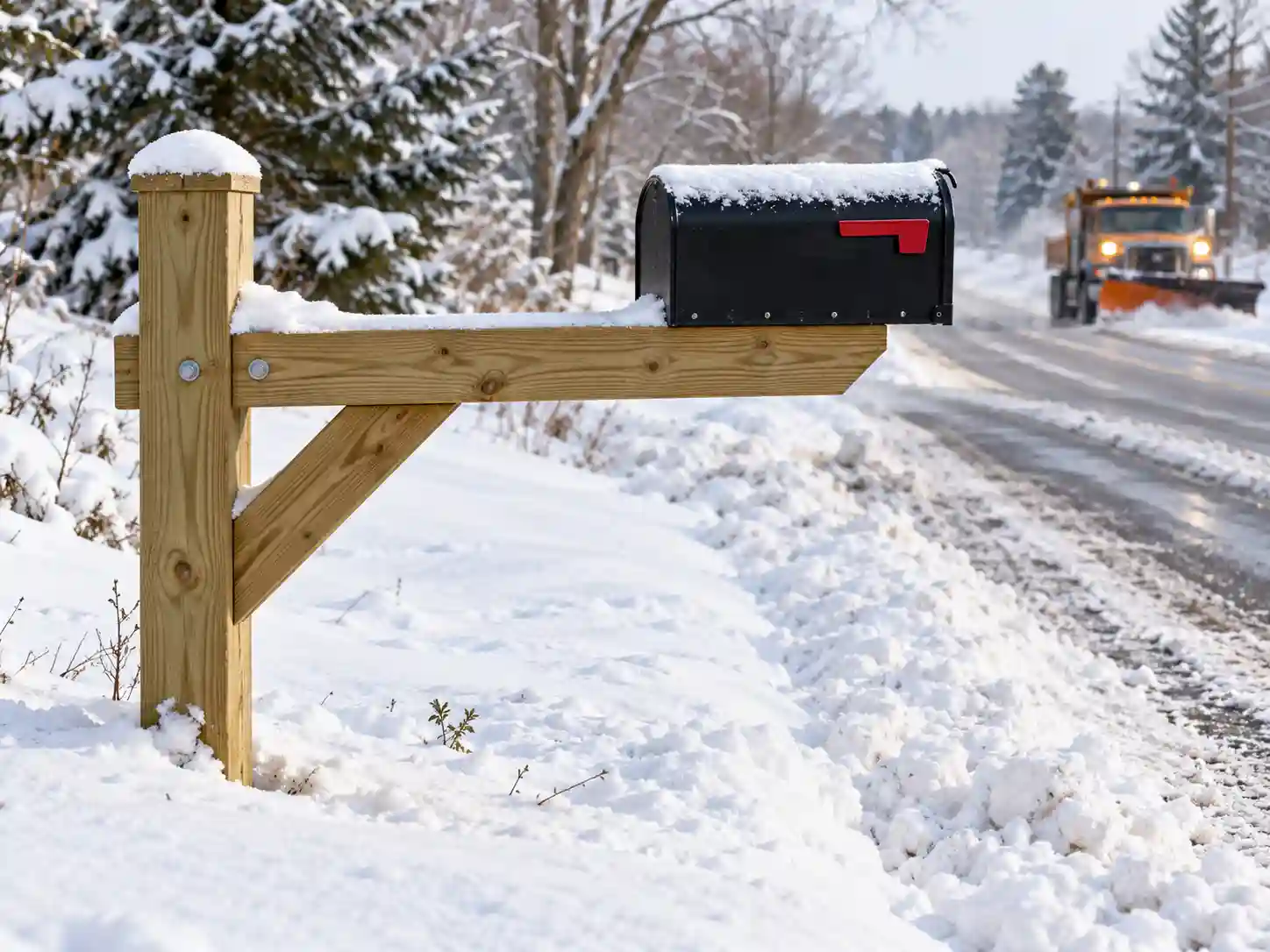
Consider an Extended-Arm Support
In areas where snow removal is a recurring problem, USPS has specifically suggested semi-arch or extended-arm-type supports.
The design allows the support post to stand farther from the immediate plow path while the mailbox extends toward the delivery point.
This can reduce damage without building a rigid roadside obstacle.
Clear Snow Around the Mailbox
After heavy snow:
Remove accumulated snow around the mailbox
Keep the carrier approach clear
Remove hard ice around the post where practical
Check whether the mailbox has shifted
Do not wait until repeated snow pressure has already loosened the post.
Inspect the Post After Winter
Look for:
Leaning
Cracks
Ground movement
Loose mounting hardware
Rot near ground level
Corrosion
A small problem after one winter can become a failed post the next.
How to Keep a Mailbox From Getting Hit by Vehicles
If a mailbox is repeatedly hit, first determine why.
Possible causes include:
Poor visibility
Placement too close to traffic
Tight driveway entrance
Vehicles backing near the mailbox
Snow hiding the mailbox
Landscaping blocking sight lines
Improve Visibility
Where appropriate, make the mailbox easier for drivers to see.
This may involve:
Keeping vegetation trimmed
Maintaining visible house numbers
Keeping the mailbox finish easy to distinguish from the surroundings
Do not add objects that interfere with carrier access or create another roadside hazard.
Check the Roadside Position
Do not move a delivery mailbox randomly.
If the current location repeatedly creates problems, contact the local Post Office before significantly changing its position.
Carrier access still needs to work after relocation.
Avoid the “Fortress Mailbox” Solution
Building a massive concrete base or oversized steel barrier may protect the box but increase danger to vehicles and people.
Roadside mailbox safety is about balancing:
stability + accessibility + impact safety.
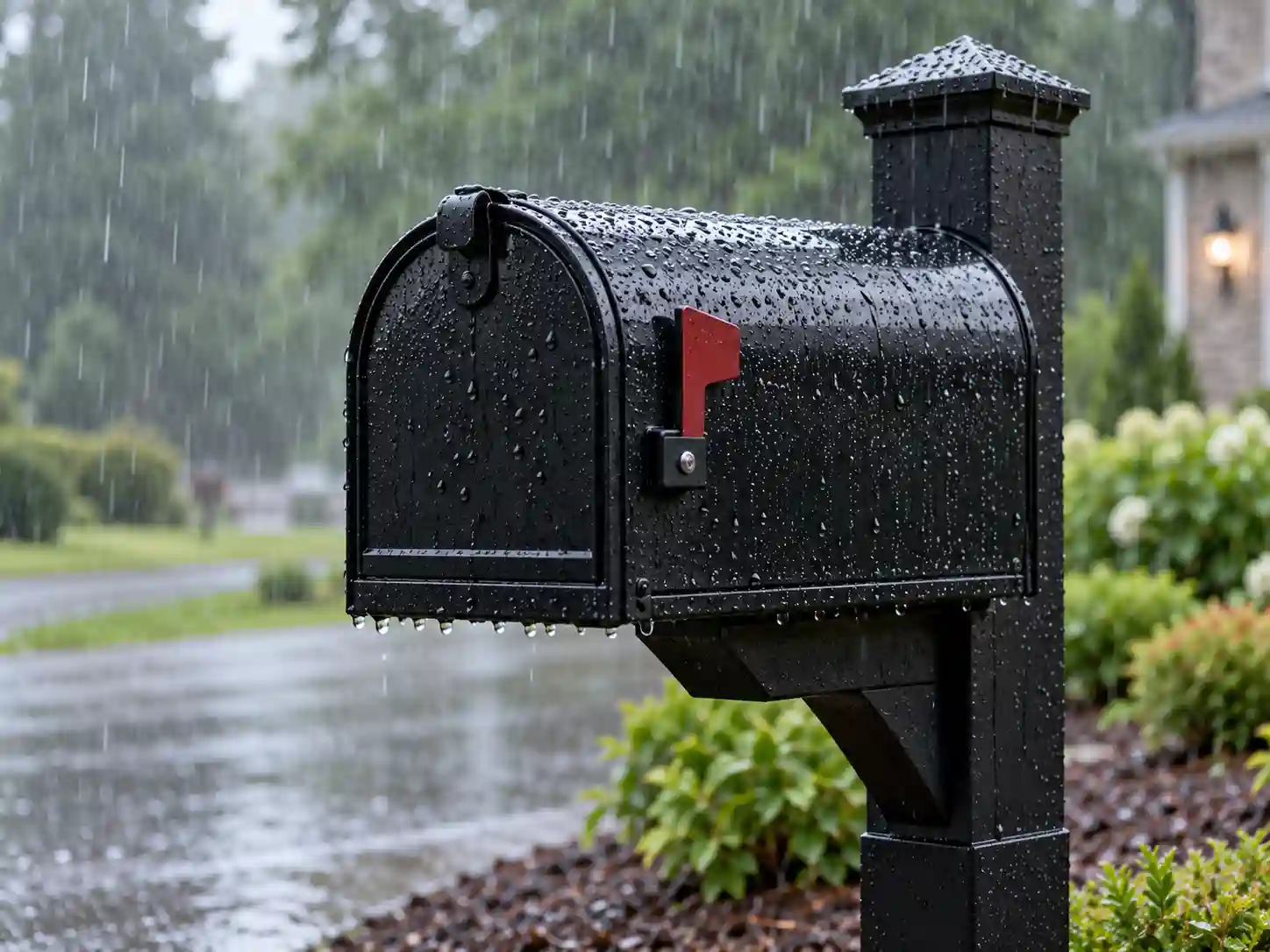
How to Protect a Mailbox From Rain
A mailbox does not need to be completely airtight.
It needs to keep normal rain away from mail while allowing moisture to escape.
Check the Door Overlap
A well-designed door should cover the opening sufficiently when closed.
Look for:
Large gaps
Bent corners
Poor alignment
Weak latch or magnet
If the door cannot close correctly, sealing other areas will not solve the main problem.
Check the Top and Seams
Water commonly enters around:
Top seams
Fasteners
Joints
Damaged welds
Installation penetrations
Inspect after rain to find where the first moisture appears.
Use Sealant Only Where Needed
Outdoor sealant may help around appropriate seams or mounting penetrations.
But do not cover everything.
Avoid blocking:
Drainage holes
Moving hinges
Lock mechanisms
Serviceable fasteners
The goal is controlled water management, not sealing the mailbox into a plastic shell.
Protect Wall-Mount and Recessed Mailboxes
With wall-mounted or recessed units, water may enter around the building opening instead of through the mailbox itself.
Pay attention to:
Flashing
Top protection
Perimeter seal
Wall drainage
Installation slope
A good mailbox cannot compensate for a badly waterproofed wall opening.
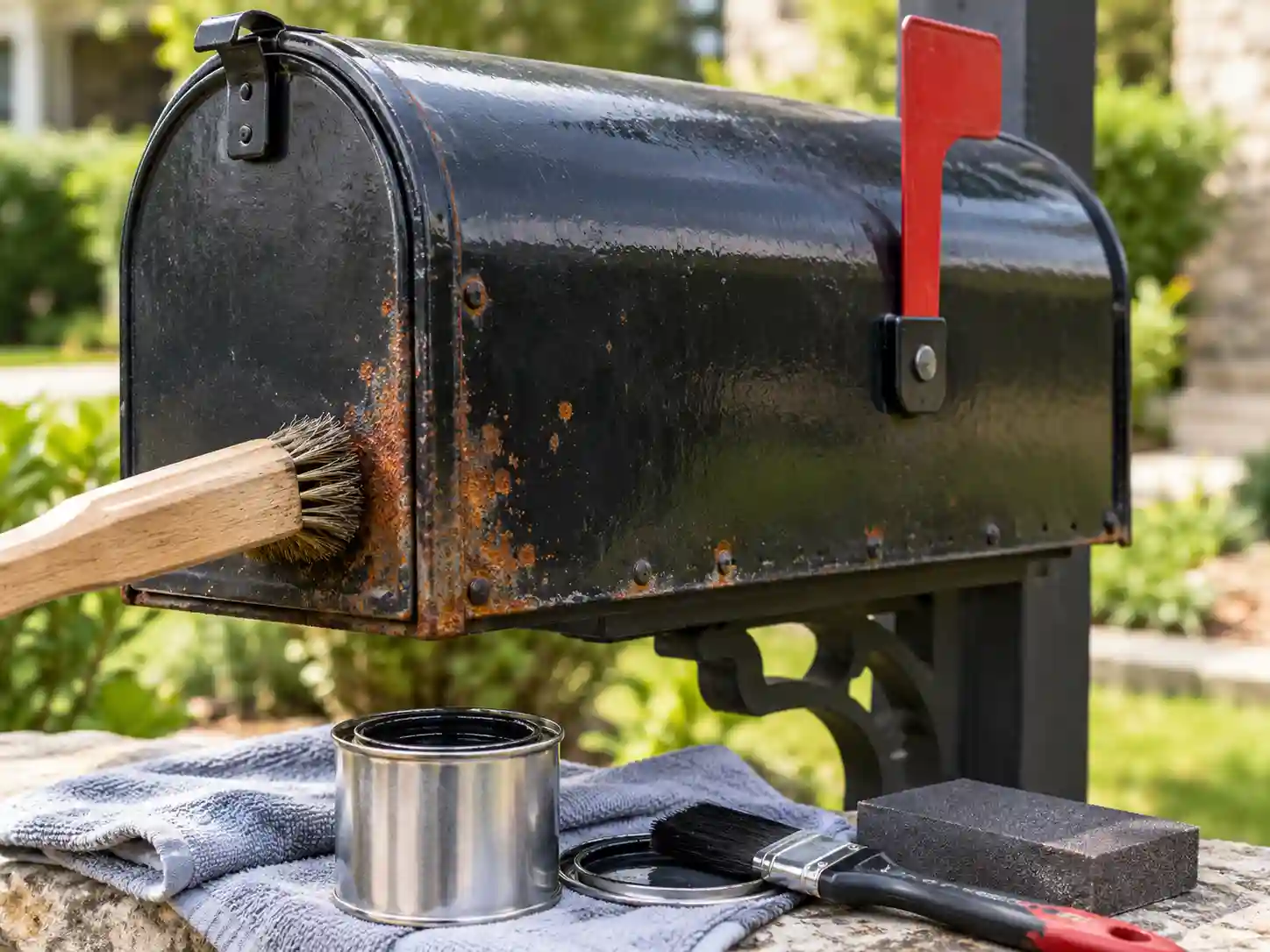
How to Protect a Metal Mailbox From Rust
Rust usually starts where the protective finish has failed.
Common areas include:
Scratched edges
Screw holes
Hinges
Welds
Bottom corners
Areas where water remains
USPS also advises owners to maintain mailbox posts and boxes and keep them rust-free.
Repair Paint Damage Early
Do not wait until a small scratch becomes a large rust patch.
For a steel mailbox:
Clean the damaged area.
Remove loose rust.
Dry the surface.
Apply a suitable primer if required.
Refinish with an outdoor-compatible coating.
Keep the Bottom Dry
Check that water does not stay trapped inside the mailbox.
Standing water speeds up corrosion.
Clean Coastal Salt
Near the coast, salt can accelerate corrosion even when the mailbox never touches seawater.
Periodic fresh-water cleaning can help remove salt deposits from:
Surfaces
Hinges
Door edges
Hardware
Choose Material for the Environment
Common outdoor mailbox materials include:
Powder-Coated Steel
Strong and versatile, but damaged coating should be repaired.
Stainless Steel
Good corrosion resistance, especially when the correct grade and finish are selected.
Aluminum
Lightweight and naturally corrosion resistant, though construction strength still matters.
Material alone does not determine service life.
Design, finish and maintenance are equally important.
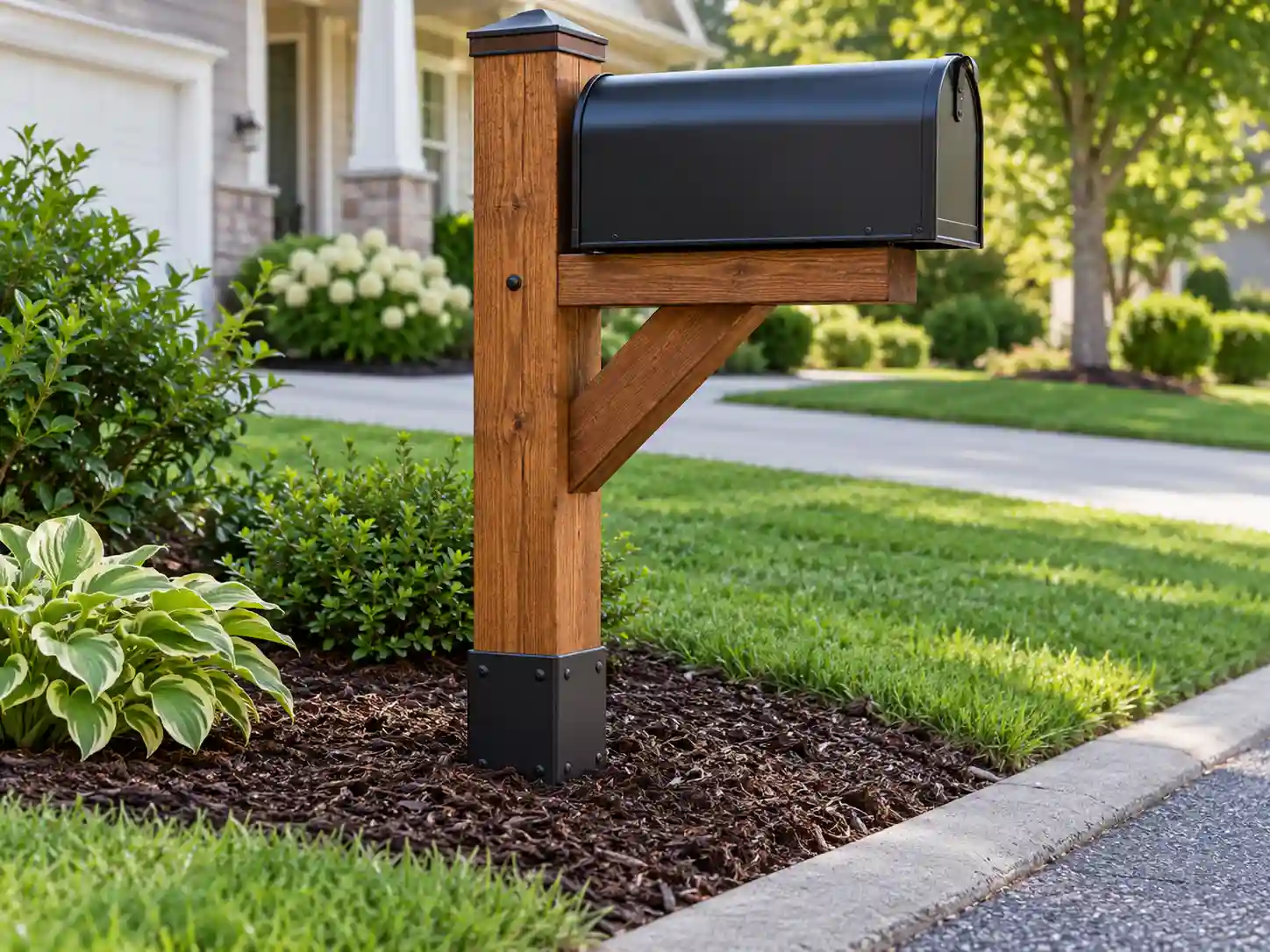
How to Protect a Mailbox Post
The mailbox body may last longer than the post if the support is ignored.
Protect Wooden Posts From Moisture
Inspect the area near ground level.
That is where moisture and decay often become serious.
Look for:
Soft wood
Cracking
Fungal decay
Loose fasteners
Do not simply repaint over rotten wood.
Keep Soil and Mulch Under Control
Avoid piling wet mulch permanently against exposed wood.
Constant moisture can shorten the life of the post.
Check Metal Posts for Corrosion
Inspect:
Ground line
Welds
Scratches
Mounting holes
Touch up damaged coatings before corrosion spreads.
Keep the Support Stable, Not Excessively Rigid
For roadside mailboxes, strength has limits.
USPS guidance emphasizes supports that are adequate for normal use but can yield when struck by a vehicle rather than acting as an unyielding obstacle.
Locking Mailbox vs Rear Access vs Parcel Box
Different risks need different products.
| Need | Better Starting Point |
|---|---|
| Protect letters from theft | Locking mailbox |
| Reduce access through slot | Anti-fishing mailbox |
| Retrieve from inside property | Rear-access mailbox |
| Secure regular packages | Parcel box |
| Mostly letters and magazines | Standard or large mailbox |
| Frequent online shopping | Parcel box |
| Mailbox integrated into fence | Front or rear-access recessed design |
| Roadside retrieval feels unsafe | Consider rear-access layout where suitable |
Do not choose a parcel box only because it is larger.
Choose it because your delivery problem is packages.
Is Rear Access More Secure?
Rear access can improve the way the homeowner uses the mailbox.
For example, a mailbox built into a:
Fence
Wall
Driveway column
Property boundary
can allow the carrier to deliver from the public side while the homeowner retrieves mail from the private side.
This can offer:
More convenient retrieval
Less time standing near traffic
Better integration with a property boundary
But rear access does not automatically make the mailbox theft-proof.
The mailbox still needs:
Strong doors
Good hinges
Appropriate locks
Secure internal construction
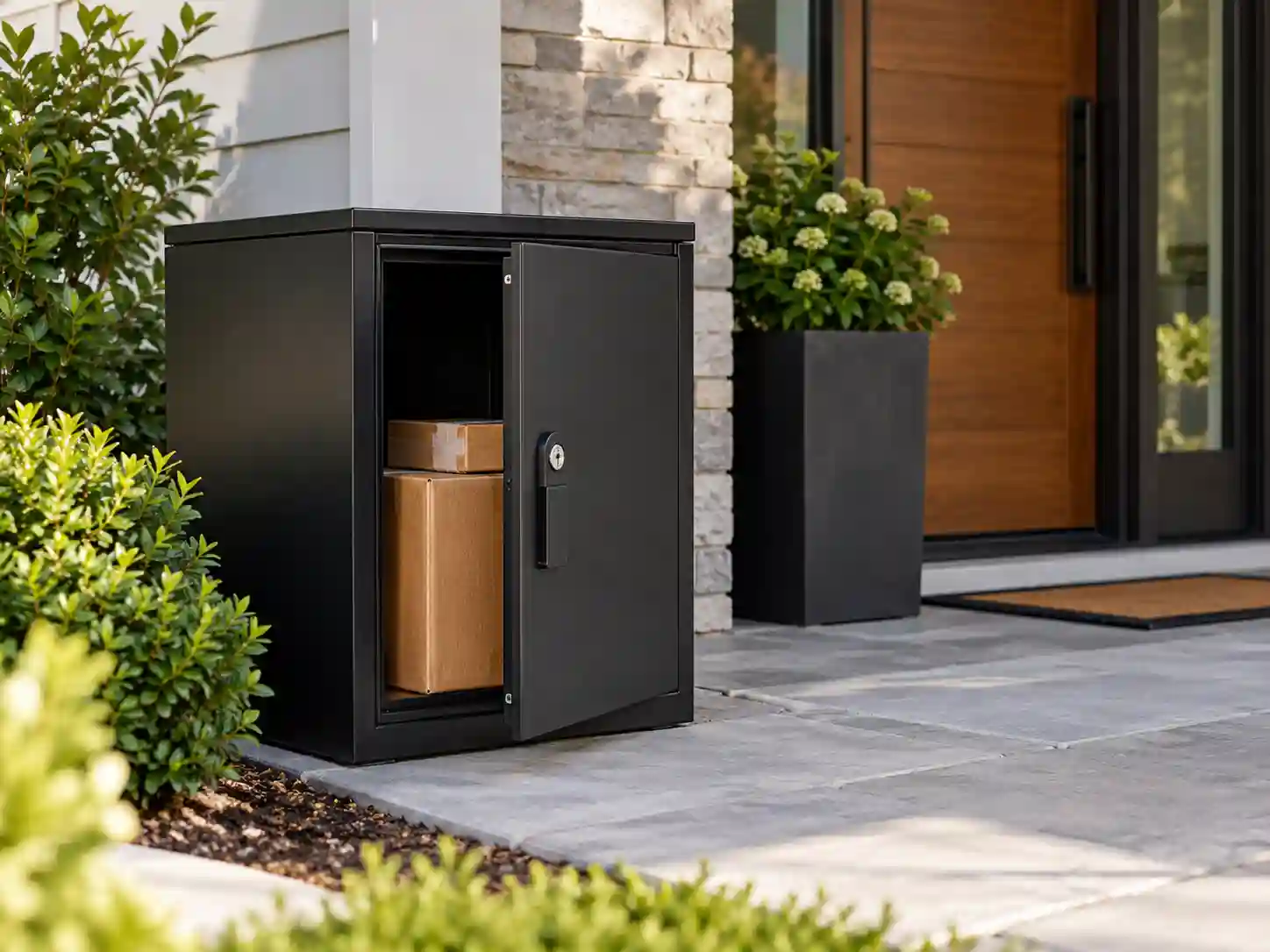
How to Protect Packages From Theft
If the main problem is packages, a normal locking mailbox may not provide enough capacity.
A parcel box can provide:
Larger delivery opening
Protected internal storage
Locked homeowner retrieval
Better weather protection
Less visible package storage
This is especially useful when parcels are otherwise left:
At the front door
Beside the mailbox
Behind a gate
In open view from the street
Check the Package Opening
A parcel box should be large enough for the packages you actually receive.
Measure typical:
Box width
Box height
Box depth
Do not evaluate capacity from the exterior dimensions alone.
Consider Multiple Deliveries
If several packages may arrive before you return home, check whether the design allows another delivery after the first package has been deposited.
This can matter more than maximum single-package size.
Common Mailbox Protection Mistakes
1. Assuming a Lock Makes Any Mailbox Secure
The door, hinges and body also matter.
2. Installing a Heavy Concrete Roadside Post
A rigid roadside obstacle may create a safety hazard.
3. Moving a Curbside Mailbox Without Checking Delivery Requirements
A safer-looking position may no longer work for the carrier.
4. Using Too Much Sealant
Blocking drainage can make water problems worse.
5. Ignoring Small Paint Chips
Small exposed areas can become larger corrosion problems.
6. Letting Bushes Hide the Mailbox
Vegetation can reduce visibility and access.
7. Using a Letter Mailbox for Frequent Packages
The problem is capacity, not security hardware.
8. Forgetting the Post
A strong mailbox on a rotten support is not protected.
9. Making Mounting Hardware Easy to Remove
Security includes the connection between the mailbox and support.
10. Waiting Until Winter to Fix a Loose Post
Snow and ice can quickly make an existing problem worse.
Seasonal Mailbox Protection Checklist
Spring
Check:
Loose post
Winter damage
Rust
Peeling coating
Hinges
Address numbers
Summer
Check:
Sun damage
Vegetation
Insects
Door alignment
Fall
Prepare for:
Rain
Snow
Ice
Strong wind
Tighten loose hardware before winter.
Winter
Keep:
Carrier access clear
Snow away from the box
Ice buildup under control
After storms, check alignment again.
USPS periodically encourages customers to inspect loose hinges, rusting surfaces, loosened posts and address numbers as part of regular mailbox maintenance.
Mailbox Protection Checklist
Before considering the mailbox protected, check all six areas.
Security
Retrieval door locks correctly
Delivery opening does not provide easy access
Hinges are secure
Mounting hardware is protected
Weather
Door closes completely
Top seams are sound
Drainage remains open
No standing water inside
Corrosion
No exposed rust
Paint damage repaired
Hardware inspected
Salt deposits cleaned when necessary
Post
Upright
Stable
No severe rot
No serious corrosion
Roadside Safety
Correct delivery position
Good visibility
No dangerous rigid obstacles
Carrier approach remains clear
Capacity
Mail fits comfortably
Packages are not left exposed
Parcel box considered if needed
Frequently Asked Questions
How Can I Make My Mailbox More Secure?
Start with a locking retrieval door, strong construction, protected hinges and a delivery opening that limits access to stored mail.
Also retrieve mail regularly.
How Do I Protect My Mailbox From Theft?
Use a purpose-built locking mailbox and reduce the ability to reach stored mail through the delivery opening.
Keep the area visible and avoid leaving mail inside for long periods.
How Do I Protect My Mailbox From Vandalism?
Choose stronger construction, secure mounting and protected hardware.
Do not create a dangerous rigid roadside barrier simply to resist vandalism.
How Do I Protect My Mailbox From a Snowplow?
Check that the mailbox is correctly positioned and consider a semi-arch or extended-arm support in areas with recurring snow removal problems.
USPS specifically identifies extended-arm-type supports as an option in snow-removal areas.
Can I Put Concrete Around My Mailbox Post?
It depends on the installation, but for a roadside mailbox you should not create an excessively rigid or dangerous support.
USPS/FHWA guidance favors supports that can yield if struck by a vehicle.
How Do I Keep Rain Out of My Mailbox?
Check the door alignment, top seams, fasteners and installation joints.
Seal actual leak points while keeping drainage openings clear.
How Do I Stop My Mailbox From Rusting?
Keep the finish intact, repair scratches early, remove standing water and clean corrosive deposits such as coastal salt.
Is Stainless Steel Better for Outdoor Mailboxes?
Stainless steel can provide good corrosion resistance, but grade, surface finish, hardware and maintenance still affect long-term performance.
Is Rear Access Safer?
Rear access may allow homeowners to retrieve mail from the property side instead of standing near the road.
However, overall security still depends on the door, lock, hinges and mailbox body.
Will a Locking Mailbox Protect Packages?
Only packages that fit through the delivery system.
For regular package delivery, a purpose-built parcel box is usually more suitable.
Should I Replace an Old Mailbox to Improve Security?
Consider replacement if the existing mailbox has:
Weak construction
A damaged door
Large accessible openings
Severe rust
Repeated lock problems
Insufficient capacity
Adding one stronger lock may not correct all of these issues.
Protect the Mailbox According to the Real Risk
There is no single modification that protects every mailbox.
If theft is the problem, focus on:
locking access and anti-fishing design.
If packages are the problem, focus on:
secure parcel capacity.
If weather is the problem, focus on:
door design, drainage and corrosion resistance.
If snowplows or vehicles are the problem, focus on:
correct placement and safer support design.
And if the mailbox is already badly rusted, loose or repeatedly damaged, protection may no longer be enough.
Replacement may be the more practical solution.
Need a More Secure Mailbox or Parcel Box?
Before choosing a new mailbox, identify the problem you want it to solve.
Send us:
Installation location
Post, wall, fence or column installation
Front or rear access preference
Typical mail and package sizes
Security requirements
Photos or drawings of the installation area
HomeBox Solutions can supply different locking, front-access, rear-access and parcel box configurations for residential and project applications.
Choosing the right structure from the beginning is usually more effective than trying to add security and weather protection after installation.