Installation Type
For most curbside mailbox installations in the United States, position the bottom of the mailbox or the lowest point of mail entry 41 to 45 inches above the road surface.The front mailbox door should normally be placed 6 to 8 inches back from the curb or road edge.These measurements help the mail carrier reach the box safely without leaving the vehicle. However, road shoulders, drainage ditches, snow routes, and unusual curbs can affect the correct location. USPS recommends contacting the local Post Office before installing or replacing a curbside mailbox.
Contents
hide
Quick Answer: Standard Mailbox Height and Placement
| Installation Detail | General USPS Guidance | Measurement Point |
|---|---|---|
| Curbside mailbox height | 41–45 inches | Road surface to the bottom of the mailbox or point of mail entry |
| Distance from curb | 6–8 inches | Front face of curb or road edge to the closed mailbox door |
| Wooden mailbox support | 4 × 4 inches | Maximum recommended wooden support size |
| Metal mailbox support | About 2 inches in diameter | Standard steel or aluminum pipe |
| Post burial depth | No more than 24 inches | Ground level to bottom of support |
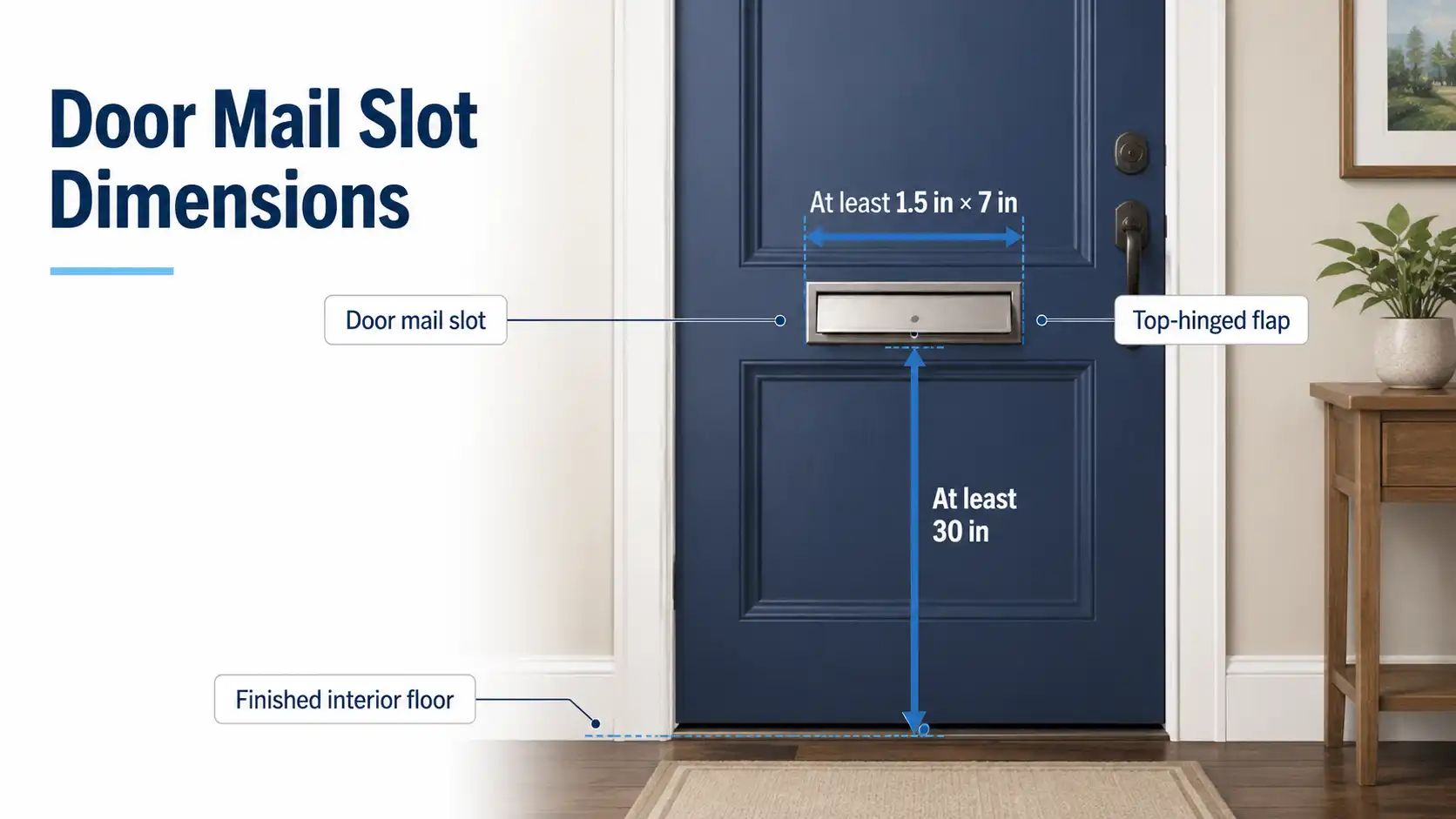
| Door mail slot height | At least 30 inches | Finished interior floor to bottom of slot |
| Door mail slot opening | At least 1½ × 7 inches | Clear opening in the outside slot plate |
The 41-to-45-inch rule applies mainly to curbside mailboxes served from the road. It should not automatically be used for wall-mounted mailboxes, parcel boxes, office mail systems, or centralized apartment mailboxes.
What Is the Standard Height of a Mailbox?
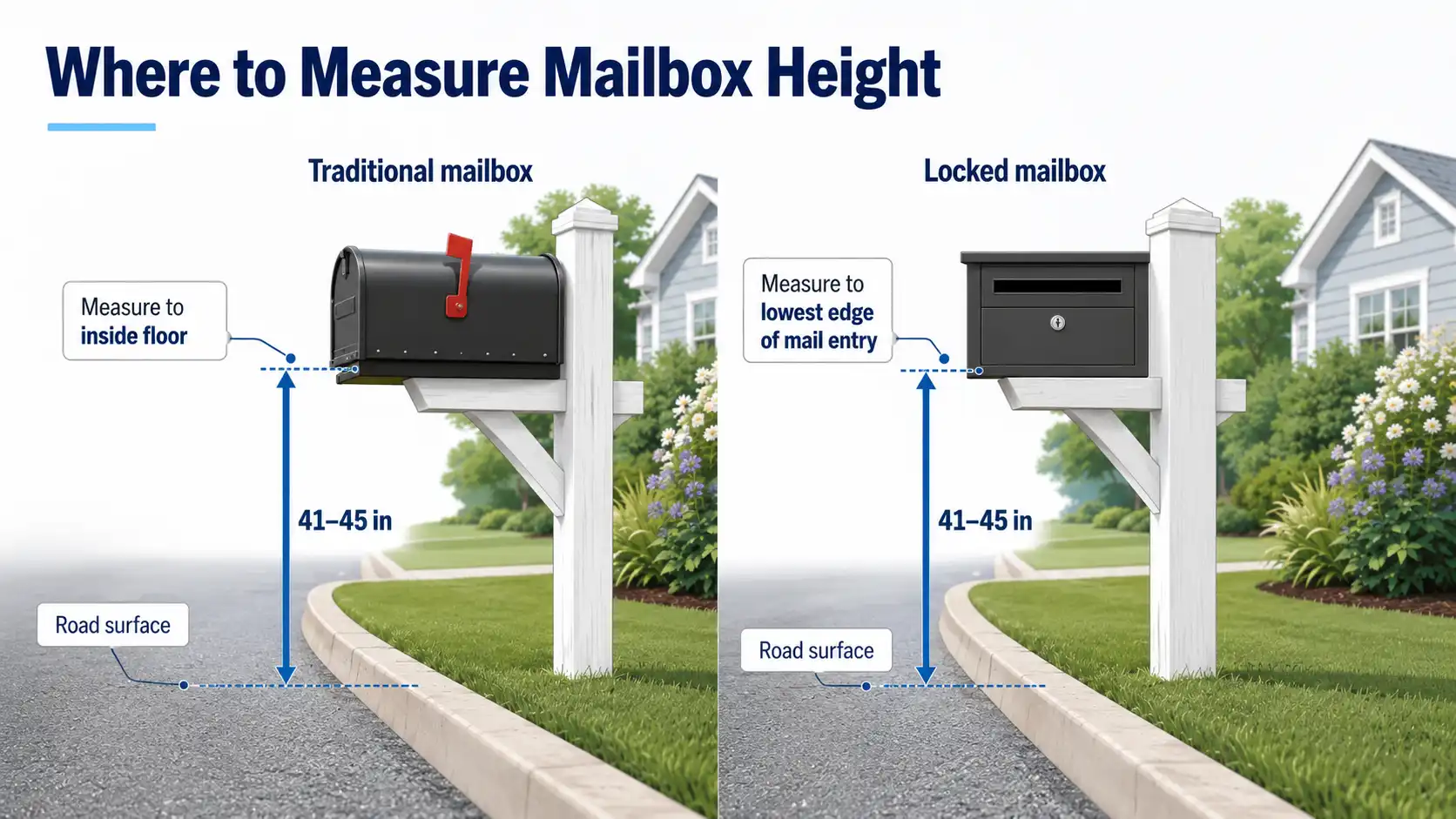
The standard height for a curbside mailbox is generally between 41 and 45 inches above the road surface.However, you should not measure to the top of the mailbox.The correct measuring point depends on the design.
Traditional Curbside Mailbox
For a traditional mailbox with a front-opening door, measure from the road surface to the bottom or inside floor of the mailbox.This is the level where the mail is placed.
Locked Curbside Mailbox
For a locking mailbox with a delivery slot, measure from the road surface to the lowest edge of the mail-entry opening.Do not measure to:
- The mailbox roof
- The center of the door
- The top of the post
- The lawn beside the road
- The sidewalk behind the mailbox
USPS-STD-7C also states that mailbox installation instructions must tell users to measure from the road surface to the inside mail-supporting surface or the lowest edge of mail entry on a locked design.
How to Measure Mailbox Height Correctly
A mailbox can appear to be at the right height but still fail because the measurement started from the wrong place.Use the following process.
1. Identify the Carrier’s Approach
First, confirm the direction from which the mail carrier reaches the mailbox.The door should face the carrier’s normal approach. The carrier should be able to open the box, place mail inside, and close it safely.On applicable motorized routes, USPS requires the mailbox to be positioned so it can be served safely and conveniently from the vehicle. Current USPS guidance also says that mailboxes should be on the right-hand side in the carrier’s direction of travel where crossing traffic would be unsafe or illegal.
2. Start at the Road Surface
Place the end of the tape measure on the road surface beside the planned mailbox location.Do not start from:
- Grass
- Gravel above the road
- The top of the curb
- A raised planting bed
- The post foundation
- A nearby sidewalk
The road surface is the reference because that is where the carrier’s vehicle travels.
3. Measure to the Mail-Entry Level
Measure vertically to:
- The bottom or inside floor of a traditional mailbox; or
- The lowest edge of the mail slot on a locked mailbox.
The result should generally fall between 41 and 45 inches.
4. Check the Curb Setback
Measure horizontally from the front face of the curb or road edge to the closed mailbox door.The normal setback is 6 to 8 inches.
5. Test the Mailbox Before Fixing the Post
Temporarily position the mailbox before completing the foundation.Open and close the door several times.Check that:
- The carrier can reach the opening
- The door opens fully
- The flag can move freely
- The mailbox does not extend into traffic
- The post does not block the door
- Plants and bins will not block access
- The mailbox remains level when loaded
This step is especially important for large locking mailboxes because their doors and bodies are often deeper than traditional curbside models.
How Far Should a Mailbox Be From the Curb?
The front mailbox door should generally be positioned 6 to 8 inches behind the curb or road edge.Measure to the front of the closed door—not to the post.This distinction matters because the post may be behind the mailbox body. Measuring to the post could leave the mailbox too far from the carrier.
What If There Is No Raised Curb?
When there is no concrete curb, use the edge of the road surface as the general reference.If the road edge is unclear, USPS recommends asking the local postmaster for guidance.
What If There Is a Drainage Ditch?
Do not place the support directly in a drainage channel without reviewing the site.A side-mounted or extended-arm support may allow the post to remain away from the ditch while positioning the mailbox at the correct delivery line.The design should consider:
- Water flow
- Soil erosion
- Road maintenance
- Door access
- Support stability
- Vehicle safety
What About Snowplows?
In areas with heavy snow removal, USPS suggests a semi-arch or extended-arm support. This allows snow-clearing equipment to pass closer to or under the mailbox without striking the main support.Do not raise the mailbox above the normal height simply because snow may collect around it. Confirm any unusual installation with the local Post Office.
What Size Should a Mailbox Post Be?
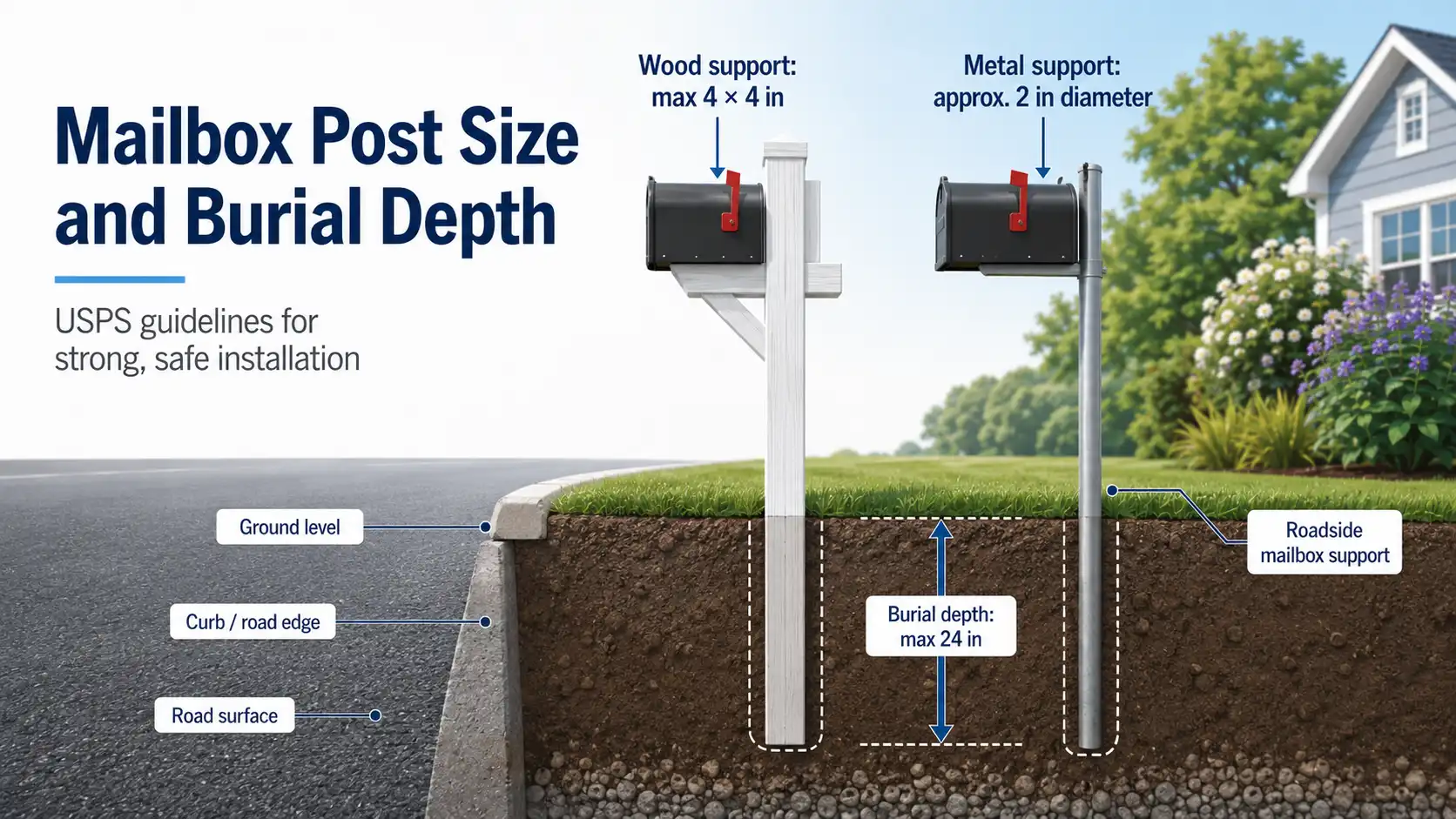
A mailbox support needs to be stable, but it should not become a rigid roadside hazard.USPS cites Federal Highway Administration recommendations for:
- A 4 × 4-inch wooden support
- A 2-inch-diameter standard steel or aluminum pipe
- A burial depth of no more than 24 inches
USPS also advises avoiding heavy, unyielding supports such as large metal pipes, concrete posts, or equipment filled with concrete.
Wooden Mailbox Posts
A 4 × 4-inch wooden post is a common choice for one residential curbside mailbox.It is easy to:
- Cut
- Drill
- Paint
- Replace
- Connect to standard mounting brackets
For outdoor use, confirm the wood treatment, soil condition, mounting hardware, and expected mailbox weight.A large locking mailbox may need a stronger bracket even when the vertical post remains 4 × 4 inches.
Metal Mailbox Posts
Steel and aluminum posts are often used for modern mailbox designs.Advantages may include:
- Slim appearance
- Powder-coated finish
- Prefabricated brackets
- Easier alignment
- Better compatibility with multiple mailbox arms
Do not use an oversized steel pipe simply because it appears stronger. Roadside safety is different from a private foundation away from traffic.
How Deep Should a Mailbox Post Be?
USPS installation guidance recommends burying the post no more than 24 inches.The exact installation still needs to consider:
- Soil type
- Frost conditions
- Wind exposure
- Mailbox weight
- Support-arm length
- Underground utilities
- State and local road rules
A freestanding parcel box installed near a house is a different product. It may be bolted to a reinforced concrete pad because it is not intended to function as a breakaway roadside mailbox support.
Should a Mailbox Post Be Set in Concrete?
Concrete can help stabilize some posts, but the goal should not be to create the strongest possible roadside obstacle.Before using concrete, check:
- Whether local rules allow the proposed support
- The recommended burial depth
- Whether the support should remain breakaway
- Drainage around the post
- Underground utility locations
- Whether the mailbox may need future replacement
Large masonry columns, heavily reinforced foundations, or concrete-filled steel posts may require local approval.For decorative projects, the visible column and the actual mailbox support can sometimes be designed as separate elements.
How High Should a Wall-Mounted Mailbox Be?
There is no single national mounting height that applies to every wall-mounted mailbox.USPS advises placing wall-mounted mailboxes near the main entrance where the carrier can see and reach them easily. Wall-mounted mailboxes are not required to carry the Postmaster General approval seal, but changing from curbside delivery to a wall-mounted box requires local postmaster permission.The installation height should allow:
- Easy carrier access
- Comfortable customer retrieval
- Full lid or door movement
- Clear house-number visibility
- Protection from rain
- Space above paths and steps
- Safe access without reaching across plants or railings
Wall-Mounted Mailbox Installation Checklist
Before drilling into the wall, confirm:
- The wall can hold the mailbox when full
- The mail opening is easy to reach
- The retrieval door opens fully
- The mailbox does not block the entrance
- Water can drain from the bottom
- The lock is easy to operate
- Large envelopes can enter without folding
- Screws will not hit hidden pipes or wiring
Hold the mailbox in the intended position and test it before marking the fixing holes.
How High Should a Door Mail Slot Be?
A door mail slot follows different rules from a curbside mailbox.USPS requires the clear outside opening to be at least:
- 1½ inches wide
- 7 inches long
The bottom of the slot must be at least 30 inches above the finished interior floor.Horizontal slots must use a top-hinged flap. Vertical slots must be hinged on the side opposite the door hinges.The measurement starts from the finished indoor floor—not the porch, step, or outdoor paving.Also check:
- Door thickness
- Weather sealing
- Privacy hood
- Security
- Interior mail collection
- Door fire rating
- Space behind the door
The door slot should allow mail to fall clear of the opening so that the next delivery does not remain exposed.
How High Should a Parcel Box Be?
A private parcel box does not have one universal installation height.Unlike a curbside mailbox, it must work for both:
- The courier delivering a package
- The customer removing the package
The correct height depends on the parcel-box design and the packages it is expected to receive.
Delivery-Opening Height
The courier should be able to open the delivery door while holding the package.An opening that is too high can be difficult when the package is heavy or needs two hands.An opening that is too low can force the courier to bend down while controlling the parcel door.
Retrieval-Door Height
Customers should be able to unlock and remove packages without excessive bending or lifting.Check the height of:
- The lock
- The bottom of the storage chamber
- The door threshold
- The largest stored package
A lock at a comfortable height does not guarantee that a heavy package at the bottom will be easy to remove.
Internal Drop Distance
A package may pass through:
- A top door
- A rotating tray
- A sloped shelf
- An anti-fishing baffle
- A lower storage chamber
The full path should be tested with real package sizes.A very tall box may provide more storage but also create a longer drop. That can be unsuitable for fragile deliveries.
Freestanding Parcel Boxes
A freestanding parcel box is commonly fixed to a solid base.Before confirming the height, check:
- Delivery-door height
- Retrieval-door height
- Maximum parcel size
- Maximum parcel weight
- Foundation level
- Door-opening direction
- Path access
- Rainwater drainage
- Theft-resistant anchoring
Do not automatically position a parcel box at the 41-to-45-inch curbside height unless it is specifically intended and approved for that type of postal delivery.
Curbside Mailbox vs. Parcel Box Placement
| Installation Factor | Curbside Mailbox | Private Parcel Box |
|---|---|---|
| Main purpose | USPS letters and mailpieces | Packages from couriers or delivery services |
| Main height reference | Road surface | Courier and customer access |
| Common location | Roadside or curb | Entrance, wall, gate, porch, or driveway |
| Standard height | Generally 41–45 inches | Depends on product and user needs |
| Curb setback | Generally 6–8 inches | Usually not applicable |
| Support | Breakaway-style roadside post | Wall, post, pedestal, or concrete base |
| Main safety issue | Vehicle and carrier access | Package handling, anchoring, and user access |
| Approval issue | USPS requirements may apply | Property, building, and project requirements |
This difference is important for product pages and installation instructions.A parcel box should not be described as a curbside USPS mailbox only because it is installed near the road.
Mailbox Height for Multifamily Properties
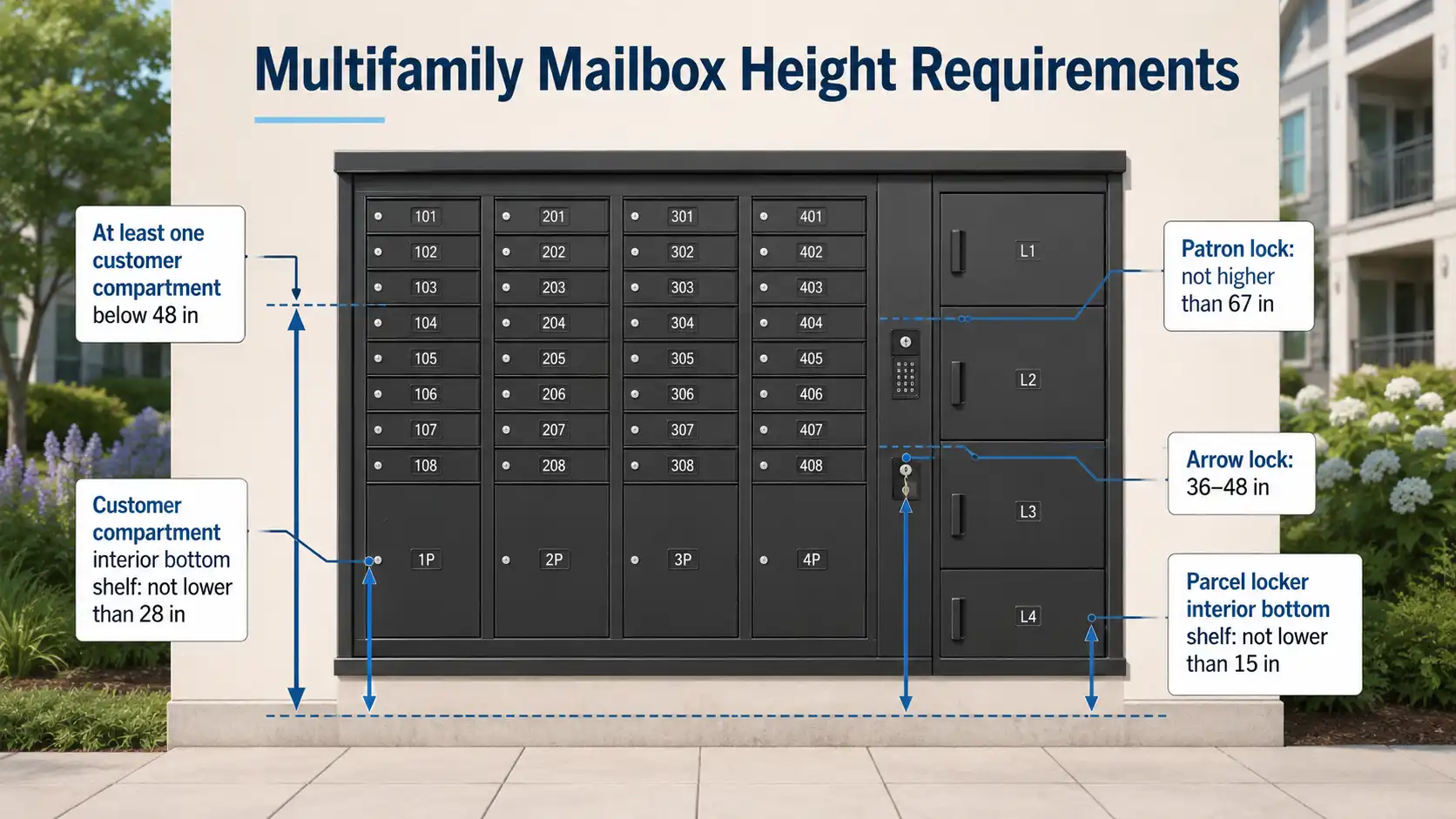
Multifamily mailbox projects need more planning than a single residential mailbox.USPS states that new or remodeled apartment buildings must use approved centralized mailbox equipment. Current USPS planning guidance identifies approved pedestal-mounted cluster box units and wall-mounted USPS-STD-4C mailboxes as the main centralized equipment types for new construction.USPS’s current apartment-community guidance also calls for at least one parcel locker for every five mailbox compartments in new or remodeled apartment projects.The system layout should be reviewed before the wall opening or concrete base is completed.Important measurements include:
- Finished floor level
- Overall unit height
- Lowest customer compartment
- Highest customer lock
- Parcel-locker position
- Carrier access
- Front or rear loading
- Door-opening clearance
- Space for users waiting nearby
Do not use a private custom cabinet as a USPS centralized mailbox unless the equipment has the required approval.
Mailbox Placement by Project Type
Your website includes six main Solution categories. Each one has different installation priorities.
Office Mailbox Solutions
An office mailbox may receive documents, catalogs, samples, and small packages.The installation should consider:
- Staff collection height
- Security
- Front or rear access
- Package frequency
- Department separation
- Whether someone is present during delivery hours
USPS notes that businesses and offices open with someone available to receive mail may not require a separate receptacle or door slot.For after-hours delivery, a locking mailbox or combined mail-and-parcel system may be more useful.
Multifamily Mailbox Solutions
Multifamily systems require approved equipment where USPS delivery applies.Plan the mailbox and parcel-locker layout together rather than adding parcel lockers after the mailboxes have been installed.The design should allow:
- Carrier access
- Tenant access
- Clear unit numbering
- Accessible compartments
- Parcel collection
- Future maintenance
Retail Mailbox Solutions
Retail stores may receive invoices, samples, replacement parts, and small orders.A rear-access mailbox can allow delivery from outside while staff retrieve items from inside.The opening should not be hidden behind customer displays, waste bins, or locked gates.
University Mailbox Solutions
Universities and student housing often experience strong parcel peaks during move-in periods and holidays.A good layout should combine:
- Individual mail compartments
- Shared parcel lockers
- Clear identification
- Staff management access
- Oversized-package procedures
The project should be sized for peak delivery periods, not only an average week.
Hospitality Mailbox Solutions
Hotels and serviced apartments may need to manage mail for guests, staff, and different departments.Useful features include:
- Front delivery
- Rear staff retrieval
- Temporary user labels
- Mixed compartment sizes
- Secure parcel storage
- Finishes that match the lobby
The installation height should support the property’s operating process, not just its appearance.
Architect Mailbox Solutions
Architects should coordinate the mailbox system before finalizing walls, gates, cabinets, and floor finishes.The project drawing should show:
- Finished floor level
- Overall product dimensions
- Delivery-opening height
- Retrieval-door height
- Door swing
- Front and rear clearance
- Wall or base fixings
- Electrical needs for smart systems
A mailbox can fit the wall opening but still fail if the doors cannot open or the user locks are difficult to reach.
Common Mailbox Installation Mistakes
Measuring From the Lawn
For curbside mailboxes, start from the road surface.
Measuring to the Mailbox Roof
The height applies to the bottom of the mailbox or the mail-entry point, not the top.
Measuring the Setback to the Post
Measure the 6-to-8-inch setback to the front mailbox door.
Installing the Box Too Far From the Carrier
A mailbox placed too far behind the curb may be difficult or unsafe to reach from the vehicle.
Using an Oversized Support
A larger metal or concrete support is not automatically safer near the road.
Forgetting Door Clearance
The mailbox may be at the correct height but still be unusable because the door hits the wall, post, fence, or landscaping.
Applying Curbside Rules to Every Product
Wall-mounted mailboxes, parcel boxes, and centralized systems have different installation needs.
Ignoring the Finished Floor Level
In commercial projects, tile, screed, stone, or raised flooring can change the final height of every lock and compartment.
Installing Before Postal Review
For new curbside or centralized USPS delivery, confirm the proposed equipment and location before completing construction.
Mailbox Installation Checklist
Curbside Mailbox
- Confirm the location with the local Post Office
- Use approved equipment where required
- Measure from the road surface
- Set the bottom or mail entry at 41–45 inches
- Set the door 6–8 inches behind the curb or road edge
- Check the carrier’s approach
- Use a suitable roadside support
- Test the door and signal flag
- Keep access clear
Wall-Mounted Mailbox
- Confirm the authorized delivery method
- Check wall strength
- Select a comfortable opening height
- Leave space for the lid and retrieval door
- Make the mailbox easy to see
- Keep the house number visible
- Protect the opening from rain
- Check for hidden utilities
Parcel Box
- Measure the largest regular package
- Check delivery-opening height
- Check retrieval-door height
- Test the full parcel path
- Confirm package weight
- Leave enough door clearance
- Fix the unit securely
- Check drainage
- Plan for future parcel volume
Multifamily Mailbox System
- Confirm approved equipment requirements
- Review the layout with USPS representatives
- Confirm the finished floor level
- Check customer and parcel access
- Plan front or rear loading
- Check carrier working space
- Coordinate wall openings and foundations
- Complete the review before construction
Frequently Asked Questions
How high should a curbside mailbox be?
A curbside mailbox should generally be 41–45 inches above the road surface, measured to the bottom of the mailbox or the point of mail entry.
Is mailbox height measured from the ground or the road?
For curbside installation, measure from the road surface beside the mailbox rather than from the grass or post foundation.
Is mailbox height measured to the top or bottom?
Measure to the bottom of a traditional mailbox or the lowest point of mail entry on a locked mailbox.
How far should a mailbox be from the curb?
The front mailbox door should generally be 6–8 inches behind the curb or road edge.
Can a mailbox be higher than 45 inches?
Unusual road, drainage, snow, or curb conditions may require a different position. Confirm any exception with the local Post Office.
What size should a wooden mailbox post be?
USPS cites a 4 × 4-inch wooden support as the recommended roadside option.
What size should a metal mailbox post be?
USPS cites a standard steel or aluminum pipe approximately 2 inches in diameter.
How deep should a mailbox post be?
USPS guidance recommends burying a roadside mailbox support no more than 24 inches.
How high should a wall-mounted mailbox be?
There is no single required height for every wall-mounted mailbox. Place it near the main entrance where the carrier can see and reach it easily, and confirm the authorized delivery method with the local Post Office.
How high should a parcel box be?
The correct parcel-box height depends on the delivery opening, package weight, courier access, storage chamber, and customer retrieval door.
How high should a door mail slot be?
The bottom of the slot must be at least 30 inches above the finished interior floor. The clear opening must be at least 1½ inches by 7 inches.
Should I contact USPS before installing a mailbox?
Yes. USPS recommends contacting the local Post Office before installing or replacing a curbside mailbox because routes, roads, curbs, and other local conditions vary.
Final Thoughts
For a typical U.S. curbside mailbox, remember two measurements:
- 41–45 inches from the road surface to the bottom of the mailbox or mail-entry point
- 6–8 inches from the curb or road edge to the front mailbox door
But these numbers do not apply to every mailbox product.Wall-mounted mailboxes should be positioned for easy carrier and customer access. Parcel boxes should be designed around package weight, delivery opening, drop path, and retrieval height. Multifamily systems must be planned around approved equipment, carrier access, tenant use, and the finished building layout.For OEM and project orders, Home Box Solutions can customize:
- Overall mailbox height
- Letter and parcel opening positions
- Front or rear retrieval
- Post and pedestal structures
- Through-wall configurations
- Compartment layouts
- Locking systems
- Metal thickness
- Powder-coated finishes
- Logos and address plates
- Private-label packaging
Send us your installation drawing, road or finished floor level, target opening height, product dimensions, application, and estimated quantity. Our team can review the layout and recommend a suitable mailbox, parcel box, or custom mail-delivery system.
Popular Parcel Box and Letterbox Products
Choose from existing product styles or develop your own custom series.
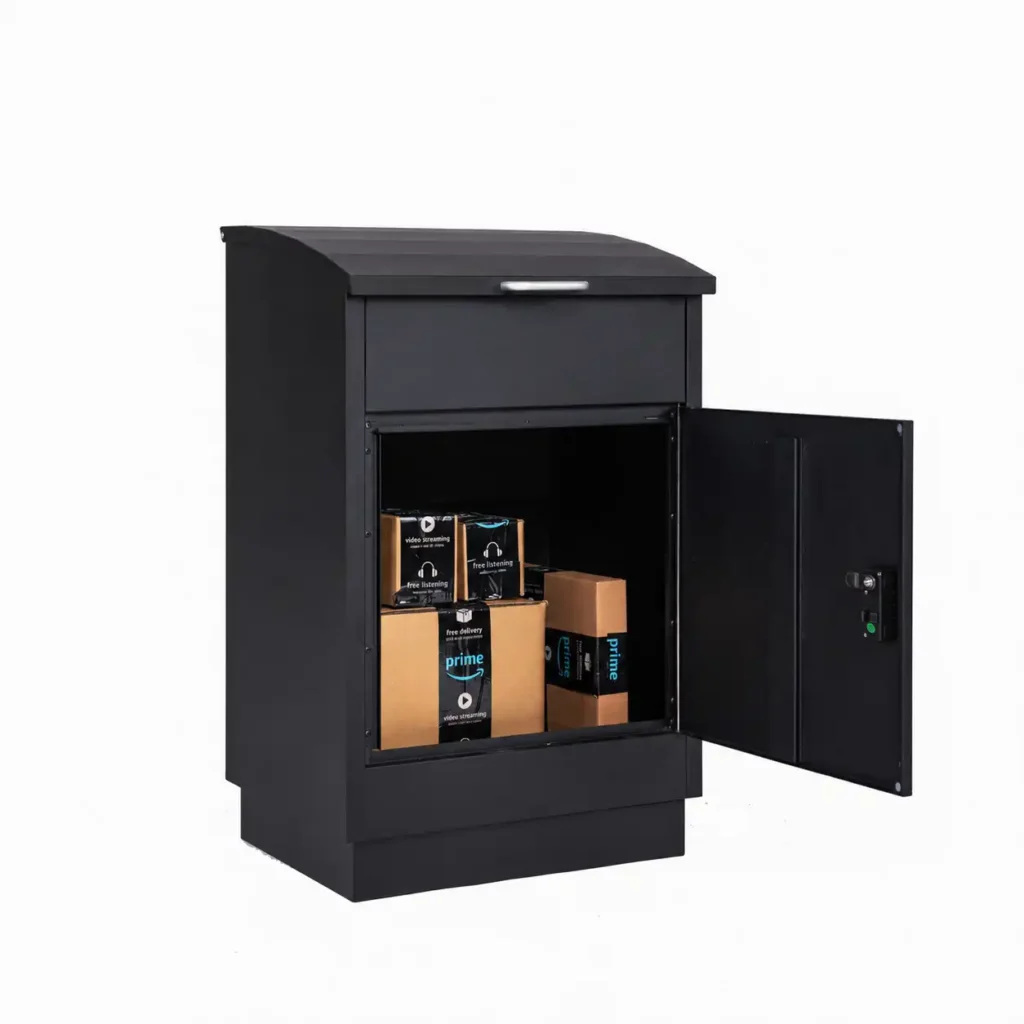
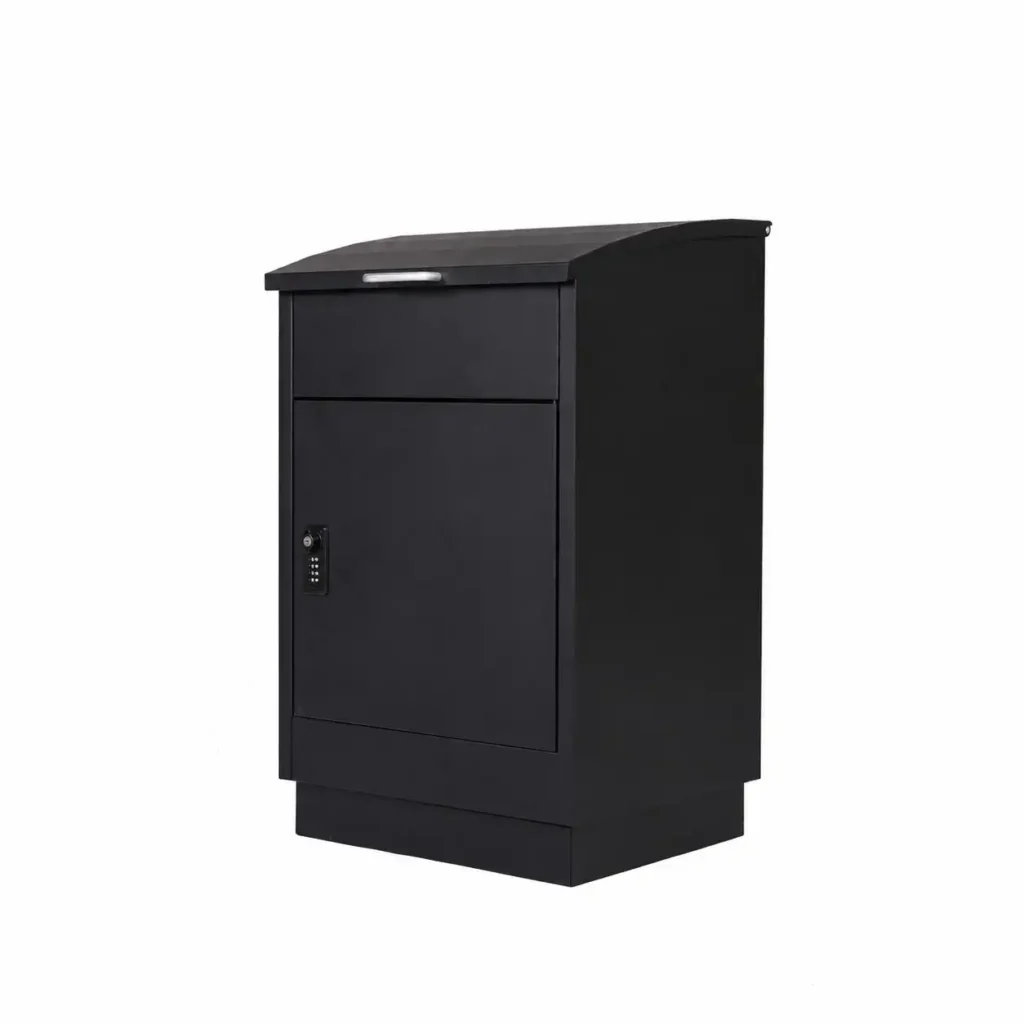
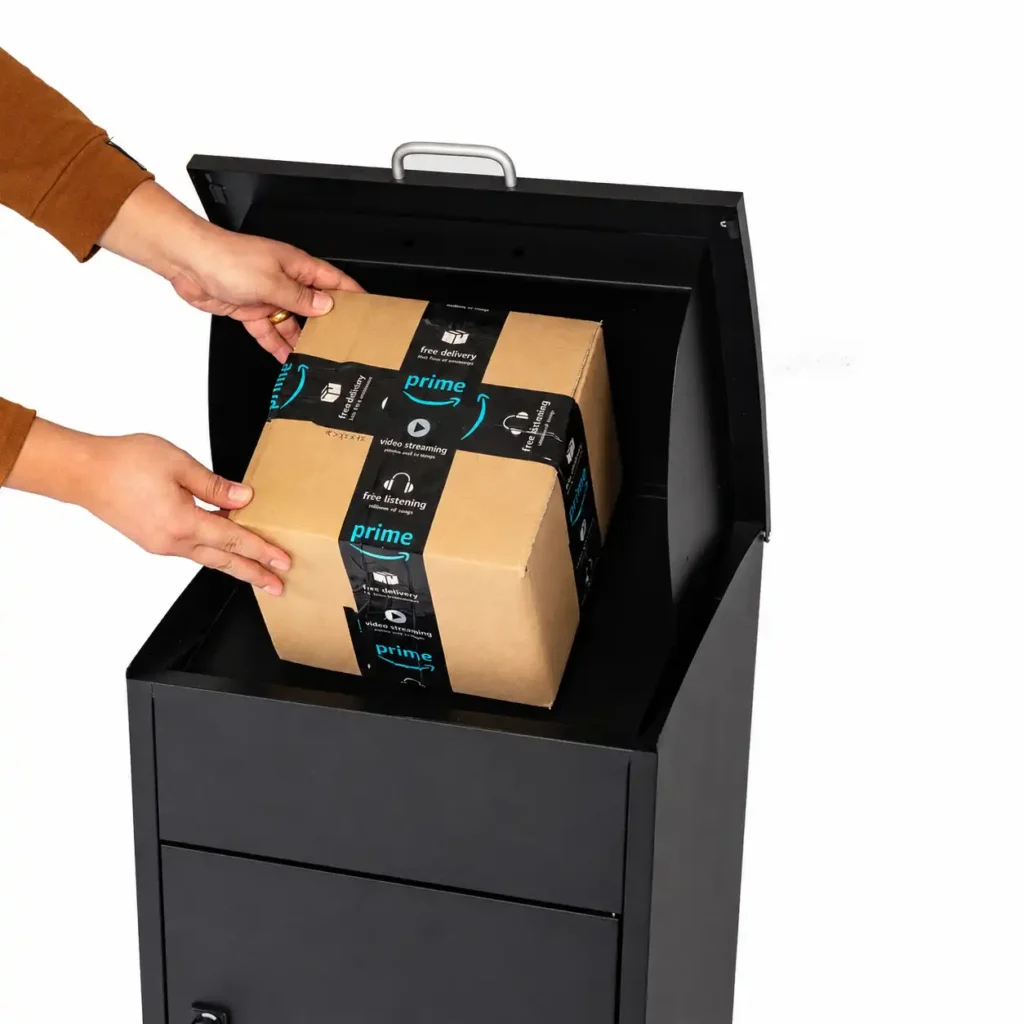
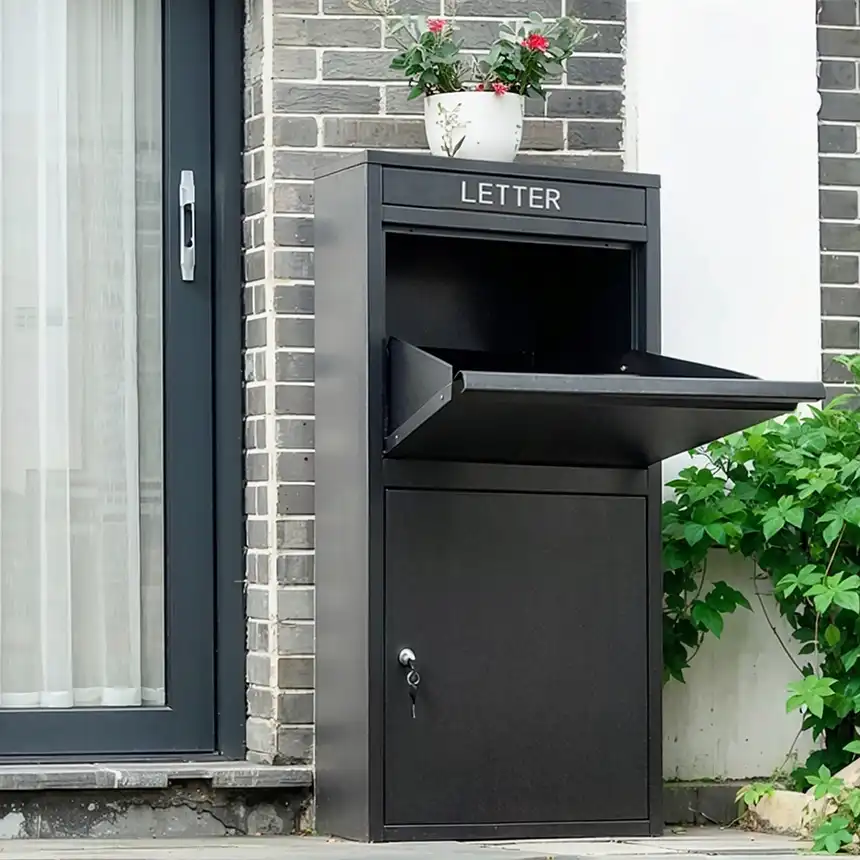
Extra Large Parcel Boxes
High-capacity parcel boxes for oversized packages and busy delivery locations.
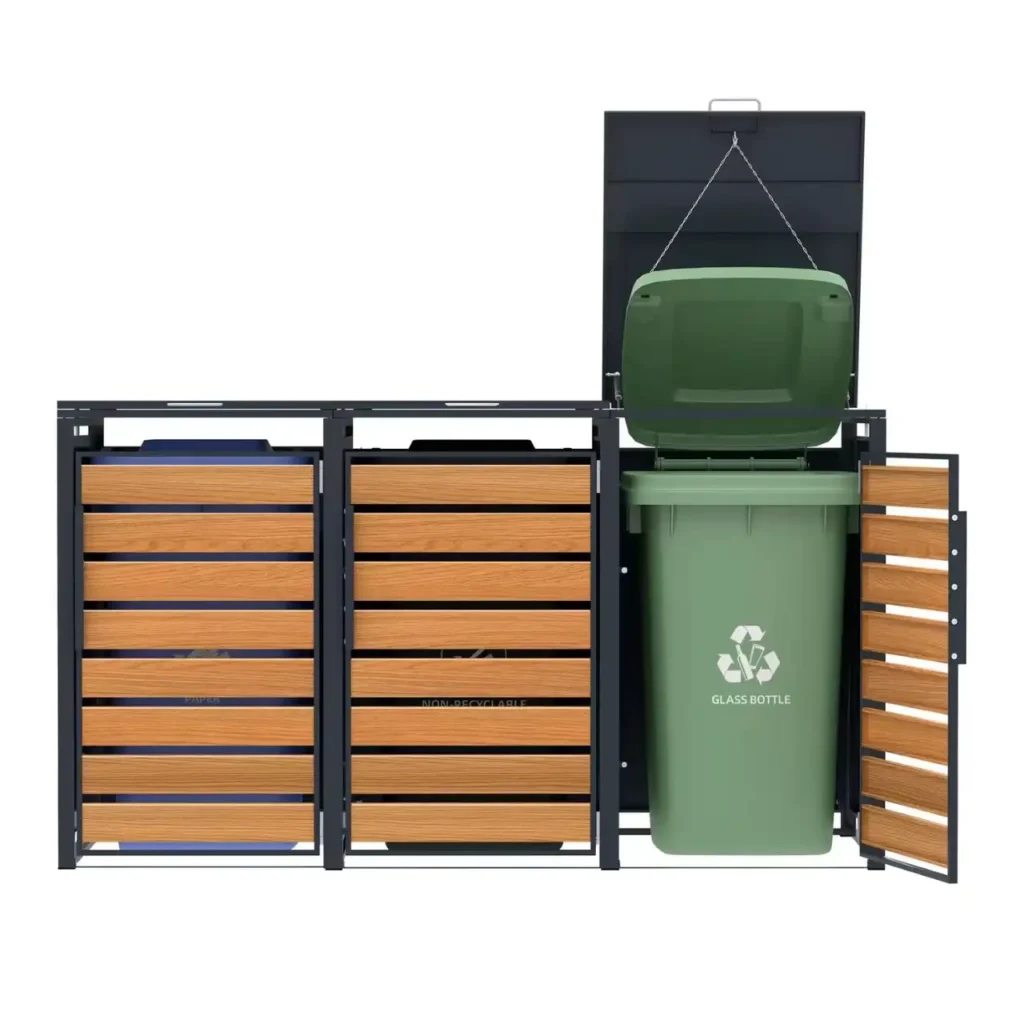
Trash Bin Enclosure
Outdoor trash bin enclosures provide a clean and secure way to store one, two, three, or multiple wheeled bins.
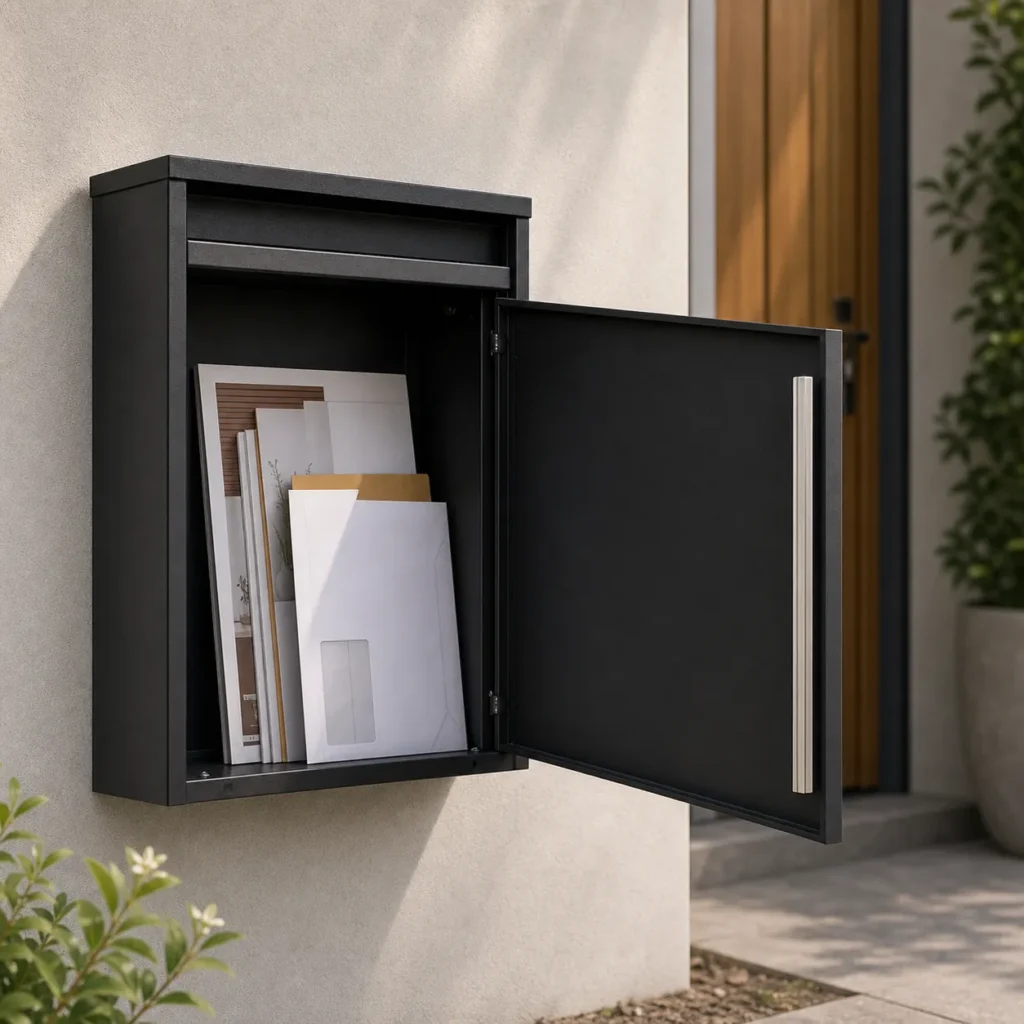
Letter and Mail Boxes
Letter boxes are designed to make mail and small parcel receiving more organized, secure, and convenient.
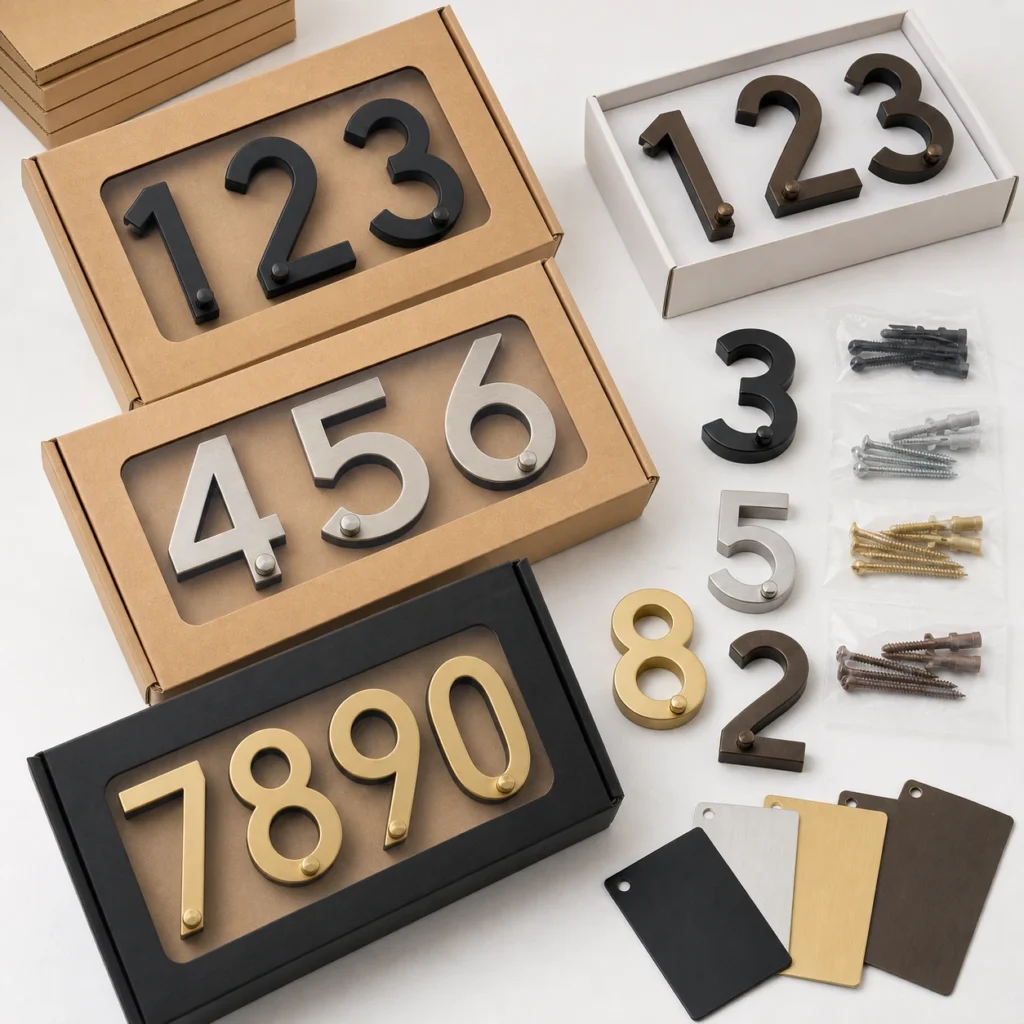
House Numbers
House numbers are small details, but they affect the first impression of a property, the visibility of an address.
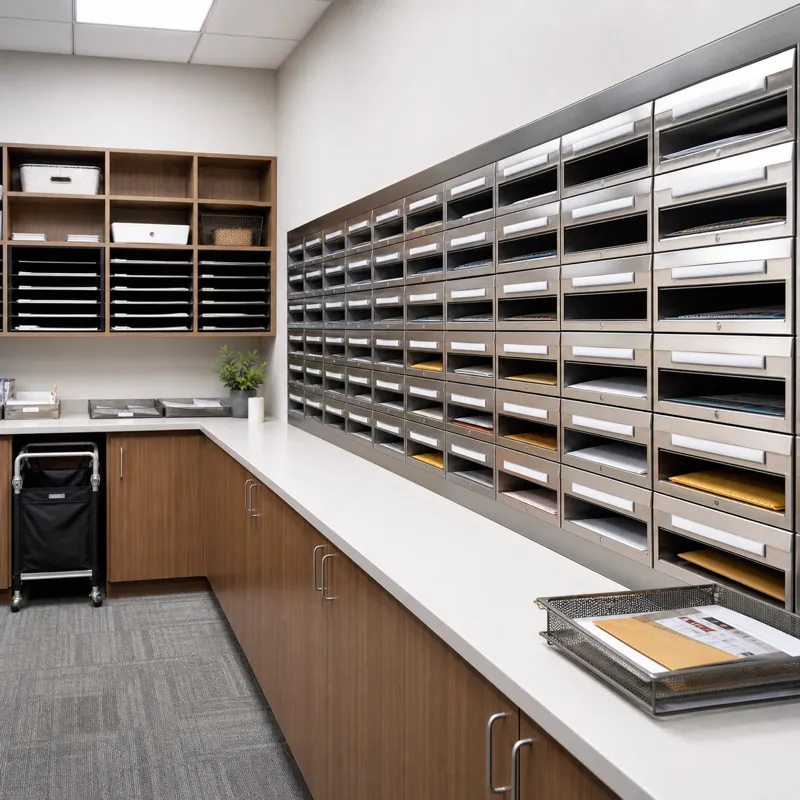
Mail Slots
Mail slots are designed for projects where appearance, size, and installation details matter.