Installation Type
Blog, Trash Bin Enclosures
How to Hide Trash Cans Outside: 15 Practical Ideas for a Cleaner Yard
03
Aug
Aug
Outdoor trash cans are useful, but they are rarely attractive.
Their large wheels, plastic bodies, bright lids, and recycling labels can stand out beside a house, driveway, patio, apartment building, or commercial property.
The best way to hide trash cans outside is usually to place them behind a privacy screen, inside a trash can enclosure, or in a covered storage cabinet. Plants, fencing, and small sheds can also work well.
The right option depends on more than appearance. You also need to consider:
- How many trash and recycling bins you have
- How much outdoor space is available
- How often the bins are moved
- Whether the area is exposed to wind
- Whether you need doors, locks, or a top cover
- How the enclosure will be cleaned
- Whether the design needs to match the property
This guide covers 15 practical outdoor trash can storage ideas. It also explains how to measure your bins, compare materials, and avoid common design mistakes.
Contents
hide
What Is the Best Way to Hide Trash Cans Outside?
For most homes, the best solution is a three-sided privacy screen or a front-opening trash can enclosure.
A privacy screen is a good choice when you only need to block the bins from street or neighbor view. It is simple, open, and easy to use.
A complete enclosure is better when you also want to:
- Keep several bins organized
- Stop bins from rolling away
- Add doors or latches
- Hide the bin lids
- Separate trash and recycling
- Match a specific building style
- Improve access control
A small trash can shed offers the most complete coverage, but it also needs more space.
Plants and trellises provide a softer look. However, they do not physically contain the bins or protect them from wind and animals.
Quick Comparison
| Your Main Goal | Recommended Solution | Why It Works |
|---|---|---|
| Hide one bin from street view | Three-sided privacy screen | Blocks the main viewing angles without making access difficult |
| Organize two or three bins | Front-opening trash bin enclosure | Keeps the bins together and allows each bin to be rolled out |
| Fully hide the bin body and lids | Covered storage cabinet | Provides front, side, and top coverage |
| Store several large bins | Small outdoor storage shed | Offers more internal space and overhead protection |
| Match a modern property | Slatted metal enclosure | Clean lines, custom colors, doors, and optional top lids |
| Match a garden or fence | Wood screen, trellis, or plants | Creates a softer and more natural appearance |
| Fit a narrow or unusual space | Custom trash bin enclosure | Can be designed around the actual bins and installation area |
7 Things to Check Before Hiding Outdoor Trash Cans
A good trash can hiding idea should improve the property without making the bins harder to use.
Before choosing a screen, enclosure, or shed, complete these seven checks.
1. Count All Trash and Recycling Bins
Do not plan only for the main garbage can.
Many properties have:
- One general waste bin
- One recycling bin
- One yard waste bin
- Several bins with different capacities
- Extra containers used during busy periods
Decide whether all of them should be stored in the same enclosure.
Also consider future needs. A two-bin home may need space for a third bin later.
2. Measure the Actual Bins
Do not rely only on the stated gallon capacity.
Two 95- or 96-gallon trash cans can have different shapes, handles, wheel positions, and lid heights.
Measure:
- Overall width
- Overall depth
- Height with the lid closed
- Height with the lid fully open
- Wheel width
- Rear handle projection
- Any part that extends beyond the bin body
Measure every bin separately.
3. Identify the Main Viewing Direction
Look at the trash can area from:
- The street
- The driveway
- The front door
- Main windows
- The patio
- The neighboring property
You may not need to cover every side.
For example, a front panel and one side panel may be enough to hide trash cans placed beside a house.
4. Check the Collection Route
Think about how the bins move from storage to the curb.
Ask:
- Is the path wide enough?
- Are there steps?
- Does the bin need to pass a parked car?
- Will the enclosure door block the walkway?
- Can the bin be tilted onto its wheels?
- Is the path usable when the ground is wet?
A well-designed enclosure should make collection day easier, not harder.
5. Inspect the Installation Surface
Trash can enclosures work best on firm, level ground.
Possible surfaces include:
- Concrete
- Pavers
- Asphalt
- Compacted gravel
- Decking
- Prepared ground
Soft soil and uneven grass can cause problems. Bin wheels may sink, doors may move out of alignment, and the enclosure frame may twist.
6. Consider Wind, Rain, and Sun
An open privacy screen mainly improves appearance.
A front-opening enclosure can also help keep bins in place. A covered cabinet or shed provides more overhead protection.
In exposed areas, check:
- How the enclosure will be anchored
- Whether the doors have latches
- Whether large panels will catch the wind
- Whether rainwater can drain away
- Whether the materials are suitable for outdoor use
7. Check Local Placement Rules
Some homeowners associations, residential communities, and local collection services have rules about outdoor garbage can storage.
Before installing a permanent enclosure, check requirements related to:
- Property lines
- Driveway visibility
- Street setback
- Collection access
- Utility access
- Fence or structure height
Requirements can vary by location.
15 Practical Outdoor Trash Can Hiding Ideas
The best design depends on the property, available space, number of bins, and required level of protection.
Here are 15 practical ideas for hiding trash cans outside.
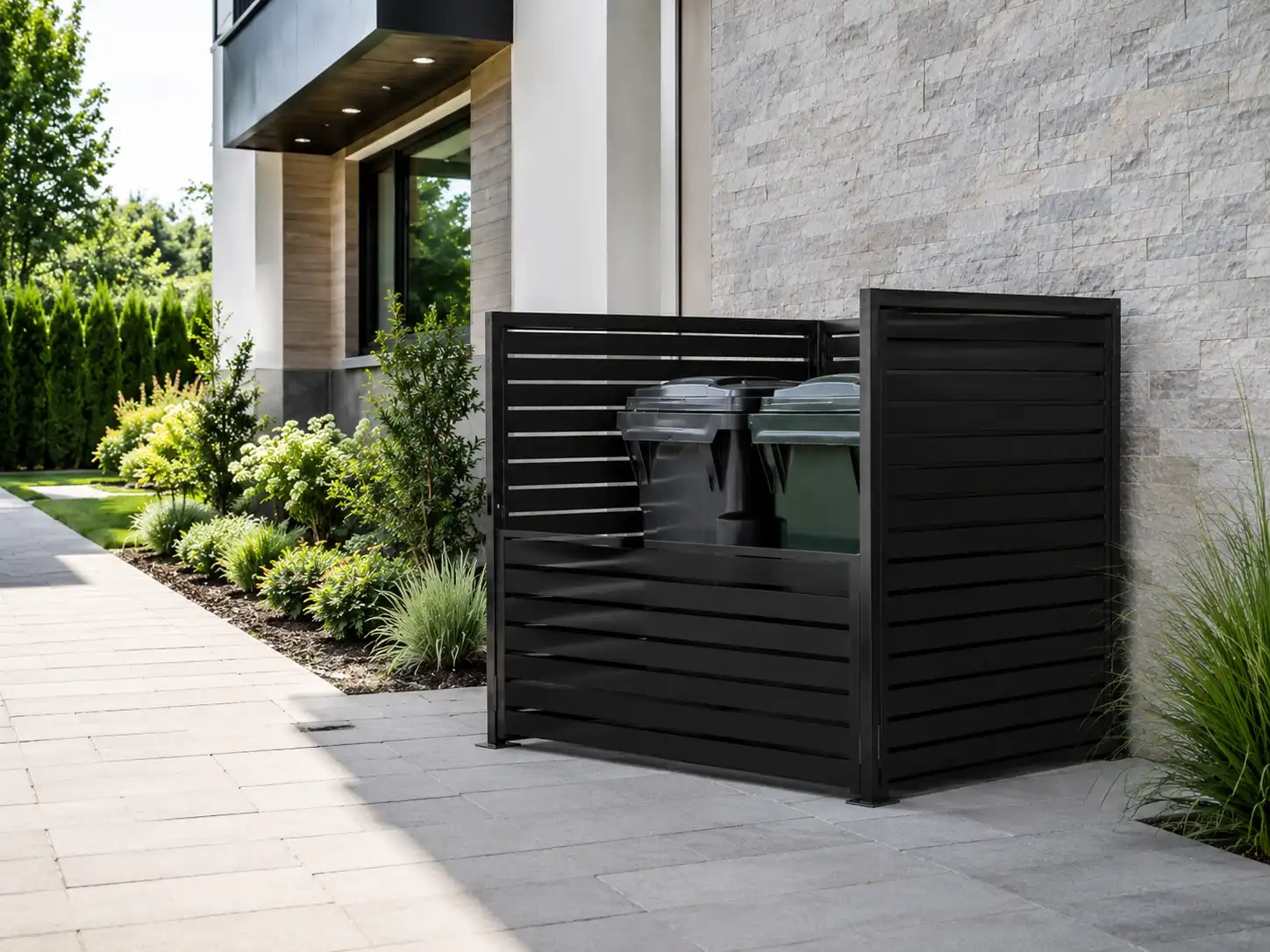
1. Install a Three-Sided Trash Can Privacy Screen
A three-sided privacy screen is one of the easiest ways to hide outdoor trash cans.
It normally has:
- One front panel
- Two side panels
- An open top
- An open or partially open back
This layout blocks the main view while keeping the bins easy to reach.
It works well for one or two trash cans placed beside a home, garage, fence, or driveway.
Privacy screens can be made from:
- Wood
- Vinyl
- Powder-coated metal
- Composite boards
- Lattice panels
The main limitation is protection. A simple screen may not stop bins from tipping, rolling, or being opened by animals.
Use a fixed frame, ground anchors, or posts when the area is exposed to wind.
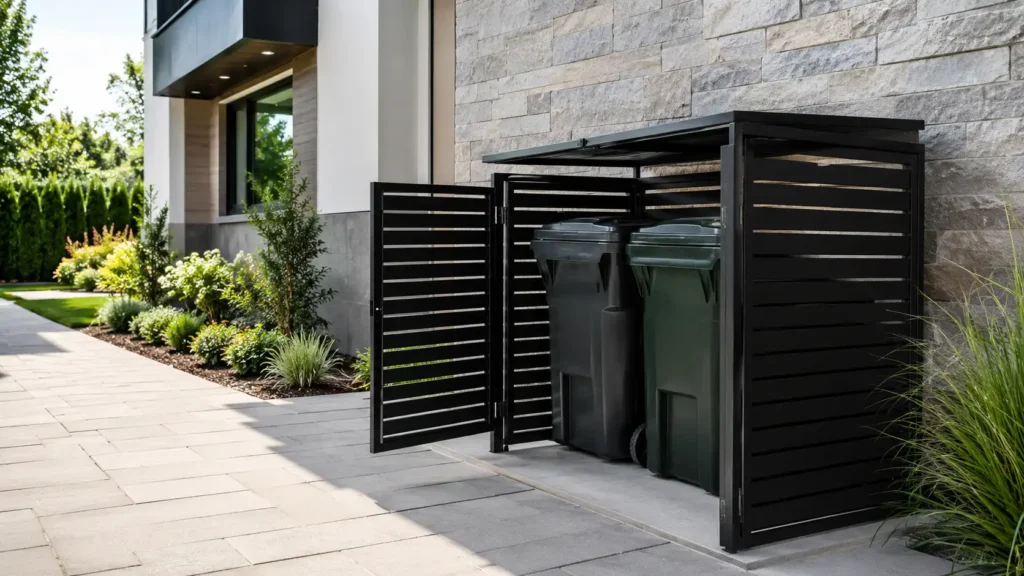
2. Choose a Modern Slatted Metal Trash Bin Enclosure
A slatted metal enclosure works well with modern homes, apartments, offices, and commercial buildings.
Horizontal or vertical slats hide most of the bin body while allowing air to move through the enclosure.
A metal enclosure can include:
- Front-opening doors
- Individual doors for each bin
- A fixed roof
- A lift-up top lid
- Hydraulic lid supports
- Internal dividers
- Door latches
- Locks
- Custom colors
Powder-coated metal can be matched with fencing, doors, window frames, mailboxes, or other outdoor products.
This is also a practical option when standard privacy screens do not fit the available space.
3. Build a Wooden Trash Can Screen
Wood is a popular choice for outdoor garbage can storage because it blends easily with fences, decks, and landscaping.
A wooden screen can use:
- Horizontal slats
- Vertical boards
- Fence panels
- Lattice
- Cedar
- Pressure-treated lumber
Small gaps between the boards can improve ventilation while still hiding the bins.
Wood should be selected and finished for outdoor use. It may need staining, sealing, painting, or repairs over time.
Avoid placing untreated wood directly against wet ground. Moisture can affect the bottom boards and posts first.
A wooden enclosure may be suitable for a simple DIY project, but heavy doors and top lids need stronger framing.
4. Use a Vinyl Trash Can Privacy Screen
Vinyl screens are often used when homeowners want a clean appearance with simple maintenance.
Many vinyl systems use modular panels and posts. Some are installed with ground stakes, while others connect to a fixed base.
Vinyl does not require the same staining schedule as wood. It can normally be washed with water and a mild cleaning product.
Before choosing a vinyl screen, check:
- Panel thickness
- Post design
- Ground fixing method
- Wind exposure
- Low-temperature impact resistance
- Maximum unsupported panel length
A light screen may work well in a protected side yard but may need stronger fixing beside an open driveway.
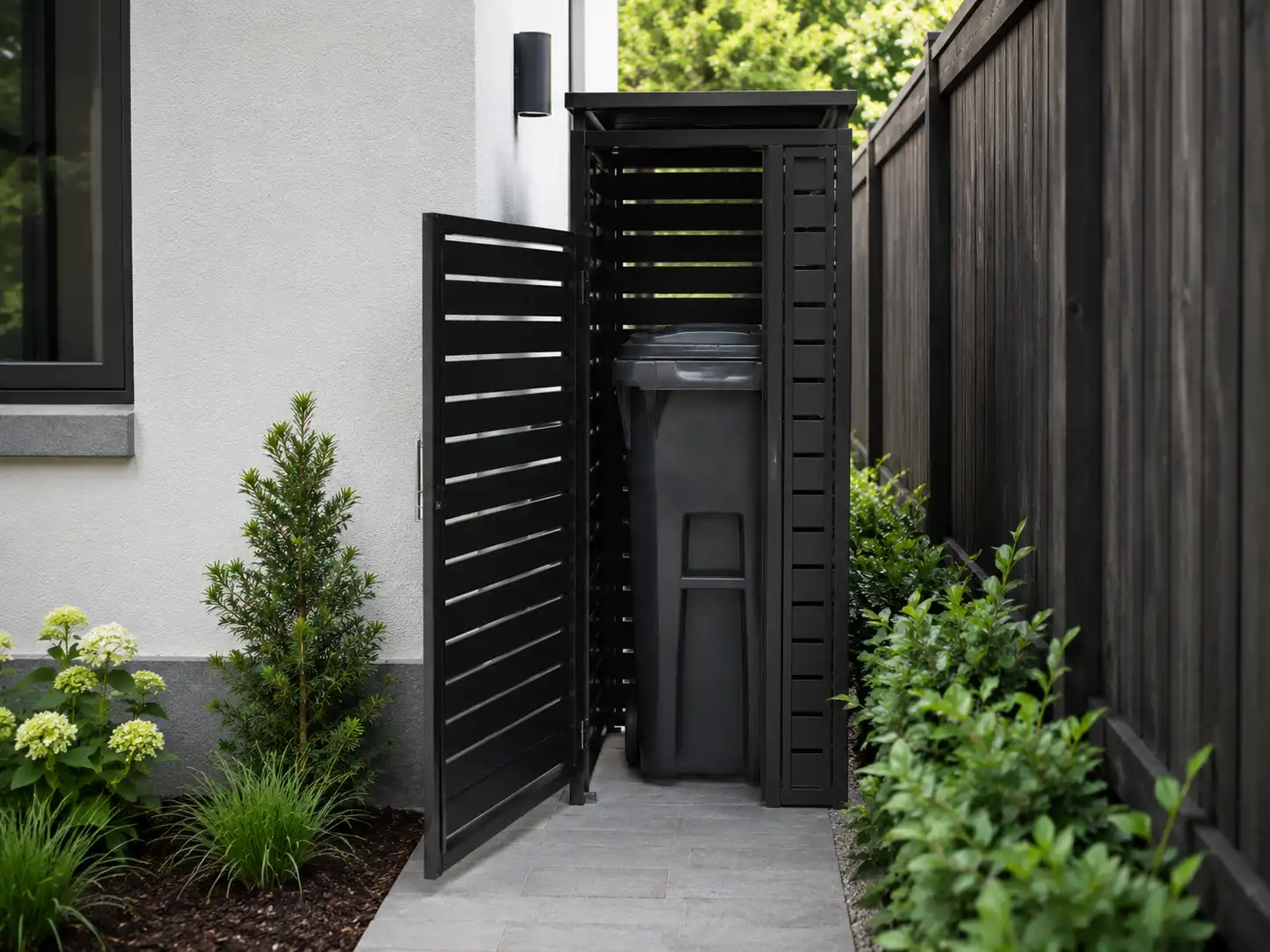
5. Hide Trash Cans on the Side of the House
The side of a house is one of the most practical places to store outdoor garbage cans.
It keeps the bins away from the front entrance while maintaining a short route to the driveway or curb.
For a narrow side yard, use a slim enclosure with panels that follow the wall.
Check the position of:
- Utility meters
- Drainpipes
- Air-conditioning units
- Outdoor faucets
- Gates
- Windows
- Walkways
The enclosure door must have enough room to open.
A door that swings toward the house may hit the wall. A door that swings outward may block the path.
Separate narrow doors can sometimes work better than one wide door.
6. Add a Trash Can Screen Beside the Driveway
Driveway storage makes collection day easier because the bins are already close to the street.
A screen or enclosure can hide the bins during the week while allowing them to be rolled out quickly.
When planning driveway trash can storage, make sure the structure:
- Does not block the driver’s view
- Does not reduce parking space
- Does not interfere with vehicle doors
- Keeps the bins from rolling into the driveway
- Has doors that open in a safe direction
- Remains accessible when a car is parked nearby
A front-opening enclosure with latches and internal wheel stops is often more useful than a light privacy screen in a windy driveway.
7. Match the Trash Can Screen to an Existing Fence
A trash can enclosure can be designed to look like part of the property fence.
Use similar:
- Panel spacing
- Board direction
- Color
- Post size
- Top line
- Hardware
An existing fence may form the back or one side of the storage area. This can reduce the number of new panels required.
However, do not assume an old fence can support a large enclosure door or heavy top lid.
Where possible, give the enclosure its own posts and frame. This helps avoid placing extra load on the fence.
Leave enough space between the enclosure and fence for cleaning and maintenance.
8. Use a Double Trash Can Enclosure
A double enclosure is useful for a home with one trash bin and one recycling bin.
The bins may share one large front opening or have separate doors.
Separate doors can make the enclosure easier to use because only one section needs to be opened at a time.
A two-bin design should allow enough room to:
- Open both bin lids
- Pull either bin forward
- Reach both handles
- Clean between the bins
- Replace one bin with a slightly different model
Do not make the internal width equal to the combined bin widths. Leave working clearance around and between the containers.
9. Use a Three-Bin Trash and Recycling Enclosure
A three-bin enclosure can organize general waste, recycling, and yard waste in one place.
This layout is useful for:
- Larger homes
- Shared residential properties
- Schools
- Offices
- Small commercial locations
- Properties with separate collection programs
The enclosure can use:
- Three individual front doors
- One wide door
- Removable internal dividers
- Separate top lids
- Labels for each waste stream
Individual doors usually provide better control. Removing one bin does not leave the entire enclosure open.
The design should account for different bin widths and collection schedules.
10. Install a Fully Covered Trash Can Storage Cabinet
A fully covered cabinet hides the bins from the front, sides, and top.
It is useful near:
- Front entrances
- Patios
- Outdoor seating areas
- Shared walkways
- Residential courtyards
The cabinet may have front doors for removing the bins and a top lid for placing bags inside.
A covered design needs more planning than a simple privacy screen.
Check:
- Open-bin-lid height
- Top-lid movement
- Door opening width
- Ventilation
- Drainage
- Cleaning access
- Hinge location
- Lid weight
If the top is large or heavy, hydraulic struts can assist opening and help hold the lid in place.
The struts must be selected according to the lid size, weight, hinge position, and opening angle.
11. Use a Small Trash Can Storage Shed
A compact outdoor shed can fully hide several large bins.
Common shed materials include:
- Resin
- Wood
- Metal
- Composite panels
Some sheds have front doors only. Others have front doors and a lift-up top.
A shed is a good choice when:
- You have several bins.
- You want overhead weather protection.
- You have enough yard space.
- You also need room for small outdoor tools.
- You want lockable doors.
Check the internal dimensions, not only the exterior size.
Wall thickness, internal supports, door frames, and sloping roofs can reduce the usable space.
Also confirm that the threshold is low enough for heavy bins to roll across.
12. Hide Garbage Cans with a Trellis
A trellis can create a softer visual barrier around an outdoor trash can area.
It can be made from:
- Wood
- Metal
- Vinyl
- Composite material
- Artificial ivy panels
Climbing plants can gradually cover the structure.
A trellis works well near a garden, patio, or fence. It does not make the area feel like a closed storage cabinet.
However, a trellis is mainly a visual solution.
It does not normally stop bins from rolling, tipping, or being opened. Plants also need time to grow and may require trimming.
Keep plants away from hinges, doors, locks, and the collection path.
13. Use Evergreen Shrubs or Tall Planters
Shrubs and planters can hide outdoor trash cans without adding a large built structure.
Possible choices include:
- Evergreen shrubs
- Tall ornamental grasses
- Narrow planter boxes
- Container-grown screening plants
Before planting, check the mature size.
A small shrub may become wide enough to block the enclosure door or collection path after several years.
Leave room for:
- Plant growth
- Bin movement
- Cleaning
- Trimming
- Air circulation
- Access to the building wall
Plants can also be combined with a low enclosure. The enclosure holds the bins in place, while the plants soften the appearance.
14. Add a Planter Top to the Enclosure
A planter-top enclosure combines waste storage and landscaping.
This can work well near a patio, entrance, garden, or apartment courtyard.
The planter may hold:
- Low-maintenance flowers
- Small grasses
- Decorative plants
- Artificial plants
The planter must be designed as part of the structure.
Wet soil is heavy. The frame must support the total weight of the planter, water, soil, and plants.
The design also needs drainage. Water should not run into the bin compartment, across the hinges, or onto the access path.
Make sure the planter does not block the bin lids or enclosure top.
15. Use a Custom Enclosure for an Unusual Space
Standard screens and sheds are designed around common bin sizes and simple rectangular spaces.
They may not fit:
- Narrow side yards
- Uneven walls
- Corners
- Sloping ground
- Different-sized bins
- Limited door swing areas
- Commercial collection points
A custom trash bin enclosure can be designed around the actual project.
Possible custom features include:
- One-, two-, or three-bin layouts
- Mixed bin sizes
- Custom height, width, and depth
- Left- or right-opening doors
- Separate bin compartments
- Fixed or lift-up roofs
- Hydraulic struts
- Ventilation panels
- Custom powder-coat colors
- Locks and latches
- Removable dividers
- Adjustable feet or anchoring points
Custom design is most useful when appearance, size, and daily operation are equally important.
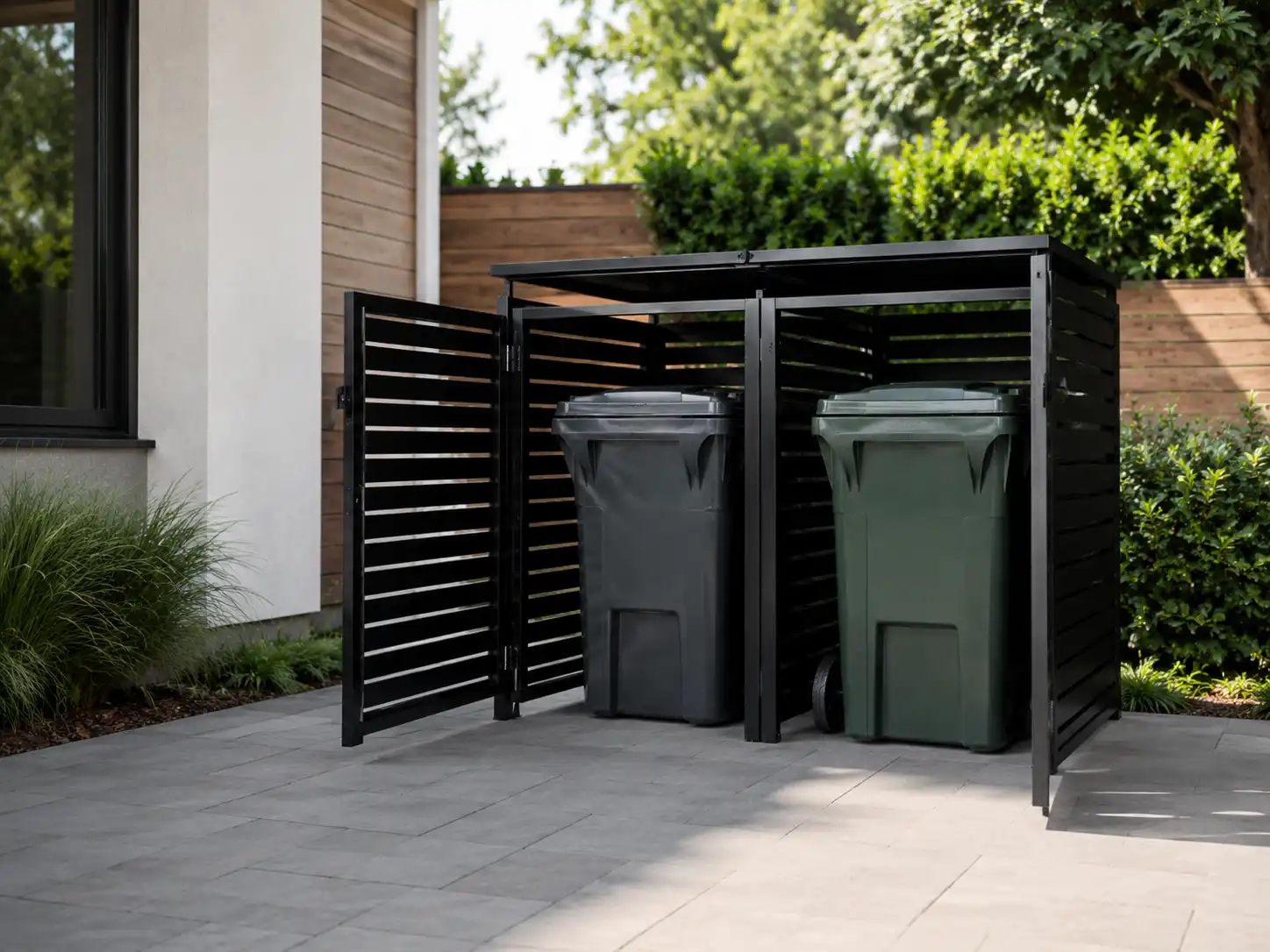
Privacy Screen vs Enclosure vs Shed: Which Is Better?
The terms privacy screen, trash can enclosure, storage cabinet, and trash can shed are sometimes used for similar products.
However, they offer different levels of coverage and function.
| Solution | What It Hides | Daily Access | Wind and Animal Control | Space Required | Best Use |
| Privacy screen | Blocks the main viewing sides but normally leaves the top and back open | Very easy because there may be no front door | Limited unless the screen is securely fixed; animals may still reach the bin lids | Uses the least space | Hiding one or two bins where appearance is the main concern |
| Open-top enclosure | Hides the bin bodies and keeps several bins organized | Easy when the front doors are wide enough | Doors, latches, dividers, and wheel stops can reduce movement | Requires space for panels and door swing | One-, two-, or three-bin residential storage |
| Covered cabinet | Hides the bins from the front, sides, and top | Requires planned front-door and top-lid clearance | Fixed panels, smaller gaps, and locks provide more control | Requires more height and depth | Homes and shared areas needing complete visual coverage |
| Trash can shed | Fully conceals the bins and may provide extra storage | Large doors make access possible, but the threshold must be considered | Stronger protection is possible when the shed is anchored and locked | Requires the most floor space | Larger yards and properties with several bins |
| Trellis or plants | Blocks selected viewing directions | The bins remain easy to reach | Does not physically control the bins | Space is needed for plant growth | Landscaped areas where appearance matters more than security |
How to Measure for an Outdoor Trash Can Enclosure
Correct measurement is one of the most important parts of the project.
A bin that fits inside the enclosure may still be difficult to use if the doors are too narrow or the lid cannot open.
Measure Width at the Widest Point
Measure the bin across the wheels, axle, side handles, and lid edges.
The widest part is not always the plastic body.
For multiple bins, measure each one separately and note the space needed between them.
Measure the Full Depth
Measure from the front edge of the bin to the farthest point at the back.
Include:
- Rear handles
- Wheels
- Lid hinges
- Any raised parts
Also consider the extra space needed to tilt the bin onto its wheels.
Measure the Lid in Motion
For a covered enclosure, record:
- Height with the lid closed
- Height with the lid fully open
- Highest point during opening
- Space needed for a hand to lift the lid
The highest point may occur before the lid reaches its fully open position.
Plan the Door Opening
The clear door opening should be larger than the bin width.
Users rarely pull a large bin out in a perfectly straight line. The wheels may move at a slight angle.
Check:
- Door width
- Door swing
- Hinge position
- Wall clearance
- Fence clearance
- Vehicle clearance
- Walkway width
For a narrow space, double doors or individual bin doors may work better than one wide door.
Leave Space for Cleaning and Future Bins
Do not build the enclosure tightly around the current containers.
Extra clearance makes it easier to:
- Clean around the bins
- Reach the handles
- Move one bin without moving the others
- Replace a damaged container
- Accept a slightly different municipal bin later
The best internal dimensions should be based on actual bin movement, not only static measurements.
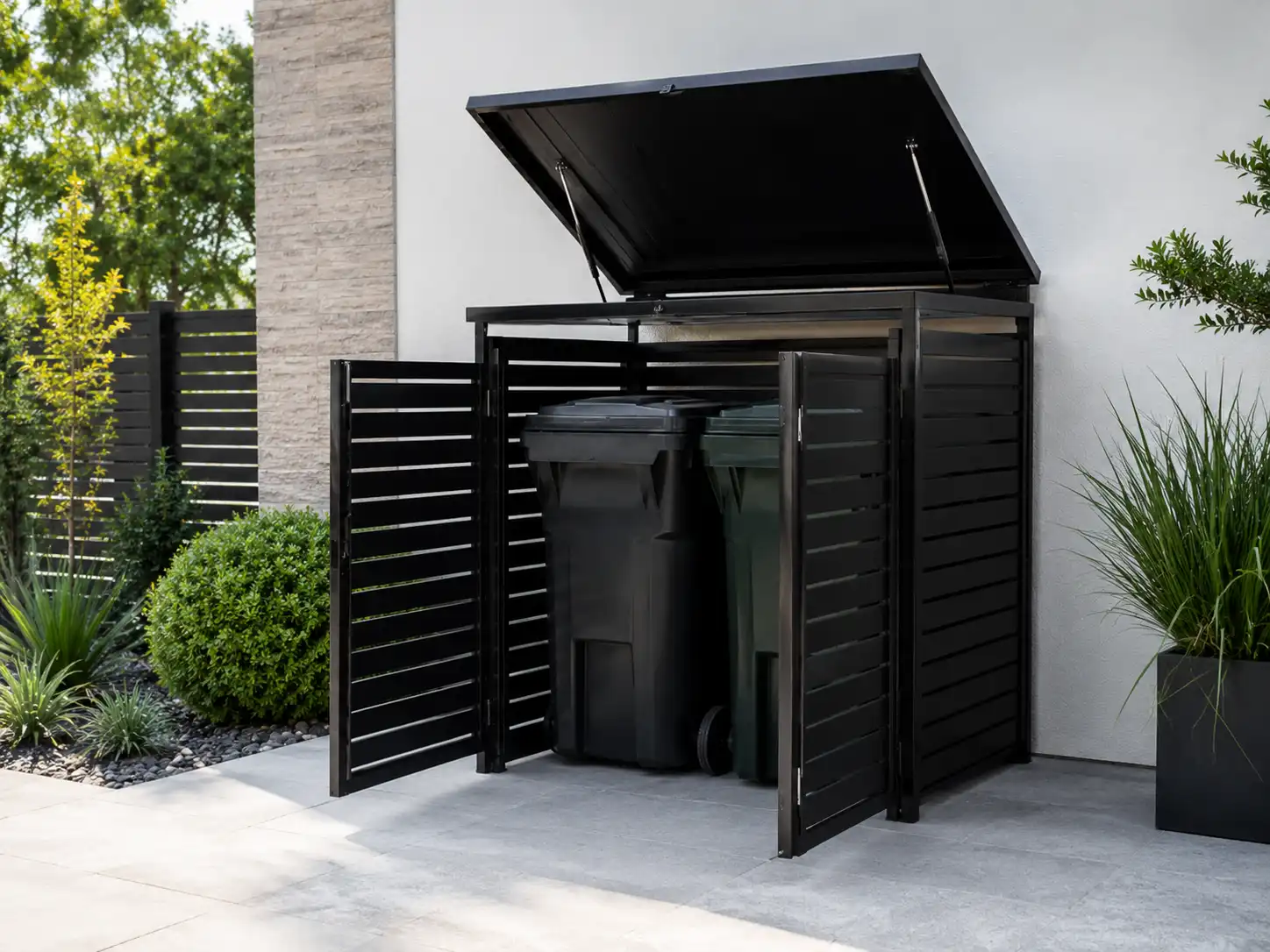
What Is the Best Material for Hiding Trash Cans?
Each material offers a different balance of appearance, maintenance, strength, and customization.
Wood
Wood provides a natural look and matches many fences and decks.
It is also easy to cut for DIY designs.
However, outdoor wood may need:
- Staining
- Sealing
- Painting
- Screw tightening
- Board replacement
- Protection from ground moisture
Wood is often suitable for simple residential screens.
Vinyl
Vinyl is easy to clean and does not need staining.
It is often used for modular privacy screens.
The strength of the complete system depends on the panels, posts, joints, and anchoring method.
Check whether the product is suitable for the local temperature and wind exposure.
Powder-Coated Metal
Metal is suitable for frames, doors, slats, perforated panels, locks, and lift-up lids.
It can also be manufactured in custom sizes.
A powder-coated metal enclosure is often selected when the project requires:
- Strong doors
- Modern appearance
- Custom colors
- Multiple bin compartments
- Locks or latches
- Hydraulic top lids
- Commercial use
The metal thickness, surface preparation, coating, hardware, and environment all affect performance.
Composite Panels
Composite panels can provide a wood-like appearance with less routine staining.
Some panels still require a separate metal or wood frame.
Check the panel’s response to heat, impact, moisture, and long unsupported spans.
Plants and Trellises
Plants provide the most natural appearance.
However, they are a screening method rather than a complete storage structure.
They require space, water, trimming, and time to grow.
How to Keep a Hidden Trash Can Area Easy to Use
Appearance is only one part of the design.
The enclosure must also work during daily waste disposal, cleaning, and collection.
Provide Ventilation
A fully sealed enclosure can trap heat, moisture, and odors.
Ventilation may be provided through:
- Slatted panels
- Perforated metal
- Openings near the top
- Gaps under the roof
- Planned spaces around the doors
The openings should still be small enough to maintain visual coverage and limit animal access.
Provide Drainage
The enclosure should not hold rainwater or cleaning water.
Place it on a surface that directs water away from the building.
Avoid deep channels and enclosed corners where dirt and water can collect.
Make the Doors Wide Enough
Door width should be based on the complete bin, including wheels and handles.
Outdoor hinges should open far enough for the bin to pass without scraping the frame.
Separate doors can improve access to multi-bin enclosures.
Use Suitable Latches
Latches can:
- Stop doors from opening in the wind
- Keep bins inside the enclosure
- Improve access control
- Reduce unauthorized use in shared areas
The latch should remain easy for approved users to operate.
Use Hydraulic Struts Carefully
Hydraulic struts can make a heavy top lid easier to lift.
They may also help hold the lid open and reduce sudden closing.
The correct strut depends on:
- Lid weight
- Lid length
- Hinge position
- Opening angle
- Mounting position
Using an incorrectly rated strut can make the lid too hard to close or fail to provide enough support.
Should You Build, Buy, or Customize a Trash Can Enclosure?
The best option depends on the site and required functions.
Build a DIY Screen When the Project Is Simple
DIY can work well when:
- You have one or two bins.
- The ground is level.
- You only need visual screening.
- No heavy roof is required.
- No special locks are needed.
- You have suitable tools and building experience.
Measure carefully before buying materials.
Buy a Ready-Made Screen for Fast Installation
A ready-made privacy screen is useful when:
- Standard dimensions fit the bins.
- The installation area is rectangular.
- Appearance is the main concern.
- You do not need many custom features.
Check the internal dimensions and fixing method before ordering.
Choose a Custom Enclosure for Better Fit and Function
Custom manufacturing may be more suitable when:
- You have two or three different bins.
- The installation space is narrow.
- The bins need separate doors.
- The enclosure needs a heavy top lid.
- Locks or hydraulic struts are required.
- The color must match the property.
- The enclosure is for a commercial or shared area.
- Standard products do not fit.
A custom enclosure can be designed around the bins rather than forcing the bins into a standard cabinet.
Common Mistakes When Hiding Outdoor Trash Cans
Making the Enclosure Too Small
The bins may fit while standing still but become difficult to remove.
Include wheels, handles, lid movement, and pulling angle in the measurements.
Forgetting the Open-Lid Height
A covered cabinet may be tall enough for a closed bin but too low for the lid to open.
Check the complete lid movement before setting the roof height.
Using One Large Door in a Narrow Area
A wide door needs a large swing area.
Double doors or individual bin doors may work better beside a wall or walkway.
Blocking the Collection Route
Do not place the enclosure where the bins must pass steps, narrow gates, parked cars, or soft ground.
Ignoring Ventilation
A fully enclosed cabinet needs planned airflow.
Use slats, perforations, or protected openings.
Ignoring Drainage
Water should not collect under the bins or around the frame.
Prepare the ground before installation.
Installing Large Panels Without Anchoring
Tall screens and doors can catch the wind.
Choose an anchoring method that matches the ground and enclosure design.
Designing Only for Appearance
The enclosure still needs to support daily use.
Users must be able to open the bin lids, place bags inside, remove the bins, and clean the area.
Frequently Asked Questions About Hiding Trash Cans Outside
What is the easiest way to hide trash cans outside?
A three-sided privacy screen is usually the simplest option. It blocks the main view while keeping the bins easy to reach. Make sure it is large enough and securely installed.
What is the cheapest way to hide outdoor trash cans?
A simple DIY wooden screen or a screen connected to an existing fence may have a lower starting cost. Include the cost of outdoor materials, hardware, finishing, installation, and future maintenance when comparing options.
How do you hide garbage cans on the side of a house?
Use a narrow screen or enclosure that follows the wall. Leave enough space for the bin lids, doors, utility equipment, and the route used to move the bins to the curb.
Can a privacy screen hide trash cans?
Yes. A privacy screen can block the bins from the street, driveway, or neighboring property. It provides less weather, wind, and animal protection than a complete enclosure.
Where should outdoor trash cans be stored?
Choose a level and well-drained location that is easy to reach from the house and the collection point. Avoid blocking doors, walkways, driveways, windows, utility equipment, or emergency access.
Does a trash can enclosure need a roof?
Not always. An open-top enclosure offers good ventilation and easy access. A roof or lift-up lid is useful when complete visual coverage or overhead weather protection is needed.
Does a trash can enclosure need ventilation?
Ventilation is recommended for covered or mostly enclosed designs. Slats, perforated panels, and protected openings can reduce trapped heat and moisture.
How do I keep trash cans from blowing away?
Use a securely anchored enclosure with front doors, latches, wheel stops, or internal dividers. The correct solution depends on the bin size, ground, and wind exposure.
Yes. A two- or three-bin enclosure can store trash, recycling, and yard waste together. Separate doors and labels can make the enclosure easier to use.
Is wood, vinyl, or metal better for a trash can enclosure?
Wood provides a natural appearance. Vinyl is easy to clean. Metal is well suited to strong doors, locks, custom sizes, and modern designs. The best choice depends on the location and required functions.
Should a trash can enclosure be anchored?
Anchoring is recommended for many tall screens, lightweight structures, and enclosures with doors. It is especially important in open or windy locations.
When is a custom trash bin enclosure worth it?
A custom enclosure is useful when standard products do not fit the bins, available space, door direction, color, or required features. It is also suitable for multi-bin and commercial projects.
Choose a Trash Can Hiding Solution That Works Every Week
The best outdoor trash can storage solution should do more than improve curb appeal.
It should also make the bins easy to open, clean, remove, and return.
Choose a privacy screen when you only need visual coverage. Use an open-top enclosure when you want to organize one, two, or three bins. Select a covered cabinet or shed when you need complete concealment and more overhead protection.
For narrow spaces, mixed bin sizes, commercial properties, or projects that need custom doors, locks, ventilation, or hydraulic top lids, a custom trash bin enclosure may provide a better fit.
Before building or ordering, measure the actual bins, check the open-lid height, plan the collection route, and inspect the installation ground.
A few careful measurements at the start can prevent years of difficult daily use.
Explore our custom trash bin enclosures for single-bin, double-bin, three-bin, residential, and commercial outdoor waste storage projects.
Popular Parcel Box and Letterbox Products
Choose from existing product styles or develop your own custom series.
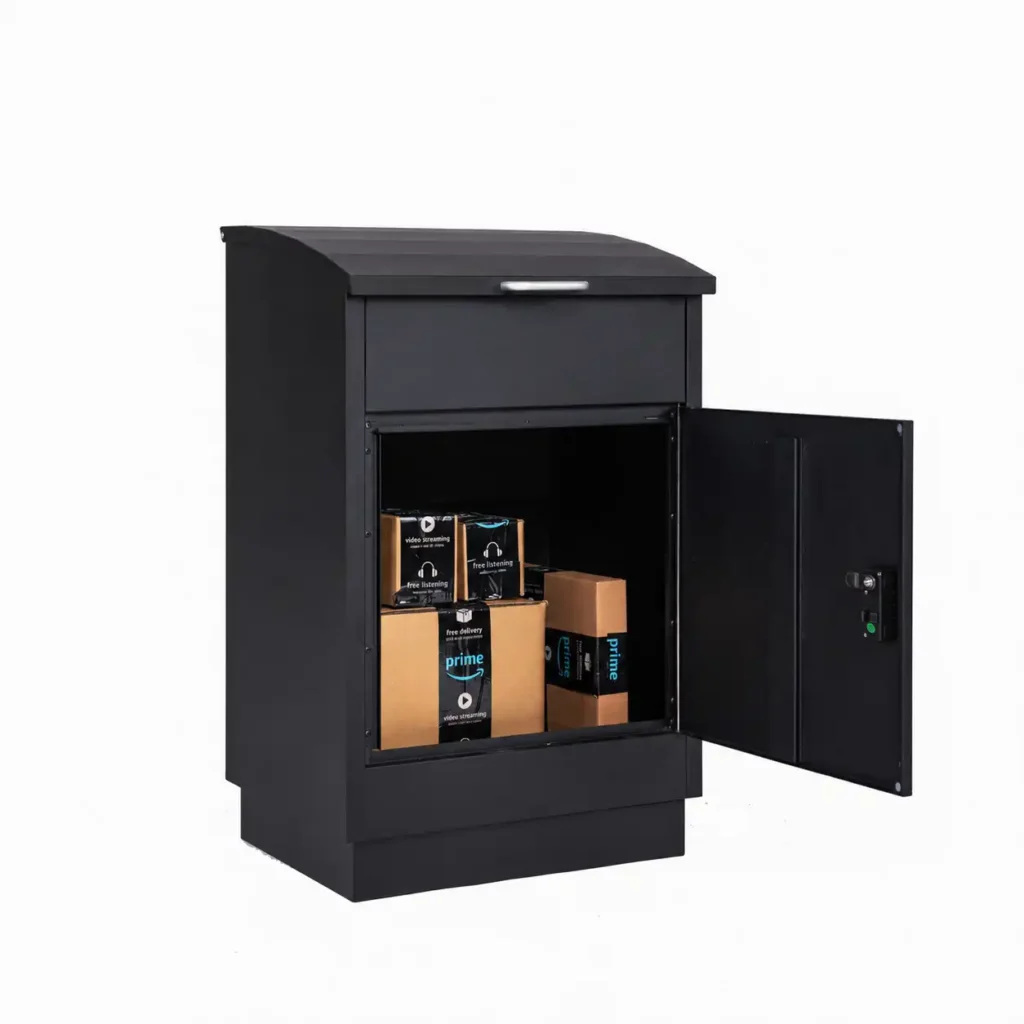
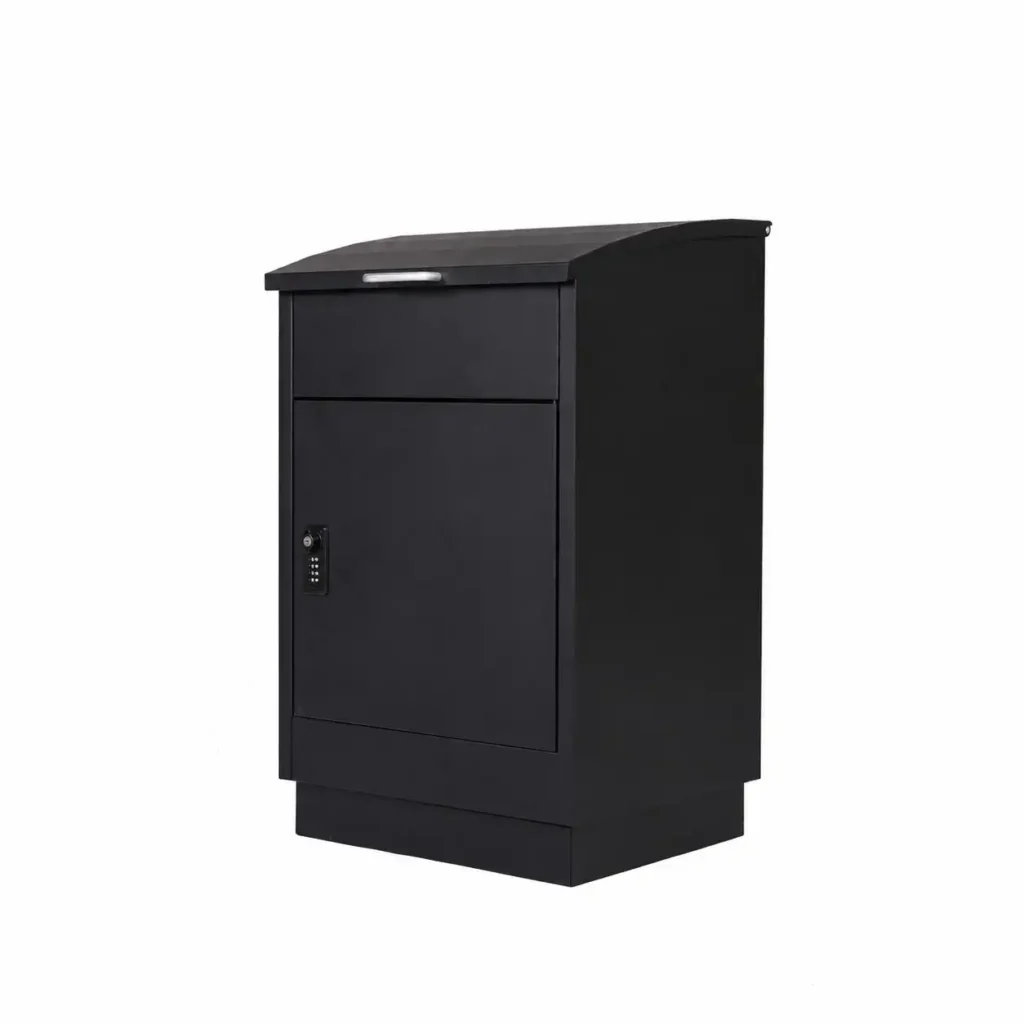
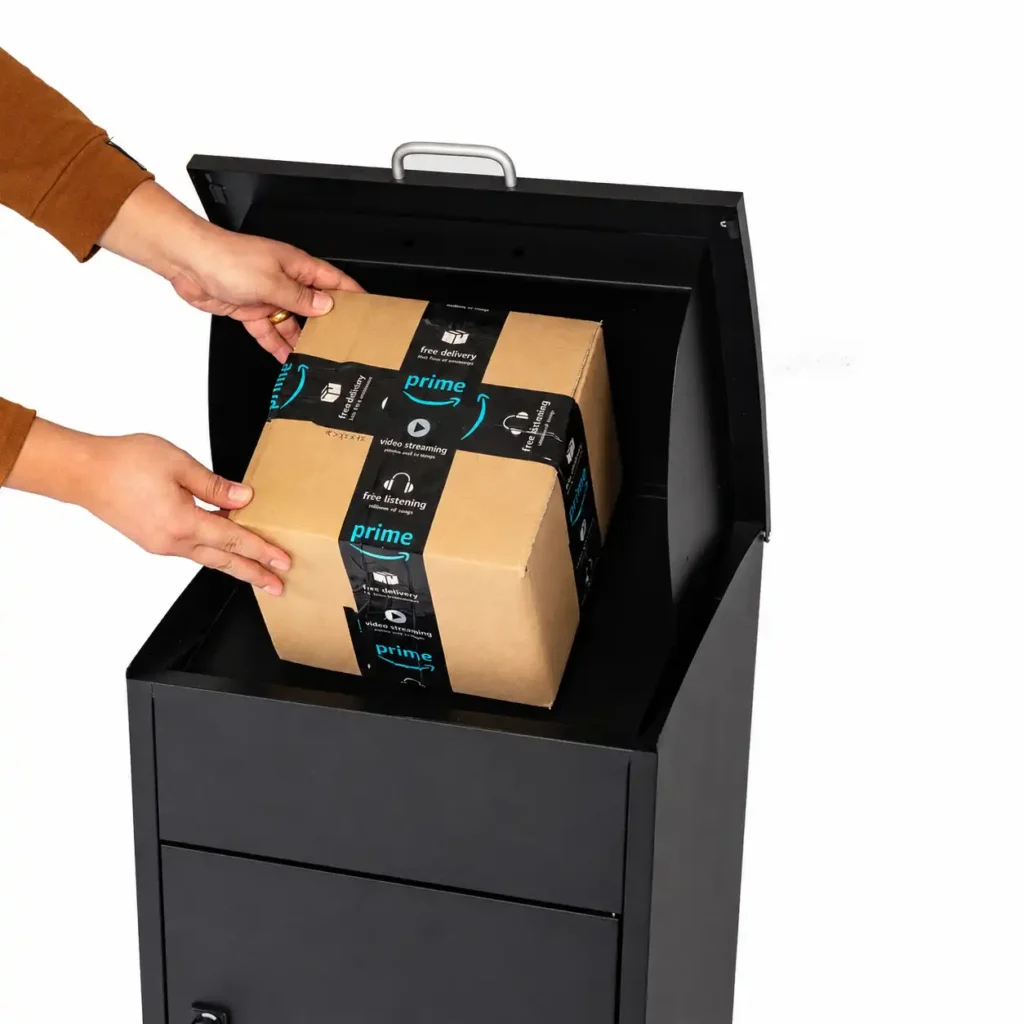
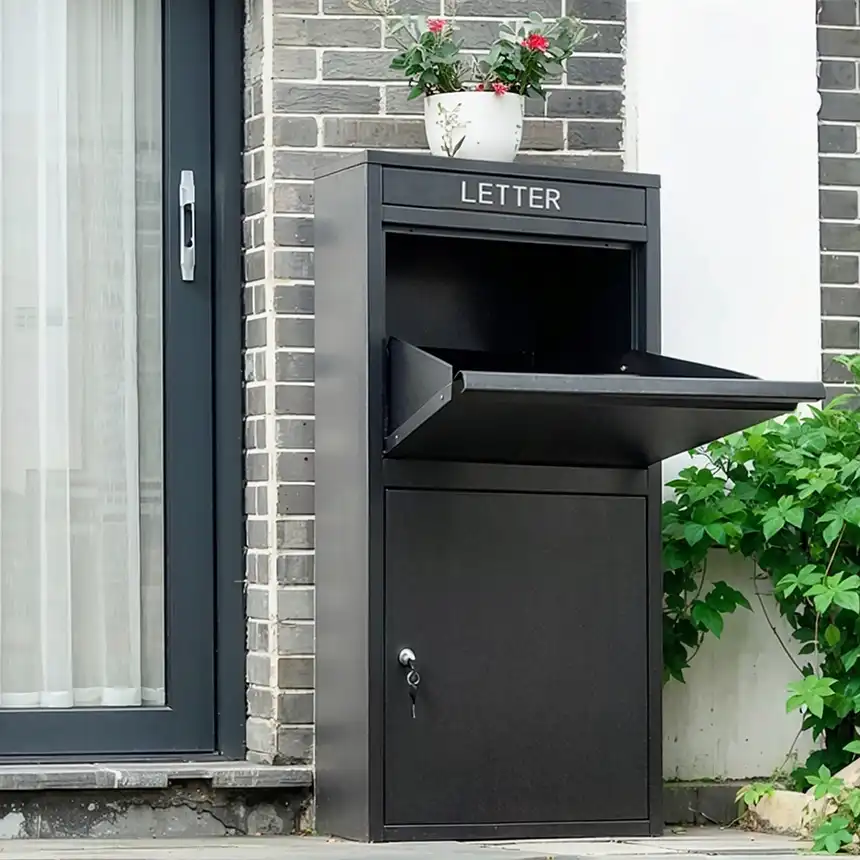
Extra Large Parcel Boxes
High-capacity parcel boxes for oversized packages and busy delivery locations.
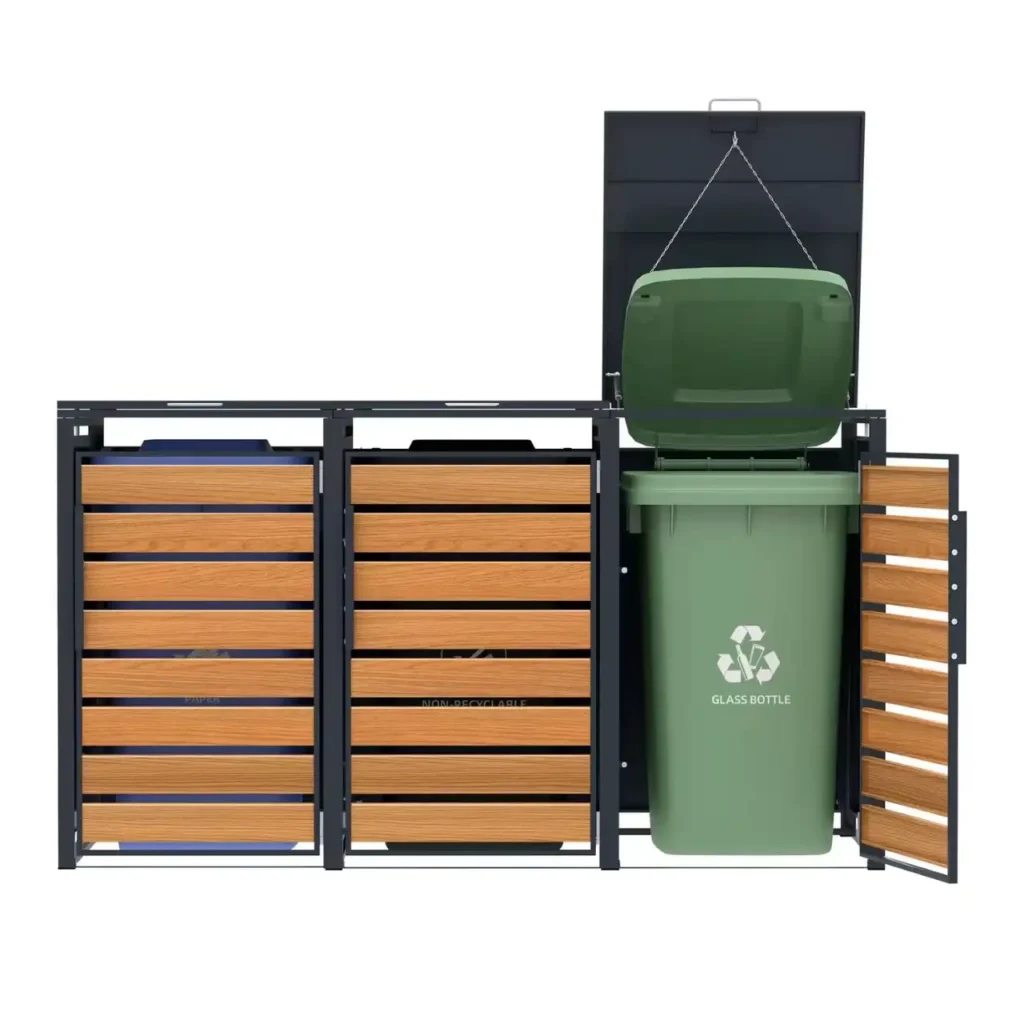
Trash Bin Enclosure
Outdoor trash bin enclosures provide a clean and secure way to store one, two, three, or multiple wheeled bins.
Letter and Mail Boxes
Letter boxes are designed to make mail and small parcel receiving more organized, secure, and convenient.
House Numbers
House numbers are small details, but they affect the first impression of a property, the visibility of an address.
Mail Slots
Mail slots are designed for projects where appearance, size, and installation details matter.