Cassette per la consegna dei pacchi
Blog, Casella di posta
Hai perso la chiave della cassetta delle lettere? Come sostituire la chiave o la serratura in sicurezza
03
Nov
Nov
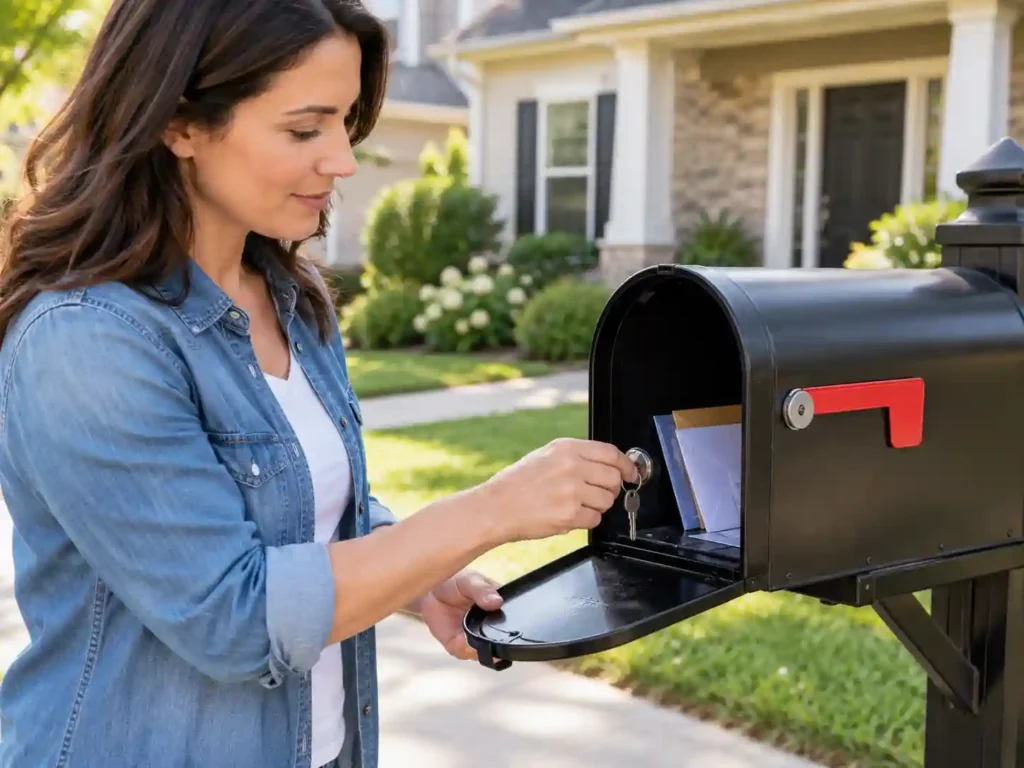
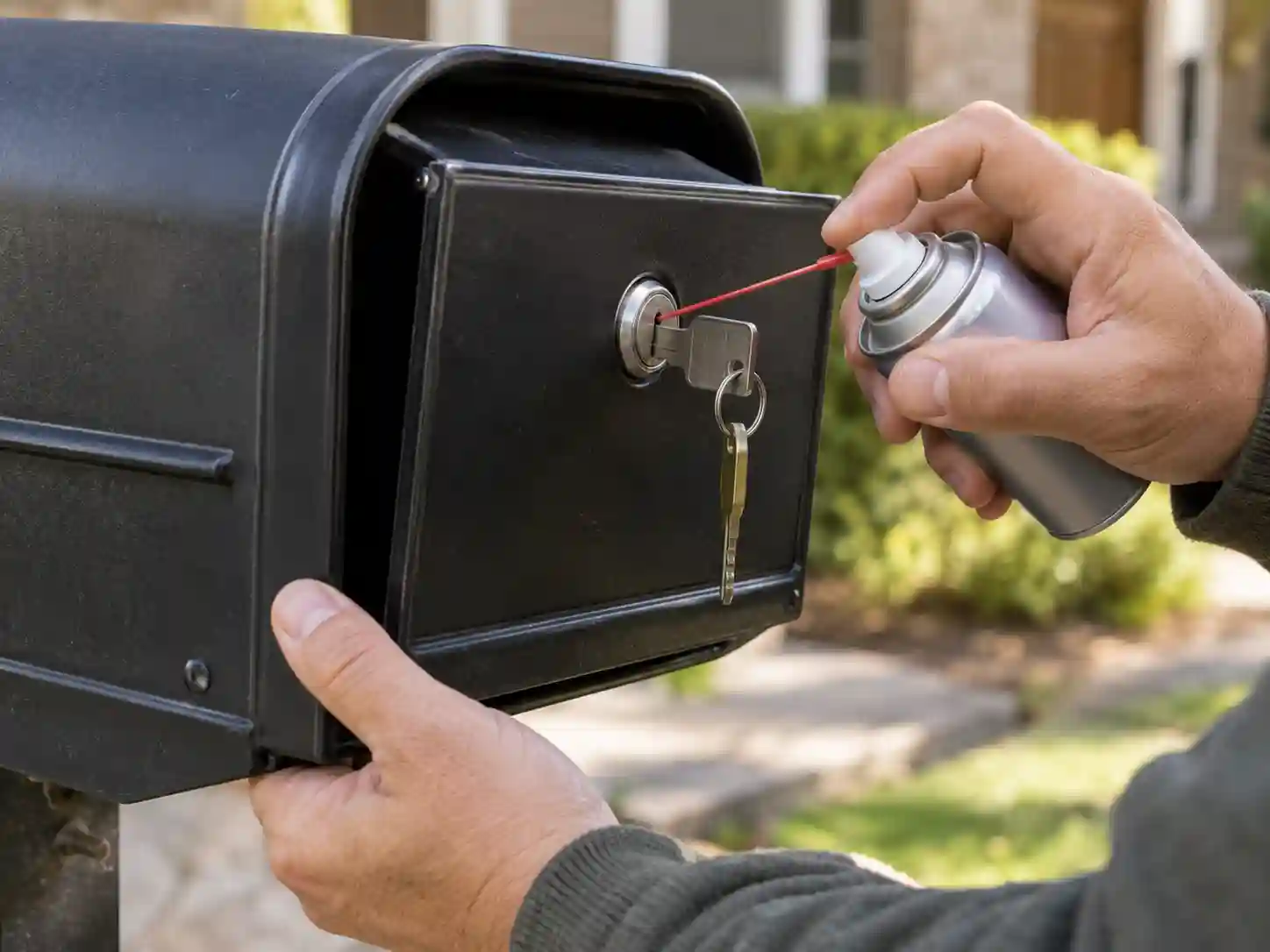 Losing a mailbox key is frustrating, but the solution depends on one important question:
Who owns and maintains the mailbox?
A locking mailbox beside your own house is different from a mailbox in an apartment building or a USPS-maintained Cluster Box Unit.
That distinction determines whether you should:
Use a spare key
Ask your property manager
Contact your local Post Office
Order a replacement key
Replace the lock
Call a locksmith
Replace the mailbox
Do not start by drilling, prying or forcing the mailbox open.
First identify the mailbox type and who is responsible for the lock.
This guide explains what to do when a mailbox key is lost, stolen, broken or stuck, and how to replace the lock on a privately owned mailbox when appropriate.
Indice
nascondi
Quick Answer: What Should You Do If You Lose Your Mailbox Key?
Use this table first.
| Tipo di casella di posta | Who Usually Handles the Key or Lock? | What to Do |
|---|---|---|
| Private curbside locking mailbox | Homeowner | Check spare key, manufacturer or replace private lock |
| Private wall-mount mailbox | Homeowner | Check spare key or replace compatible lock |
| Private parcel box | Homeowner | Contact manufacturer or replace compatible lock |
| USPS-maintained Cluster Box Unit | USPS | Contact local Post Office |
| Apartment mailbox maintained by property | Owner / manager | Contact property manager |
| Condo mailbox maintained by HOA | HOA / management | Contact responsible management |
| PO Box | USPS | Contact the Post Office where the box is located |
The most important rule is:
Do not assume every mailbox lock belongs to USPS.
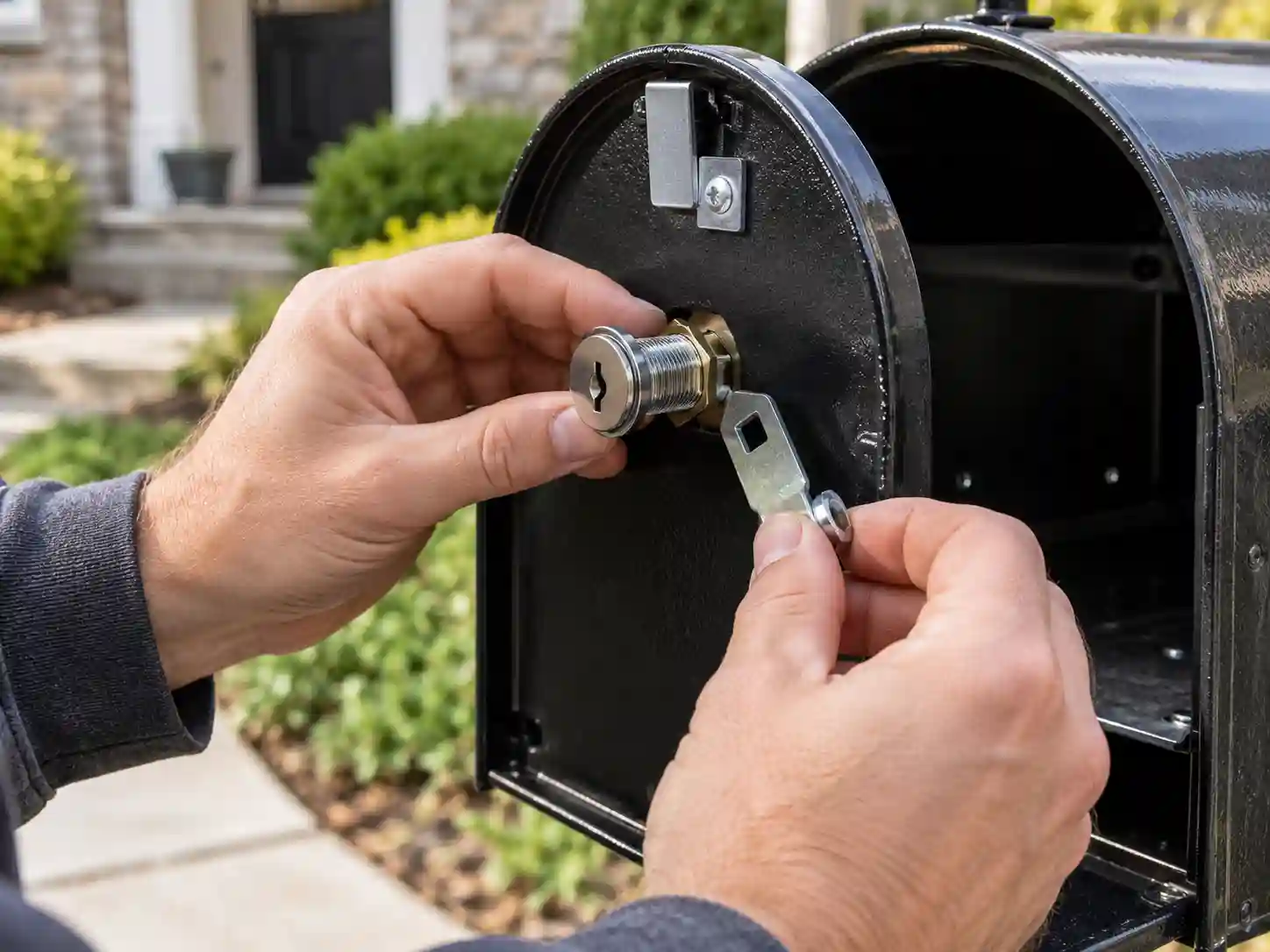
1. First, Find Out Who Owns the Mailbox
This prevents a lot of unnecessary work.
Privately Owned Residential Mailbox
Examples include:
Locking curbside mailbox you purchased
Wall-mounted locking mailbox
Mailbox built into your fence
Recessed mailbox
Private parcel box
In these cases, the homeowner normally maintains:
Keys
Lock cylinder
Retrieval door
Cerniere
Replacement hardware
USPS does not need your private retrieval key to deliver mail into a properly designed locking residential mailbox.
USPS-Maintained Centralized Mailbox
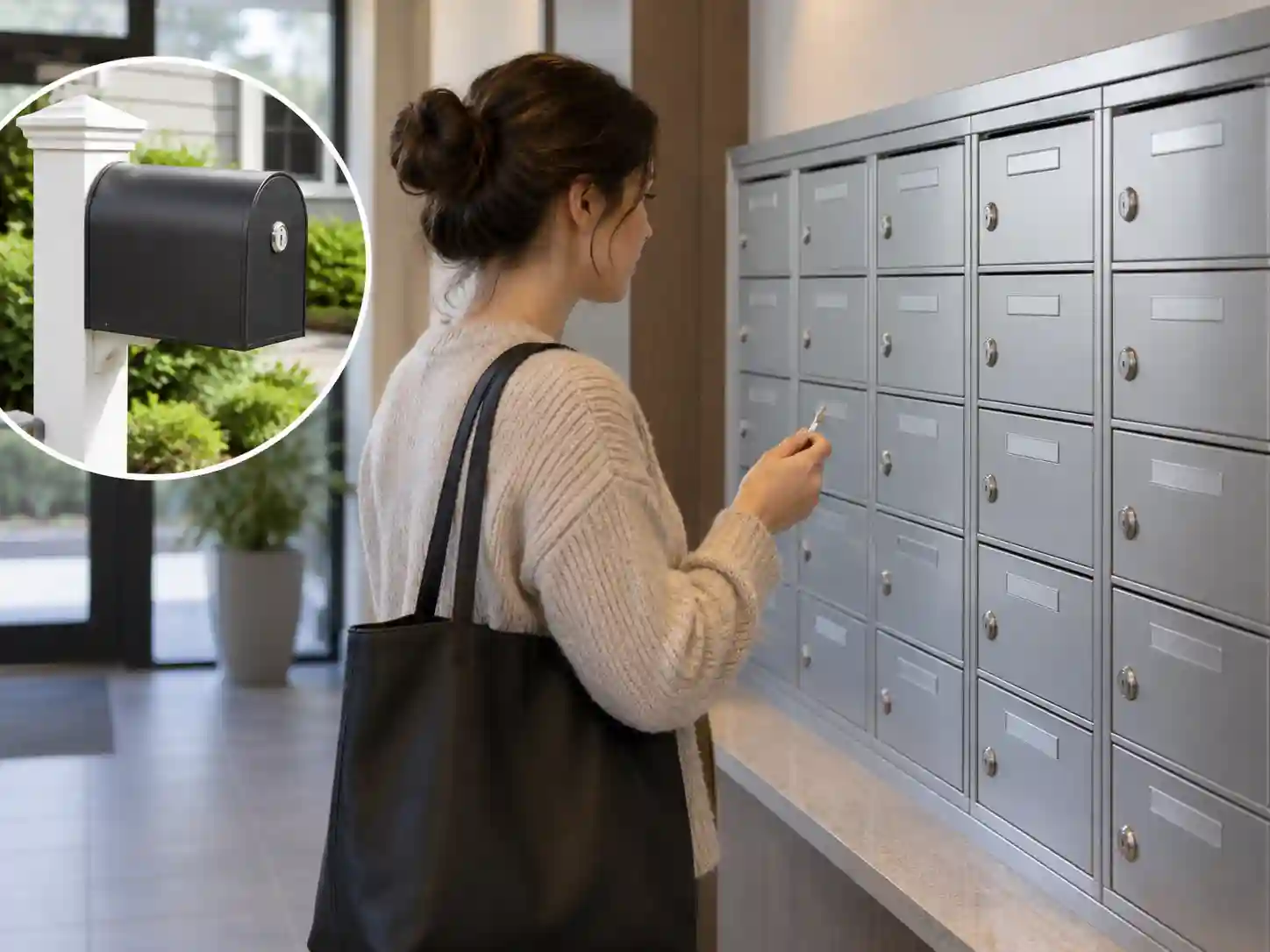
Some apartments, condominiums and residential developments use centralized mailboxes or Cluster Box Units.
If the mailbox is owned and maintained by USPS, contact your local Post Office when all compartment keys are lost, stolen or broken.
USPS does not keep duplicate compartment keys for customers. If all keys are lost, a new lock may need to be installed and replacement keys issued.
Privately Maintained Apartment or Condo Mailbox
Not every apartment mailbox is maintained by USPS.
Some are maintained by:
Building owner
Property manager
HOA
Management company
In that case, contact them rather than USPS.
They may:
Keep a spare key
Have the lock number recorded
Order replacement keys
Arrange lock replacement
PO Box
A PO Box is another category entirely.
PO Box keys and lock replacement are handled directly through USPS.
Do not treat a PO Box like a private residential mailbox.
2. What Should You Do If You Lost a Mailbox Key?
Do these steps in order.
Step 1: Look for a Spare Key
Before replacing anything, check:
Other household members
Previous key storage location
Key organizer
Property manager
Landlord
HOA
A duplicate may already exist.
Step 2: Identify the Mailbox Type
Determine whether it is:
Private mailbox
Apartment mailbox
Cluster Box Unit
PO Box
Step 3: Determine Who Maintains It
Look at:
Lease documents
HOA information
Building management
Local Post Office information
Step 4: Look for Lock Information
For a privately owned mailbox, check:
Manufacturer
Modello
Lock brand
Lock number if present
Owner’s manual
Purchase records
Step 5: Decide Between Key Replacement and Lock Replacement
If a correct replacement key can be obtained securely, changing the whole lock may be unnecessary.
If not, replace the lock.
3. Can You Get a Replacement Mailbox Key?
Sometimes.
It depends on the lock.
Some mailbox manufacturers provide replacement keys when you have:
Key code
Lock number
Product model
Proof of ownership
Other mailbox locks are generic cam locks and are easier to replace completely than to obtain a matching key.
When a Replacement Key Makes Sense
Try to replace only the key when:
The lock works normally
You still have one working key
The key code is known
The manufacturer supports replacement keys
When Lock Replacement Makes More Sense
Replace the lock when:
All keys are lost
No key code is available
The lock is old
The lock is corroded
The cylinder sticks
The mailbox has changed owners
You are concerned someone may have the lost key
If the key was stolen rather than simply misplaced, changing the lock is usually the more secure option.
4. Lost Mailbox Key vs Stolen Mailbox Key
These situations are slightly different.
Misplaced Key
If you believe the key is simply somewhere in your home, ordering a duplicate may be enough.
Stolen Key
If the key may have been stolen with information that identifies your address, consider replacing the lock.
A replacement key restores access.
A replacement lock restores control over who can access the mailbox.
5. How to Replace a Mailbox Lock
This section applies only to a privately owned mailbox that you are authorized to maintain.
If you cannot legally access the mailbox, contact the responsible owner, USPS, property manager or qualified locksmith.
For most simple private mailbox locks, replacement is easiest when the retrieval door is already open.
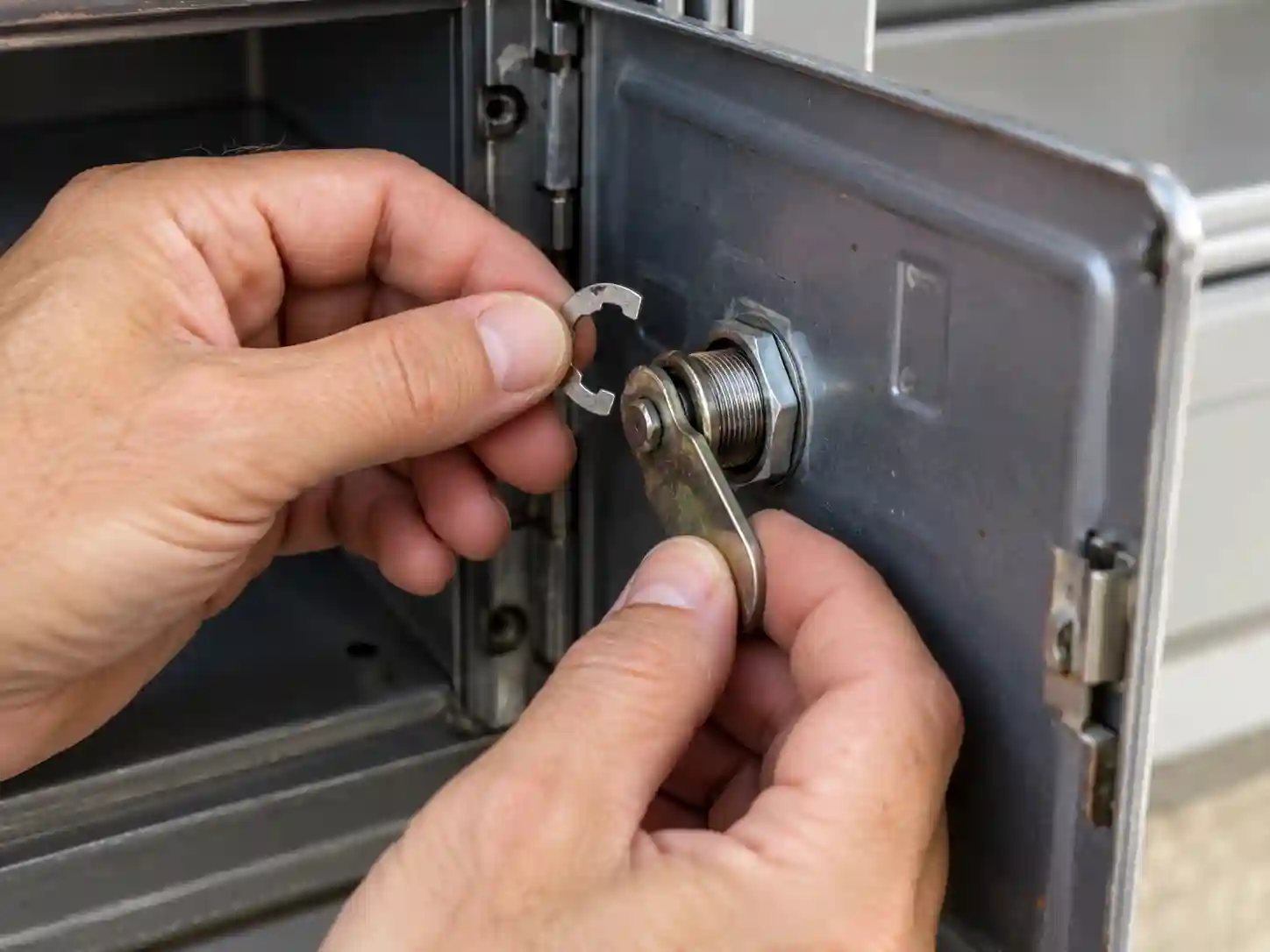
Typical mailbox locks use a small cylinder and a rotating metal piece called a cam.
The general process is:
Open the authorized retrieval door.
Inspect the existing lock from the inside.
Record the lock dimensions and cam position.
Remove the retaining hardware.
Remove the old cylinder.
Install the compatible replacement lock.
Install the correct cam.
Tighten the retaining hardware.
Test the lock before closing the door.
The exact procedure varies by lock design.
Follow the mailbox or lock manufacturer’s instructions whenever available.
6. How to Remove an Old Mailbox Lock
When you have authorized access to the inside of the mailbox, inspect how the cylinder is retained.
Common designs use:
Retaining nut
Clip
Washer
Retaining plate
Before taking anything apart, take a photo.
This gives you a reference for:
Cam direction
Washer position
Lock orientation
Then remove the internal retaining hardware and slide the cylinder out through the front of the door.
Do not damage the door opening.
The replacement cylinder must sit securely in the same area.
7. How to Choose the Correct Replacement Mailbox Lock
This is one of the most important parts of the job.
Two locks can look almost identical from the outside while operating differently.
Check these dimensions and features.
Cylinder Diameter
The cylinder must fit the existing door opening.
Too large:
It will not fit.
Too small:
It may move inside the opening.
Cylinder Length
The cylinder needs to match the thickness of:
Mailbox door
Retaining hardware
A cylinder that is too short may not secure correctly.
A cylinder that is too long may protrude unnecessarily.
Cam Length
The cam is the metal arm behind the cylinder.
Its length determines whether it reaches the mailbox’s locking point.
Too short:
The door may not lock.
Too long:
It may hit the body or prevent the door from closing.
Cam Shape
Cams may be:
Straight
Offset
Bent
Hooked
Do not assume a straight replacement cam will work just because the lock cylinder fits.
Rotation Direction
Some locks turn:
Clockwise
Counterclockwise
90 degrees
180 degrees
Check the existing lock before ordering a replacement.
Spessore della porta
The retaining hardware must tighten correctly around the mailbox door.
Key Removal Position
Some locks allow the key to be removed only when locked.
Others allow different configurations.
Check how you want the mailbox to operate.
Mailbox Lock Measurement Checklist
Before ordering, record:
| Measurement / Feature | Check |
|---|---|
| Cylinder diameter | Sì |
| Cylinder length | Sì |
| Lo spessore della porta | Sì |
| Cam length | Sì |
| Cam shape | Sì |
| Lock rotation | Sì |
| Locked position | Sì |
| Key removal position | Sì |
| Manufacturer / model | If available |
Taking five minutes to measure can prevent ordering the wrong lock.
8. How to Install a New Mailbox Lock
Once you have the correct lock:
Step 1: Insert the Cylinder
Place the cylinder through the mailbox door from the outside.
Make sure the keyway is correctly oriented.
Step 2: Install the Retaining Hardware
Install the:
Washer
Clip
Nut
according to the lock design.
Step 3: Install the Cam
Position it in the same orientation as the original.
Step 4: Tighten the Hardware
The cylinder should not rotate inside the door.
But avoid excessive force that could distort a thin metal door.
Step 5: Test With the Door Open
This is important.
Turn the key several times.
Check that:
Cam rotates freely
Cam does not hit the mailbox body
Key can be removed correctly
Cylinder stays secure
Step 6: Test the Door
Close the door gently.
Confirm that the cam engages correctly.
Do not slam the door while testing a newly installed lock.
9. Why Won’t My New Mailbox Lock Work?
A new lock does not automatically solve every mailbox problem.
If the lock is difficult to operate, check these issues.
Wrong Cam Length
The cam may not reach the locking point.
Cam Too Long
It may press too tightly against the body.
Wrong Cam Angle
The door may close but not lock.
Door Misalignment
The mailbox door may be twisted or sagging.
This can put pressure on the lock.
Cylinder Is Loose
The retaining nut or clip may not be secure.
Mailbox Body Is Bent
A badly deformed mailbox can make a correctly installed lock feel defective.
Always check alignment before blaming the lock.
10. How to Fix a Mailbox Lock That Won’t Turn
Do not immediately force the key.
Start with basic diagnosis.
Check Door Pressure
Push the door gently inward while turning the key.
Then try pulling it slightly outward.
If the key suddenly turns, the problem may be:
door alignment rather than the lock.
Check the Key
Cerca:
Bent key
Worn teeth
Crepe
Sporco
Try another authorized key if available.
Clean the Lock
Remove visible dirt around the cylinder.
Use a lubricant designed for locks rather than heavy grease.
Check for Corrosion
Outdoor mailbox locks are exposed to:
Pioggia
Humidity
Sale
Freezing temperatures
Internal corrosion can eventually make the cylinder unreliable.
If cleaning and lubrication do not restore smooth operation, replacement may be better.
11. How to Fix a Stuck Mailbox Key
A key can become stuck because of:
Wrong key position
Door pressure
Worn key
Damaged cylinder
Corrosione
Try these steps:
Stop applying excessive force.
Return the key gently toward its normal removal position.
Reduce pressure on the mailbox door.
Apply a suitable lock lubricant if needed.
Try gentle movement again.
Do not twist aggressively.
A broken key inside the cylinder creates a more difficult repair.
12. What If the Mailbox Key Breaks Inside the Lock?
Do not push the broken piece deeper.
If part of the key remains accessible, a locksmith may be able to remove it without replacing the lock.
If the broken section is deep inside the cylinder, replacing the lock may be easier.
For:
USPS-maintained mailbox
Apartment mailbox
Condo mailbox
contact the responsible organization instead of attempting to dismantle the lock yourself.
13. Can You Open a Mailbox Without a Key?
If it is your own mailbox and you have lost every key, the correct method depends on ownership.
USPS-Maintained Mailbox
Contact the local Post Office.
Apartment or Condo Mailbox
Contact:
Property manager
Landlord
HOA
Privately Owned Residential Mailbox
Verifica:
Manufacturer
Replacement key service
Qualified locksmith
Authorized lock replacement
Avoid prying or forcing the door.
Doing so can:
Bend the door
Damage the frame
Destroy the lock opening
Create a security problem
Turn a simple lock replacement into a full mailbox replacement
The goal is to restore authorized access without damaging the mailbox.
14. Can USPS Open My Private Locking Mailbox?
A privately owned locking residential mailbox should be designed so the carrier can deliver mail without needing the homeowner’s retrieval key.
The carrier deposits mail through the approved delivery opening.
The homeowner uses the private lock to access the stored mail.
If your mailbox requires the mail carrier to use your personal key for normal delivery, the design or installation should be reviewed.
15. Do Mail Carriers Have a Key to My Locking Mailbox?
For a normal privately owned locking mailbox:
No homeowner retrieval key should be required for normal mail delivery.
The delivery opening must be large enough for the normal daily mail volume.
This is different from centralized mailbox systems, where USPS may use separate authorized master access for delivery while residents use individual compartment keys.
16. What If You Lose All Keys to a USPS Cluster Mailbox?
For a USPS-owned and maintained Cluster Box Unit, contact your local Post Office.
USPS does not keep duplicate customer compartment keys.
If every key has been lost, the compartment lock may need to be replaced before new keys can be issued.
Do not attempt to pry open the compartment.
17. What If You Lose an Apartment Mailbox Key?
First ask:
Does USPS or the property maintain the mailbox?
If the apartment complex owns and maintains it:
Contact:
Building manager
Landlord
Maintenance office
They may have:
Spare key
Key records
Replacement lock procedure
If USPS owns and maintains the centralized unit:
Contact the local Post Office.
This one distinction can save a lot of time.
18. Should You Duplicate Your Mailbox Key?
Having a spare is useful.
For a privately owned mailbox, consider keeping one duplicate somewhere secure.
Do not label a spare key with:
Full address
Mailbox location
Other information that makes it easy to identify
For USPS-maintained compartment keys, USPS currently states customers may duplicate their keys at their own expense.
A spare can prevent an entire lock replacement after the original key is lost.
19. When Should You Replace the Lock Instead of Making Another Key?
Replace the lock when:
Key was stolen
Cylinder feels worn
Lock frequently sticks
Key requires excessive movement
Corrosion is visible
Previous occupant may still have keys
Unknown duplicates may exist
A new key does not solve a worn or compromised lock.
20. When Should You Replace the Whole Mailbox?
Sometimes the lock is only one symptom of an aging mailbox.
Look at the area around the cylinder.
Replace the mailbox if you find:
Severe Rust Around the Lock
A strong new lock will not help if the surrounding sheet metal is weak.
Bent Retrieval Door
If the door no longer sits square, the new lock may continue to bind.
Damaged Lock Opening
Repeated lock replacement or forced entry can enlarge the hole.
Broken Hinges
A secure lock cannot compensate for a weak door hinge.
Severe Water Damage
Repeated moisture can affect:
Blocco
Porta
Hardware
Mail
Insufficient Security
Older mailbox designs may have:
Large openings
Weak doors
Exposed hardware
Insufficient Capacity
If you now receive more packages, replacing the lock does not solve the real problem.
A parcel box may be a better upgrade.
Replacement Lock vs New Mailbox
Use this table as a quick guide.
| Condition | Replace Key | Replace Lock | Replace Mailbox |
|---|---|---|---|
| One key lost, spare available | ✓ | Facoltativo | No |
| All keys lost | Maybe | ✓ | Di solito no |
| Key stolen | No | ✓ | Di solito no |
| Lock sticks repeatedly | No | ✓ | Maybe |
| Cylinder corroded | No | ✓ | Maybe |
| Door badly bent | No | Maybe | ✓ |
| Rust around lock opening | No | Maybe | Often |
| Broken hinge | No | Maybe | Depends |
| Mailbox too small | No | No | ✓ |
| Need package security | No | No | Consider parcel box |
21. How to Prevent Losing Your Mailbox Key Again
Once the new key or lock is installed, reduce the chance of repeating the problem.
Keep a Spare
Store one in a secure location.
Do Not Keep Every Copy Together
If the entire keyring disappears, you still need access to another copy.
Label Carefully
Avoid writing the full property address on the key.
Replace Worn Keys Early
A worn key can eventually:
Stop working
Break
Damage the cylinder
Maintain the Lock
Occasionally check for:
Corrosione
Sporco
Difficult rotation
Small maintenance can prevent lock failure.
22. Mailbox Lock Maintenance Tips
Outdoor locks need basic maintenance.
Keep Water Out
Do not direct:
Hose
Pressure washer
Sprinkler
directly into the cylinder.
Use the Right Lubricant
Use a product intended for locks.
Avoid filling the cylinder with thick grease.
Check Door Alignment
If the lock suddenly becomes hard to turn, inspect the door before replacing the cylinder.
Pulisci il sale costiero
Salt exposure can accelerate corrosion.
Rinse the surrounding mailbox surfaces periodically with fresh water.
23. Common Mailbox Key and Lock Mistakes
1. Assuming USPS Maintains Every Mailbox
Many apartment and private residential mailboxes are maintained by the property owner.
2. Forcing a Stuck Key
This can break the key inside the lock.
3. Ordering a Lock by Appearance Alone
Measure the cylinder and cam.
4. Ignoring Cam Direction
A correct cylinder with the wrong cam may not lock the door.
5. Closing the Door Before Testing the New Lock
Always test the mechanism while the door is open first.
6. Over-Tightening the Cylinder
Thin mailbox doors can deform.
7. Using Heavy Grease in the Lock
It can trap dirt.
8. Replacing the Lock Without Checking Door Alignment
The new lock may develop the same problem.
9. Keeping a Lost-Key Lock After Suspected Theft
If unauthorized access is possible, replace the lock.
10. Forcing Open a Locked Mailbox
You may turn a simple key problem into a damaged mailbox.
Mailbox Key and Lock Checklist
If the Key Is Lost
Spare key checked
Mailbox ownership confirmed
USPS / manager contacted if applicable
Manufacturer checked
Lock replacement considered
If the Lock Is Stuck
Key inspected
Door pressure checked
Dirt removed
Correct lubricant used
Corrosion checked
Before Buying a Lock
Cylinder diameter measured
Cylinder length measured
Door thickness checked
Cam length checked
Cam shape checked
Rotation direction checked
After Installing
Lock tested with door open
Cam moves freely
Door closes correctly
Key removes normally
Cylinder does not move
Mailbox remains secure
Domande frequenti
What Should I Do If I Lost My Mailbox Key?
First determine who owns and maintains the mailbox.
For a private mailbox, check for a spare key or manufacturer replacement before replacing the lock.
For a centralized apartment or USPS-maintained mailbox, contact the responsible manager or local Post Office.
How Do I Get a Replacement Mailbox Key?
If you know the manufacturer or key code, you may be able to order another key.
If no key information is available, replacing the lock may be easier.
Can USPS Give Me a New Mailbox Key?
For a USPS-maintained centralized mailbox, contact the local Post Office.
If all compartment keys are lost, the lock may need to be replaced.
Does USPS Keep a Spare Mailbox Key?
For USPS-maintained Cluster Box Unit customer compartments, USPS states that it does not keep duplicate customer keys.
Can I Replace My Own Mailbox Lock?
For a privately owned mailbox that you are authorized to maintain, many simple cam locks can be replaced using compatible hardware.
Follow the mailbox or lock manufacturer’s instructions.
How Do I Know What Mailbox Lock to Buy?
Measure:
Cylinder diameter
Cylinder length
Lo spessore della porta
Cam length
Cam shape
Rotation direction
Do not select a lock by appearance alone.
Why Won’t My Mailbox Key Turn?
Tra le possibili cause figurano:
Door misalignment
Worn key
Sporco
Corrosione
Damaged lock cylinder
Check door pressure before assuming the lock itself has failed.
Can I Spray Lubricant Into a Mailbox Lock?
Use only a lubricant suitable for lock cylinders.
Avoid heavy grease that can attract dirt.
What Should I Do If My Mailbox Key Breaks?
Do not push the broken section deeper.
For managed or USPS mailboxes, contact the responsible organization.
For your own private mailbox, a locksmith may be able to extract the broken key or replace the cylinder.
Should I Change the Lock If My Mailbox Key Was Stolen?
Usually yes.
A new lock prevents the missing key from continuing to provide access.
Can a Mail Carrier Open My Private Locking Mailbox?
A properly designed private locking mailbox allows the carrier to deposit mail without needing your retrieval key.
Is It Better to Replace the Lock or the Whole Mailbox?
Replace only the lock when the:
Door is sound
Body is structurally strong
Hinges work properly
Lock opening is undamaged
Consider a new mailbox when the surrounding structure is badly rusted, bent or insecure.
Losing a Mailbox Key Does Not Always Mean Replacing the Mailbox
Start with ownership.
If the mailbox belongs to a property manager or USPS, contact the responsible organization.
If it is your privately owned residential mailbox, check whether a replacement key is available.
If not, a compatible replacement lock is often a relatively simple solution when the door and mailbox body are still in good condition.
The important part is to solve the correct problem.
A missing key needs access restored.
A stolen key may require the lock changed.
A sticking lock may actually be caused by door misalignment.
And a badly rusted mailbox may need more than a new cylinder.
Replacing an Old Locking Mailbox?
If the mailbox itself is no longer secure, think about what you want the replacement to improve.
Consider:
Locking security
Anti-fishing design
Door strength
Accesso anteriore o posteriore
Weather resistance
Mail capacity
Package capacity
Installation method
HomeBox Solutions supplies different locking mailboxes, front-access mailboxes, rear-access mailboxes and parcel boxes for residential and project applications.
If you need a replacement for an existing installation, send us:
Mailbox dimensions
Installation photos
Post, wall or recessed mounting type
Front or rear retrieval requirement
Typical mail or package size
Required security level
Choosing the mailbox around the existing opening or mounting structure can reduce modification work and improve long-term usability.