Blog, Mailbox
Cómo pintar un buzón de metal: preparación, imprimación, pintura y prevención del óxido
27
Oct
Oct
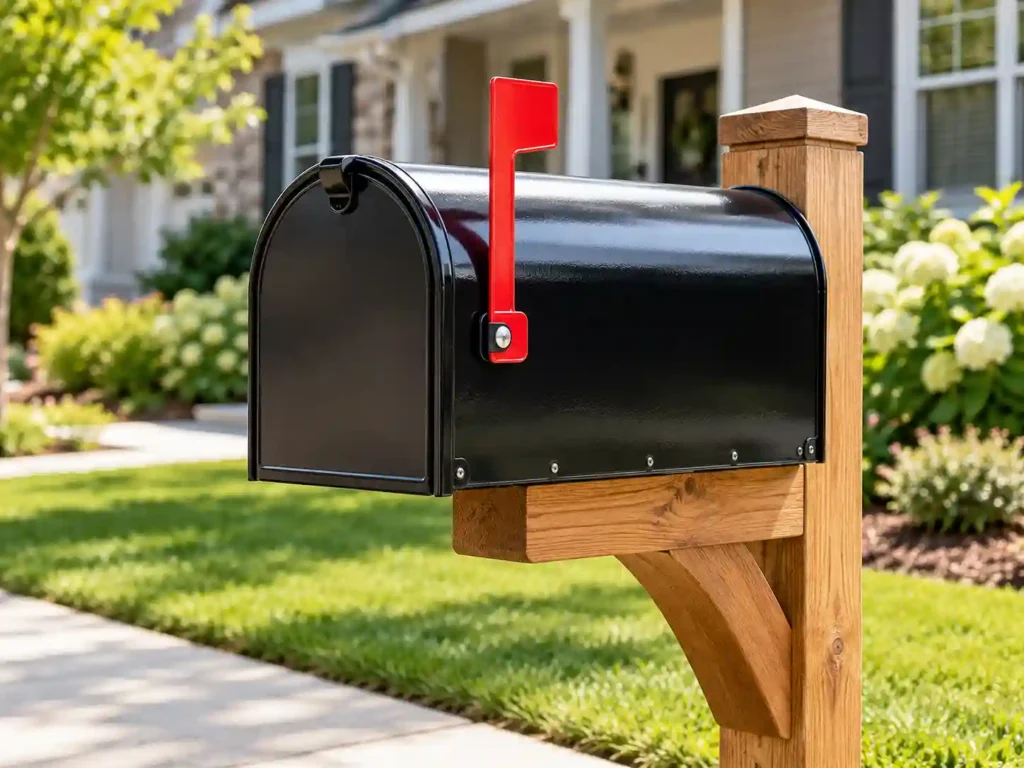
A metal mailbox can last for years, but the finish will not stay perfect forever.
Sunlight can fade the color. Rain can work into scratches. Road salt can attack exposed steel. Small rust spots may appear around hinges, screws, seams or the mailbox flag.
The good news is that you often do not need to replace the mailbox.
If the body is still structurally sound, repainting can restore the appearance and protect the metal from further corrosion.
But good results depend much more on preparation than on the final coat of paint.
If you spray new paint over dirt, loose coating or active rust, the finish may peel again quickly.
A better process is:
Clean → inspect → remove rust → sand → prime → paint → cure → maintain
This guide explains each step.
Quick Guide: What Do You Need to Paint a Metal Mailbox?
The exact tools depend on the condition of the mailbox, but a typical project may need:
| Artículo | Why You Need It |
|---|---|
| Mild soap and water | Remove dirt and surface contamination |
| Soft cloth or sponge | General cleaning |
| Wire brush | Remove loose rust |
| Sandpaper | Smooth old paint and prepare metal |
| Rust remover | Optional for stubborn corrosion |
| Painter’s tape | Protect locks, hinges and hardware |
| Drop cloth | Protect the ground |
| Metal primer | Improve adhesion and corrosion protection |
| Exterior metal paint | Provide the final finish |
| Spray paint or brush | Apply coating |
| Gloves | Protect your hands |
| Dust mask or respirator | Useful during sanding or spraying |
| Clean cloth | Remove sanding dust |
You may not need every item.
A mailbox with intact paint and no rust needs much less preparation than a badly weathered steel box.
Should You Paint or Replace the Mailbox?
Before spending time refinishing the mailbox, check whether the body is worth saving.
Painting makes sense when the mailbox has:
Faded paint
Light surface rust
Small scratches
Peeling finish
Cosmetic wear
Minor surface staining
Replacement may be better when you find:
Large rust holes
Severely weakened metal
Torn mounting points
Large cracks
A badly twisted body
A door that cannot be aligned
Severe corrosion around the lock
Repeated water damage
Paint can protect sound metal.
It cannot restore metal that has already lost its strength.
Can You Paint Any Metal Mailbox?
Most steel and aluminum mailboxes can be refinished, but the preparation may vary.
Painted Steel Mailbox
Usually straightforward to repaint.
You need to:
Remove loose paint
Remove rust
Sand the surface
Prime exposed metal
Apply exterior metal paint
Powder-Coated Steel Mailbox
Powder coating is durable, so you do not need to remove all of it if it is still firmly attached.
Instead:
Clean thoroughly
Sand lightly to create adhesion
Remove damaged areas
Prime exposed steel
Apply a compatible finish
Aluminum Mailbox
Aluminum does not rust like steel, but paint may still peel if the surface is not prepared properly.
Use a primer that is suitable for aluminum or other non-ferrous metal.
Stainless Steel Mailbox
Stainless steel is usually selected for its natural finish, so repainting is less common.
If you do paint it, surface preparation and primer choice become especially important.

Should You Remove the Mailbox Before Painting?
You can paint a mailbox either installed or removed.
Both methods work.
Painting the Mailbox While It Is Installed
This is easier when:
The mailbox is securely mounted
You only need a light repaint
The underside does not need much work
Removing the box would be difficult
You must carefully protect:
Post
Ground
Plants
Road
Nearby walls
Removing the Mailbox First
Removal is usually better when:
There is rust underneath
The bottom needs refinishing
You want the most even spray finish
Mounting hardware also needs inspection
The mailbox can be removed easily
Working on a bench also makes sanding and painting easier.
Practical Tip
Take a few photos before removing the mailbox.
This helps you remember:
Screw positions
Mounting board location
Brackets
Hardware arrangement
How to Prepare a Metal Mailbox for Painting
Preparation is the most important part of the job.
Do not rush it.
A clean, stable surface gives paint something to bond to.
Step 1: Empty the Mailbox
Remove all:
Letters
Packages
Labels
Address cards
Loose debris
If possible, remove any detachable internal parts.
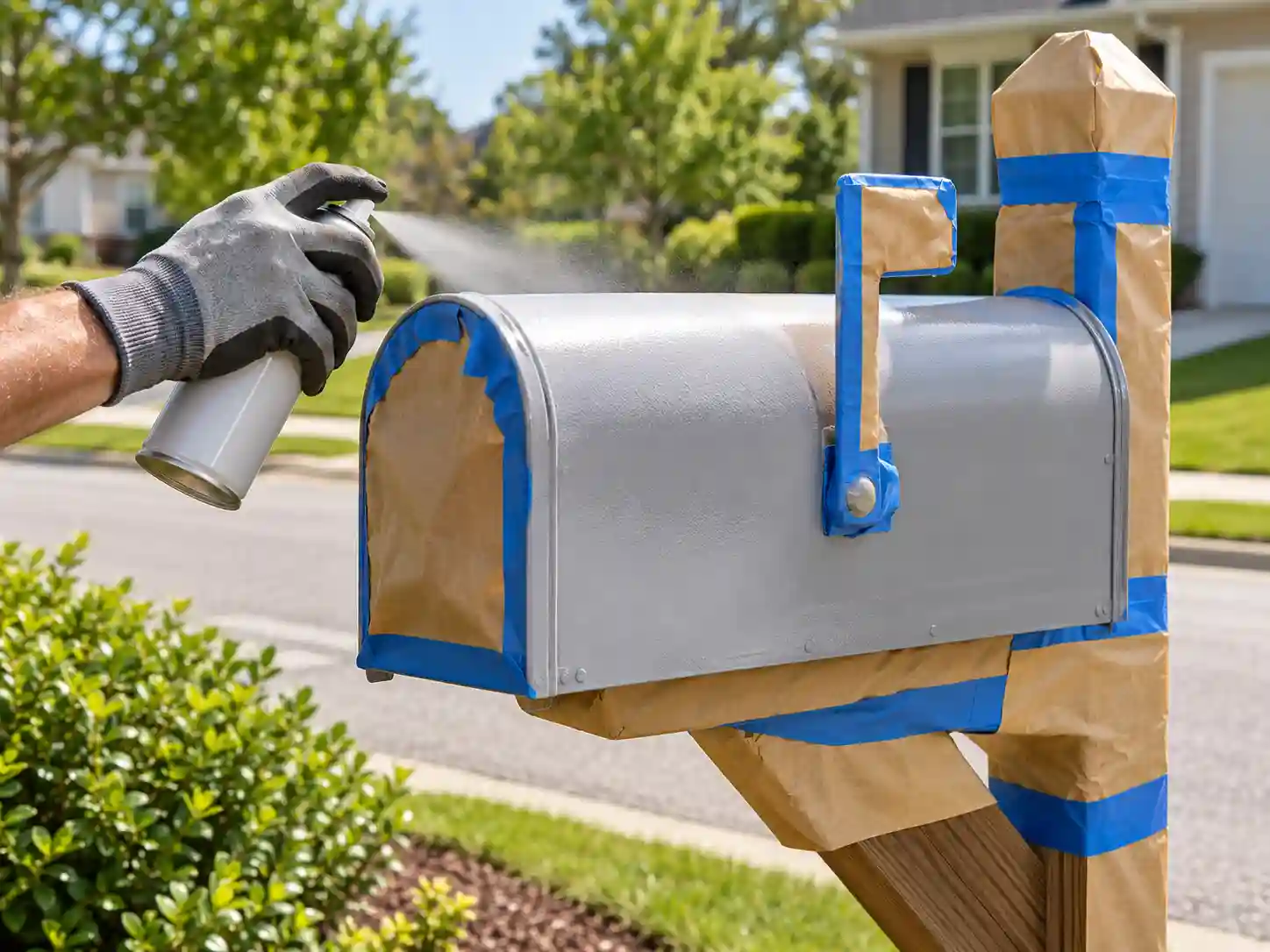
Step 2: Remove or Protect Hardware
You may be able to remove:
Mailbox flag
Cerrar
Decorative numbers
Handle
Magnetic catch
If you cannot remove them, protect them with painter’s tape.
Do not spray paint directly into:
Lock cylinders
Hinges
Moving pivots
Paint can interfere with movement.
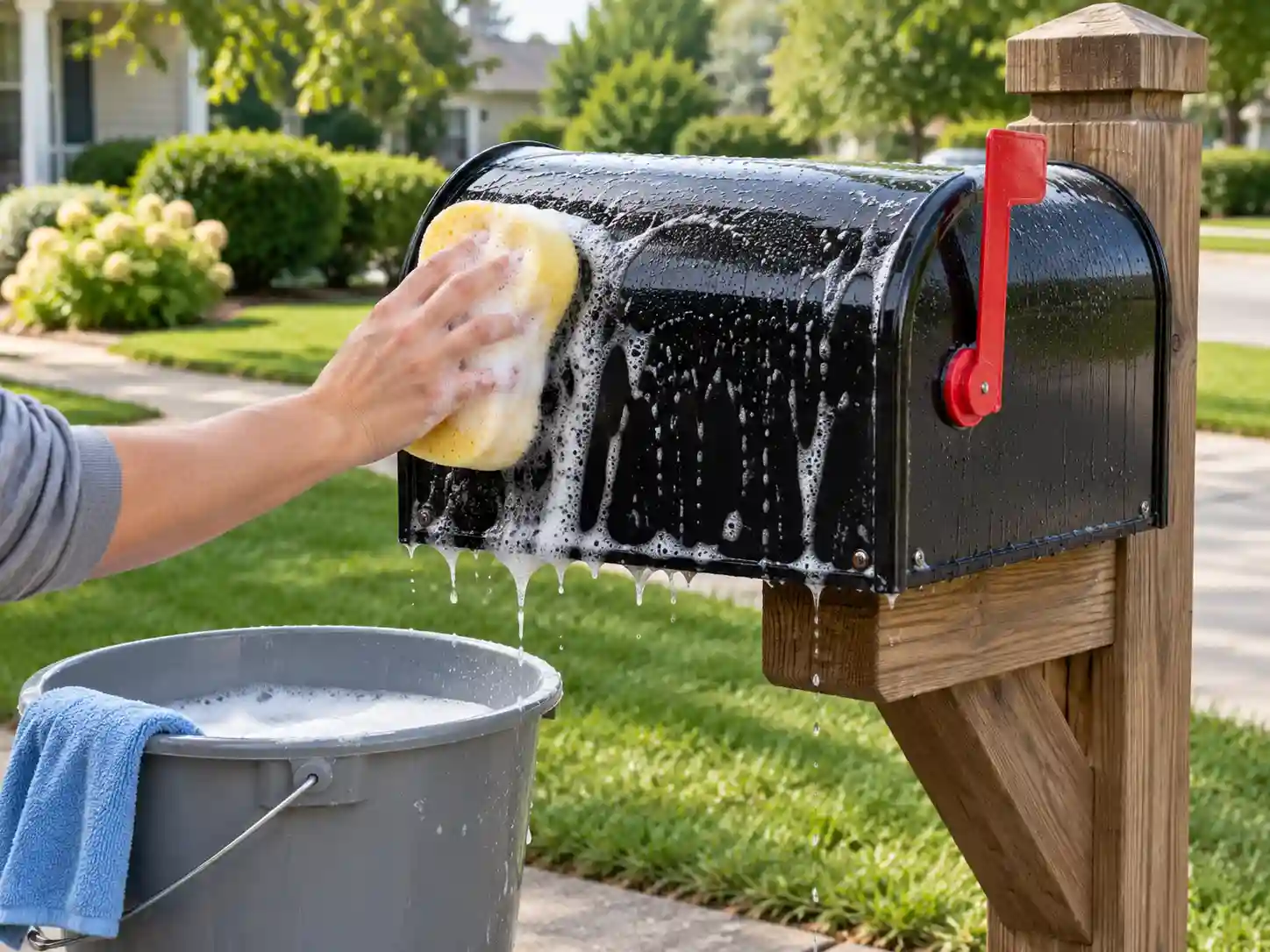
Step 3: Wash the Mailbox
Use mild soap and water.
Clean away:
Dust
Road grime
Pollen
Grease
Bird droppings
Salt deposits
Pay extra attention to seams and bottom edges.
Step 4: Dry Completely
Do not sand or paint a wet mailbox.
Water trapped around seams or hardware can interfere with primer and paint.
Allow the surface to dry fully.
How to Remove Old Paint From a Mailbox
You do not always need to remove all the old paint.
If the existing coating is:
Smooth
Firmly attached
Not peeling
you can usually sand it lightly and paint over it.
If the coating is:
Peeling
Flaking
Bubbling
Loose
remove the damaged areas first.
Use a Scraper Carefully
A plastic or suitable metal scraper can remove loose coating.
Do not gouge the mailbox surface.
Sand the Edges
Where old paint meets bare metal, sand the edge smooth.
You do not want a sharp ridge under the new finish.
How to Remove Rust Before Painting a Mailbox
Do not paint directly over loose rust.
Rust needs to be removed or stabilized first.
Light Surface Rust
For small spots:
Clean the area.
Use sandpaper or a wire brush.
Remove loose orange or brown corrosion.
Smooth the surrounding paint.
Wipe away dust.
Prime the exposed metal.
This is enough for many mailbox repairs.
Moderate Rust
If corrosion covers a larger area, use:
Wire brush
Sanding block
Power sanding tool carefully
Suitable rust-treatment product
Remove as much loose corrosion as possible.
Deep Rust
If the metal has:
Holes
Severe pitting
Thin edges
Flaking layers
stop and inspect the structure.
If the mailbox is losing strength, repainting may only hide the problem.
How Smooth Does the Mailbox Need to Be?
It does not need to look like polished metal.
The goal is:
No loose rust
No loose paint
No sharp peeling edges
Clean surface
Slight texture for adhesion
Paint usually bonds better to a lightly sanded surface than to a glossy one.
What Sandpaper Should You Use?
The exact grit depends on the job.
A practical approach is:
For Removing Rust or Loose Paint
Use a more aggressive grit.
For Smoothing the Surface
Move to a medium grit.
Before Painting
Finish with a finer grit so the surface is smooth but not polished.
You do not need to make the metal mirror-smooth.
Do You Need Primer on a Metal Mailbox?
In many cases, yes.
Primer is especially important when:
Bare steel is exposed
Rust has been removed
Aluminum is being painted
Old coating has been sanded heavily
You want better corrosion resistance
Primer helps:
Paint adhesion
Surface uniformity
Rust protection
Final color consistency
Can You Skip Primer?
Sometimes.
If you are using a paint specifically designed as a direct-to-metal coating, the manufacturer may allow application without a separate primer.
But check the product instructions.
Do not assume that every spray paint works the same way.
What Primer Should You Use?
Choose a primer that matches the material.
Steel Mailbox
Use a metal or rust-inhibiting primer.
Aluminum Mailbox
Use a primer suitable for aluminum or non-ferrous metal.
Previously Painted Surface
Use a primer compatible with both:
Existing coating
New topcoat
Compatibility matters.
How to Apply Primer
Apply thin, even coats.
Avoid trying to cover everything with one heavy coat.
Heavy primer can:
Run
Drip
Dry slowly
Create uneven texture
Allow the primer to dry according to the product instructions.
What Paint Should You Use on a Metal Mailbox?
Choose paint designed for:
Exterior use
Metal surfaces
Weather exposure
Common choices include:
Exterior spray paint for metal
Rust-resistant enamel
Exterior metal paint
Industrial-style metal coating
What Finish Is Best?
Common finishes include:
Matte
Hides small imperfections well.
Satin
Provides a moderate sheen and is easy to maintain.
Semi-Gloss
Easier to wipe clean and often gives a more finished appearance.
Gloss
Offers a shiny appearance but can highlight dents and surface imperfections.
There is no single best finish.
Choose based on the mailbox style and surrounding property.
Spray Paint vs Brush-On Paint
Both can work.
The better option depends on the project.
| Factor | Spray Paint | Brush-On Paint |
|---|---|---|
| Smooth finish | Excellent | Good |
| Curved mailbox body | Excellent | Good |
| Speed | Fast | Slower |
| Overspray risk | Higher | Low |
| Small touch-up | Less convenient | Excellent |
| Large flat surface | Good | Good |
| Control near hardware | Lower | Higher |
| Professional-looking finish | Easier | Depends on technique |
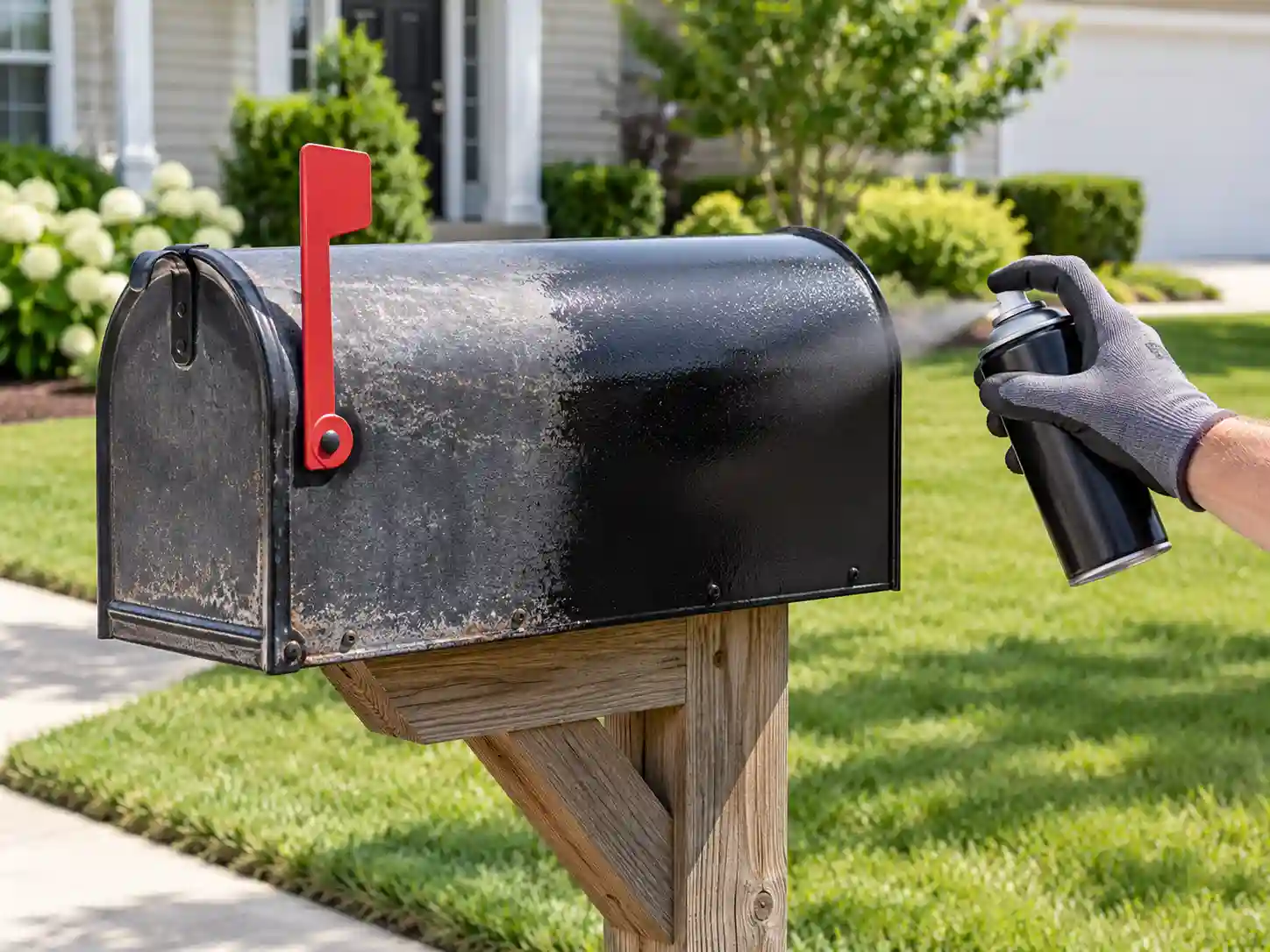
For traditional curved metal mailboxes, spray paint often produces the most even finish.
How to Spray Paint a Metal Mailbox
Spray painting works best with good preparation and light coats.
Step 1: Choose a Suitable Location
Work in a:
Well-ventilated area
Dry area
Low-wind environment
Dust-free space
Avoid spraying outdoors in strong wind.
Overspray can travel farther than you expect.
Step 2: Mask Everything You Do Not Want Painted
Protect:
Cerrar
Hinges
Flag pivot
Address numbers
Post
Ground
Surrounding wall
Step 3: Shake the Can Thoroughly
Follow the paint manufacturer’s instructions.
Proper mixing helps produce a more consistent finish.
Step 4: Start Spraying Before Reaching the Mailbox
Begin the spray slightly outside the surface.
Move smoothly across the mailbox.
Stop spraying after moving past the other edge.
This helps prevent heavy paint buildup at the start and end of each pass.
Step 5: Use Thin Coats
Do not try to get full coverage in one pass.
Several light coats are usually better than one thick coat.
Heavy coats can produce:
Runs
Sagging
Slow curing
Uneven gloss
Step 6: Overlap Each Pass Slightly
This helps create consistent coverage.
Step 7: Let Each Coat Dry
Follow the recoat time on the paint label.
Do not guess.
Some paints need the next coat within a certain time window.
How Many Coats of Paint Does a Mailbox Need?
Two or three light topcoats are common, but always follow the paint manufacturer’s recommendations.
Coverage depends on:
Paint color
Primer color
Surface condition
Paint type
Application method
Dark colors over a similar primer may cover faster than light colors over dark metal.
How to Paint a Mailbox With a Brush
Brush painting is useful when:
You cannot use spray paint
Overspray is a concern
The mailbox is installed near a wall
You are doing a small repair
Use a good-quality brush designed for the paint.
Use Thin Coats
Avoid loading too much paint onto the brush.
Brush in smooth strokes.
Watch the Edges
Paint tends to collect around:
Door edges
Bottom seams
Flag brackets
Corners
Remove excess paint before it forms a drip.
Allow Proper Drying
Do not close the mailbox door while wet paint is touching both surfaces.
The door may stick.
How to Paint Around the Mailbox Door
The door needs special attention because it moves.
Open the door and paint:
Exterior face
Edges
Interior lip if required
Avoid creating thick paint buildup where the door contacts the body.
Too much coating can change the fit.
How to Paint Around the Mailbox Flag
Removing the flag is usually easier.
If it cannot be removed:
Move it up
Paint the exposed area
Allow it to dry
Move it down
Paint the remaining area
Do not coat the pivot so heavily that the flag cannot move.
How to Paint Around Hinges
Avoid filling hinge gaps with paint.
Heavy paint buildup can make the hinge stiff.
Protect moving joints where practical.
Should You Paint the Inside of a Mailbox?
Usually, the outside needs more attention than the inside.
Painting the inside may make sense if:
There is exposed metal
Interior rust has started
The original coating has failed
If you paint the interior:
Use a suitable coating
Allow it to cure completely
Keep drainage holes open
Avoid heavy buildup
Do not put mail back inside until the coating is fully cured.
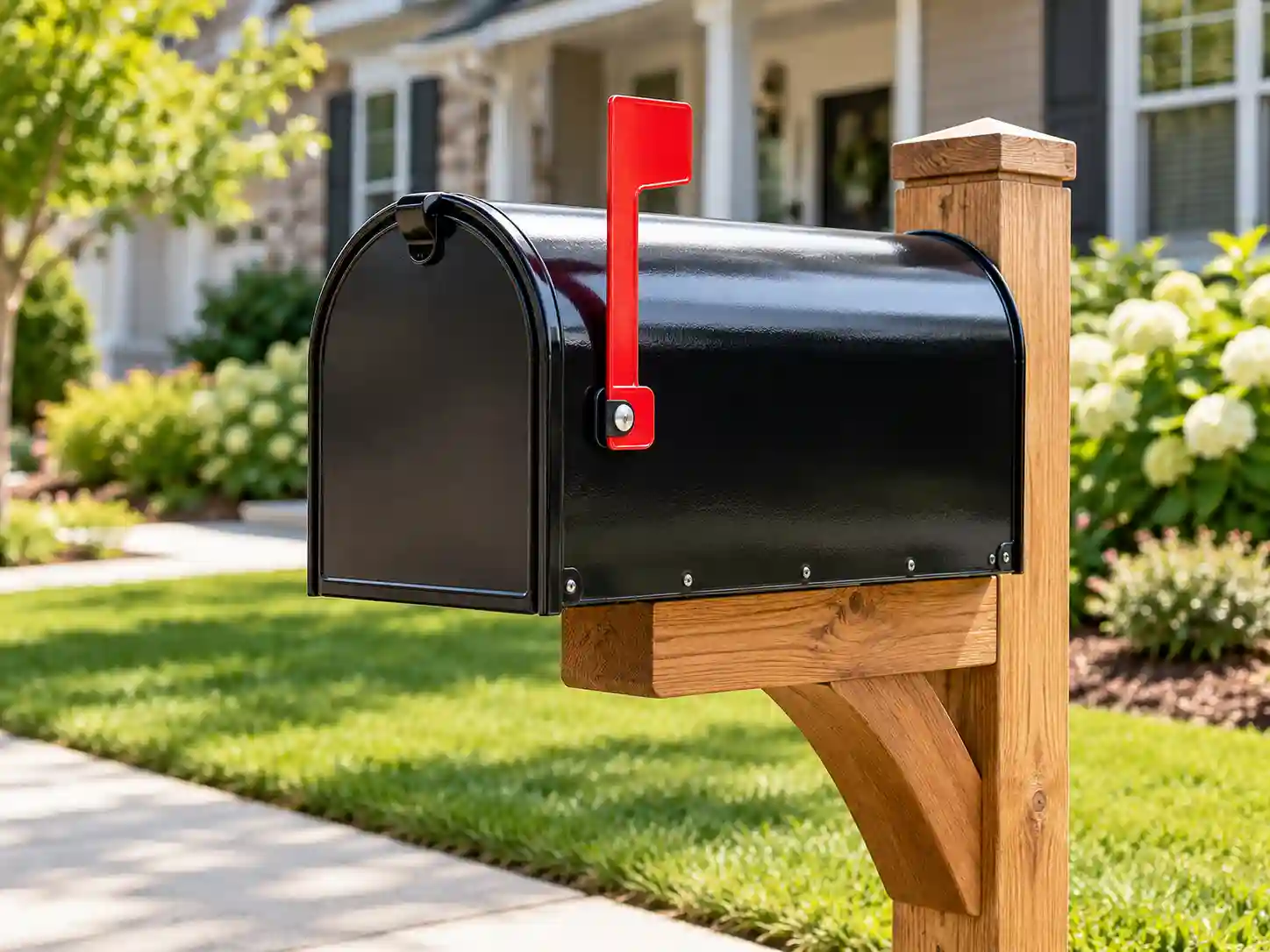
How Long Should Mailbox Paint Dry?
Drying and curing are different.
Dry to Touch
The surface no longer feels wet.
Recoat Time
The recommended time before applying another coat.
Full Cure
The coating reaches its final hardness and durability.
A mailbox may feel dry long before it is fully cured.
Follow the manufacturer’s label.
Weather also affects drying time.
Avoid Painting in Poor Weather
Do not paint when conditions are:
Too cold
Too hot
Very humid
Rainy
Windy
Temperature and humidity can affect:
Adhesion
Gloss
Drying
Finish quality
How to Paint a Mailbox Without Removing It
If the mailbox stays installed:
Protect the Post
Wrap or mask the post carefully.
Protect the Ground
Use:
Drop cloth
Cardboard
Plastic sheeting
Protect Nearby Plants
Overspray can land on leaves and flowers.
Watch the Wind
Do not spray when wind can carry paint toward:
Cars
Houses
Sidewalks
Neighboring property
Paint the Underside Carefully
The bottom is easy to miss.
Inspect it for rust before finishing the job.
How to Prevent Rust After Painting
A new coat of paint is only part of rust prevention.
Long-term protection depends on maintenance.
Repair Scratches Early
If you see exposed metal, touch it up before rust spreads.
Keep the Mailbox Clean
Dirt and salt can hold moisture against the surface.
Wash periodically.
Keep Drainage Open
Standing water can speed up corrosion.
Inspect Hinges and Screws
Rust often begins around hardware.
Check:
Rivets
Screws
Flag pivot
Door hinge
Mounting points
Clean Coastal Salt
If the mailbox is near the coast, rinse it more frequently with fresh water.
Avoid Constant Sprinkler Spray
A sprinkler hitting the mailbox every day creates unnecessary moisture exposure.
Adjust the irrigation system if possible.
How to Protect the Bottom of a Metal Mailbox
The bottom is easy to ignore.
But it can collect:
Water
Dirt
Road salt
Moisture from the mounting board
When repainting, inspect underneath.
If the bottom is rusty:
Remove the mailbox if possible.
Clean the underside.
Remove corrosion.
Prime exposed metal.
Repaint.
Do not repaint only the visible top and sides if the bottom is deteriorating.
Common Mailbox Painting Mistakes
1. Painting Over Dirt
Paint needs a clean surface.
2. Painting Over Loose Rust
Rust may continue underneath.
3. Skipping Surface Preparation
Glossy old paint may provide poor adhesion.
4. Applying One Heavy Coat
Thin coats usually produce a better finish.
5. Spraying the Lock
Paint can damage the lock mechanism.
6. Painting Moving Hinges Too Heavily
The door may become difficult to operate.
7. Blocking Drainage Holes
Keep drainage open.
8. Painting in Strong Wind
This causes overspray and uneven coverage.
9. Reassembling Too Soon
Fresh paint can stick or scratch.
10. Ignoring Rust on the Bottom
Hidden corrosion can continue even when the visible surface looks new.
Metal Mailbox Painting Checklist
Before Painting
Mail removed
Surface washed
Mailbox dry
Loose paint removed
Rust removed
Surface sanded
Dust cleaned
Hardware protected
Primer
Correct primer selected
Bare metal covered
Primer dry before topcoat
Paint
Exterior metal paint selected
Thin coats applied
Runs checked
Door edges inspected
Hinges kept functional
Drainage openings clear
After Painting
Coating allowed to cure
Hardware reinstalled
Door tested
Flag tested
Lock tested
Mounting checked
Frequently Asked Questions
What Paint Should I Use on a Metal Mailbox?
Use an exterior coating designed for metal surfaces.
Rust-resistant enamel or exterior metal spray paint are common options.
Can You Spray Paint a Metal Mailbox?
Yes.
Spray paint often works especially well on curved mailbox bodies because it can create a smooth, even finish.
Do I Need to Sand a Mailbox Before Painting?
Usually, yes.
Light sanding helps remove loose coating and gives new paint a better surface to bond to.
Do I Need Primer Before Painting a Mailbox?
Primer is strongly recommended when bare metal is exposed or rust has been removed.
Some direct-to-metal paints may have different instructions.
Can I Paint Over Rust?
Do not paint directly over loose or active rust.
Remove loose corrosion and prepare the metal first.
How Do I Paint a Rusty Mailbox?
Clean it, remove rust, smooth the surface, apply rust-resistant primer and then apply a suitable exterior metal paint.
Can I Paint a Mailbox Without Removing It?
Yes.
Protect the post, plants, ground and nearby surfaces carefully.
Can I Paint a Powder-Coated Mailbox?
Yes, if the existing coating is firmly attached.
Clean it thoroughly, sand lightly and use compatible primer and paint where necessary.
Can I Use Regular Interior Paint?
No.
A mailbox is exposed to rain, UV light and temperature changes.
Use a coating designed for exterior use and suitable for metal.
How Many Coats of Spray Paint Should I Use?
Several thin coats are usually better than one heavy coat.
Follow the specific paint manufacturer’s instructions.
How Long Should Paint Dry Before I Use the Mailbox?
Follow the coating manufacturer’s curing time.
A surface that feels dry may still be soft underneath.
Should I Paint the Inside of a Mailbox?
Usually only if the interior coating is damaged or rust is present.
Keep drainage openings clear and allow the paint to cure fully.
How Do I Stop a Painted Mailbox From Rusting Again?
Keep the coating intact, repair scratches early, clean salt and dirt away, keep drainage open and inspect hardware regularly.
Repainting Can Extend the Life of a Good Mailbox
A faded or lightly rusted mailbox does not always need to be replaced.
If the metal body is still strong, a proper repaint can improve both:
appearance
and
corrosion protection.
The most important steps happen before the color coat.
Clean the surface.
Remove loose rust.
Sand damaged areas.
Prime exposed metal.
Then apply thin, even coats of suitable exterior paint.
If you skip preparation, even expensive paint may fail quickly.
But if the mailbox already has major rust holes, severe structural damage or repeated water problems, a new finish may only hide a larger issue.
At that point, replacement may be the better long-term choice.
Repainting or Replacing Your Mailbox?
If you are deciding whether to restore an existing mailbox or replace it, check:
Extent of rust
Condition of the door
Mounting points
Lock and hinges
Mail capacity
Weather exposure
Need for package delivery
HomeBox Solutions supplies different metal mailbox and parcel box configurations for residential and project applications.
If your existing mailbox has reached the end of its service life, send us your:
Installation photos
Existing dimensions
Mounting type
Front or rear access preference
Typical mail or package size
A replacement designed around the existing installation can often reduce modification work and provide better long-term weather resistance.